EcomOptix

Category: E-Commerce SEO

  • The Future of Ecommerce Marketing in 2027: AI, SEO and Growth Strategies

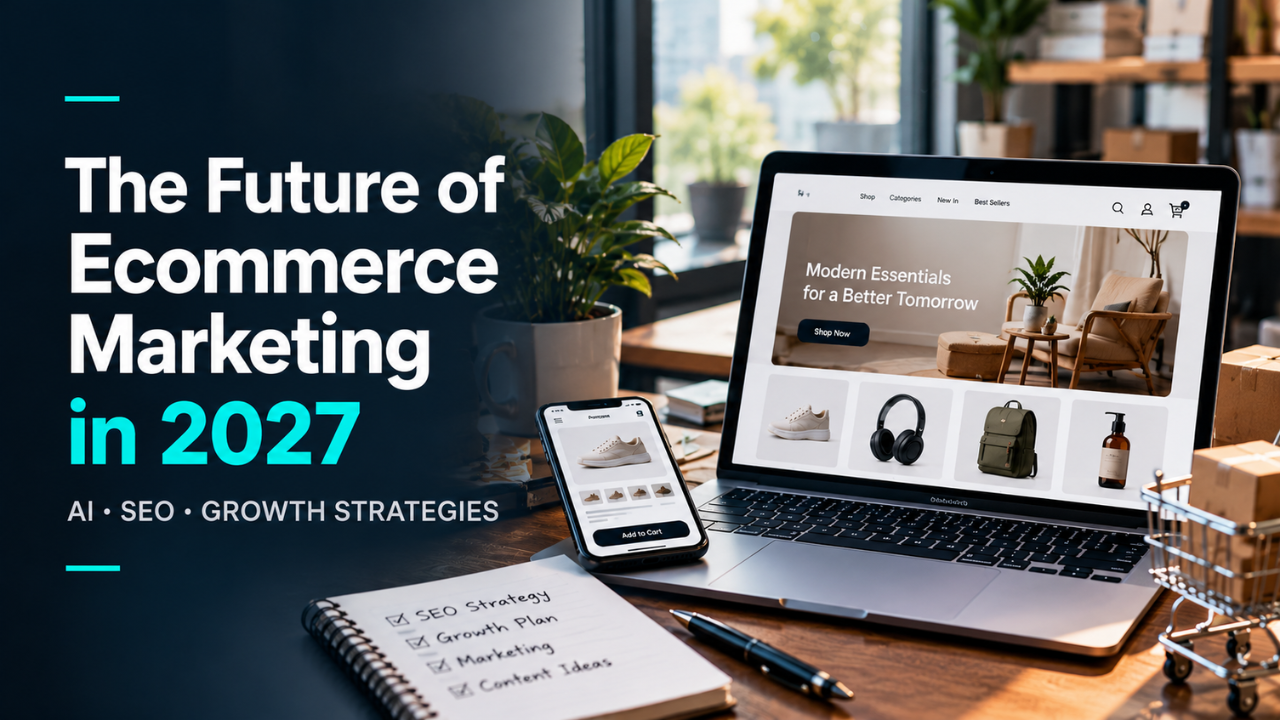
    The Future of Ecommerce Marketing in 2027: AI, SEO and Growth Strategies

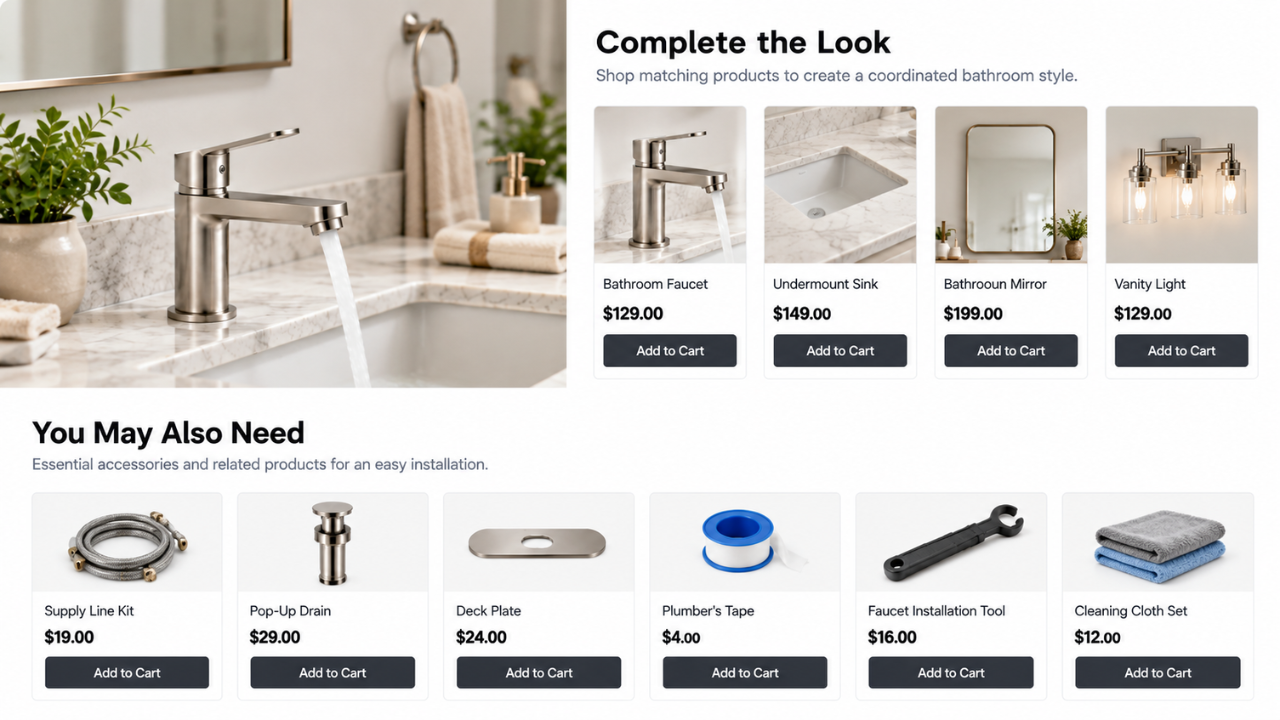
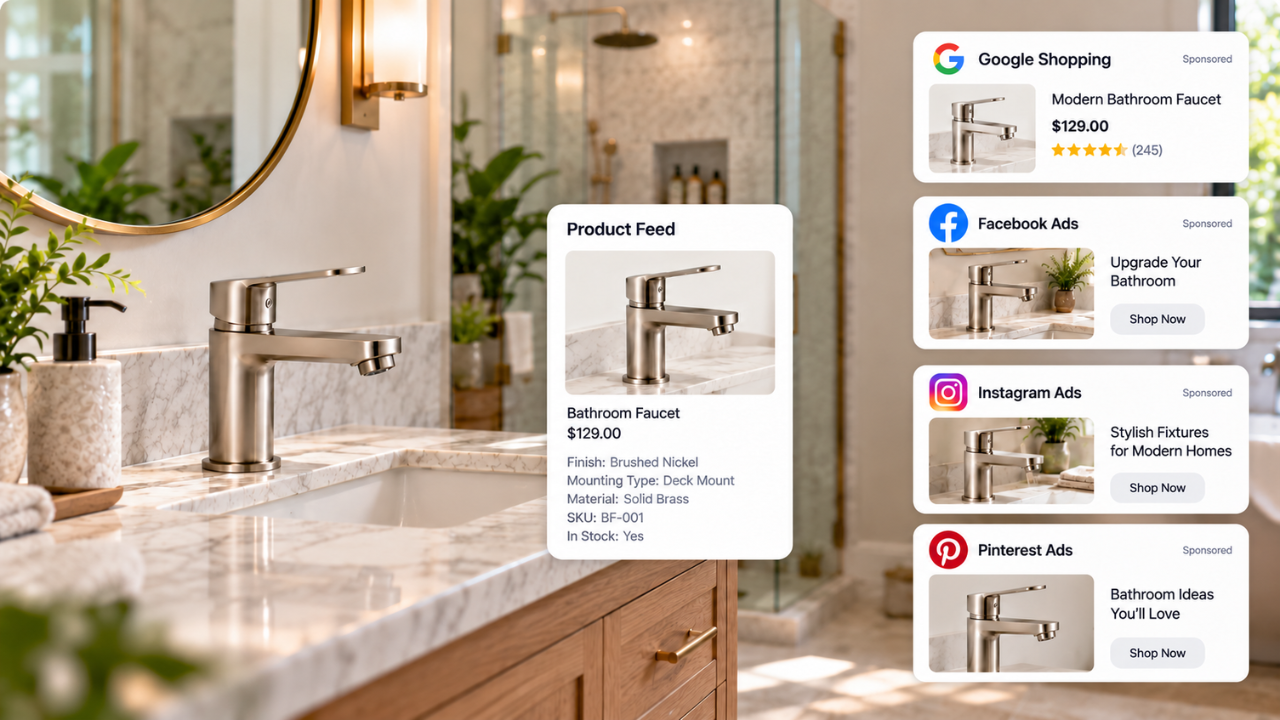
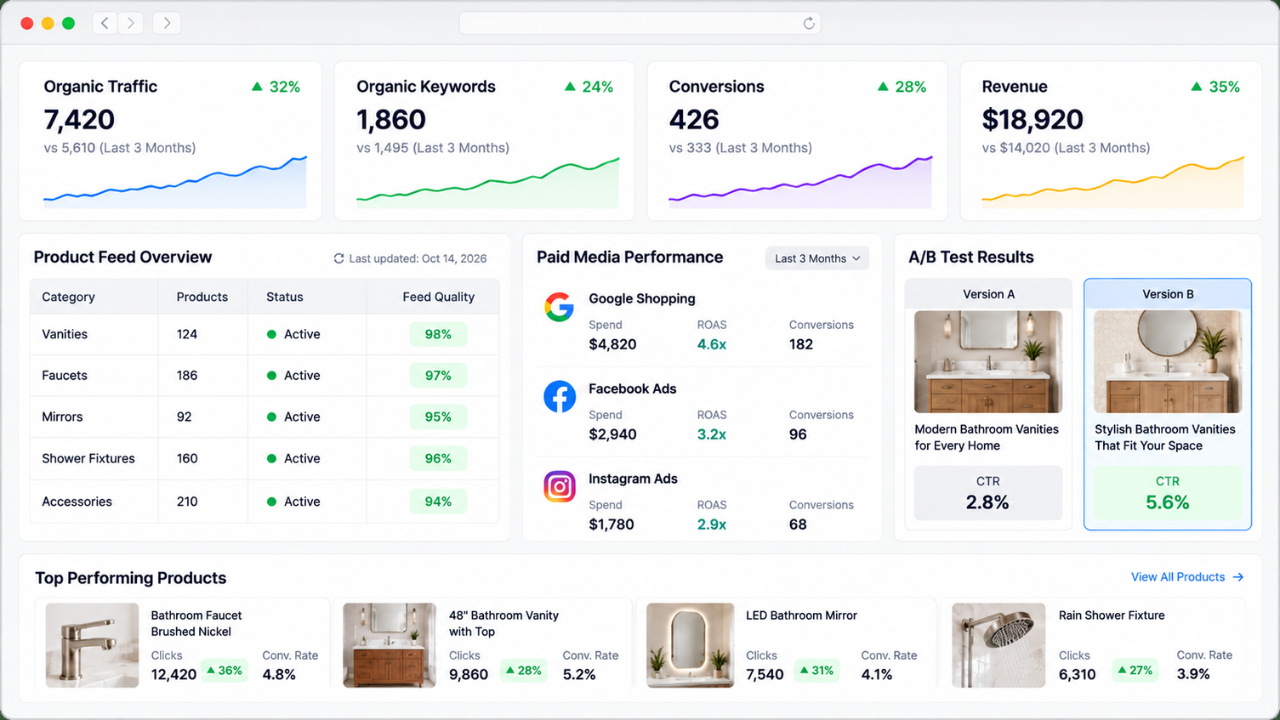
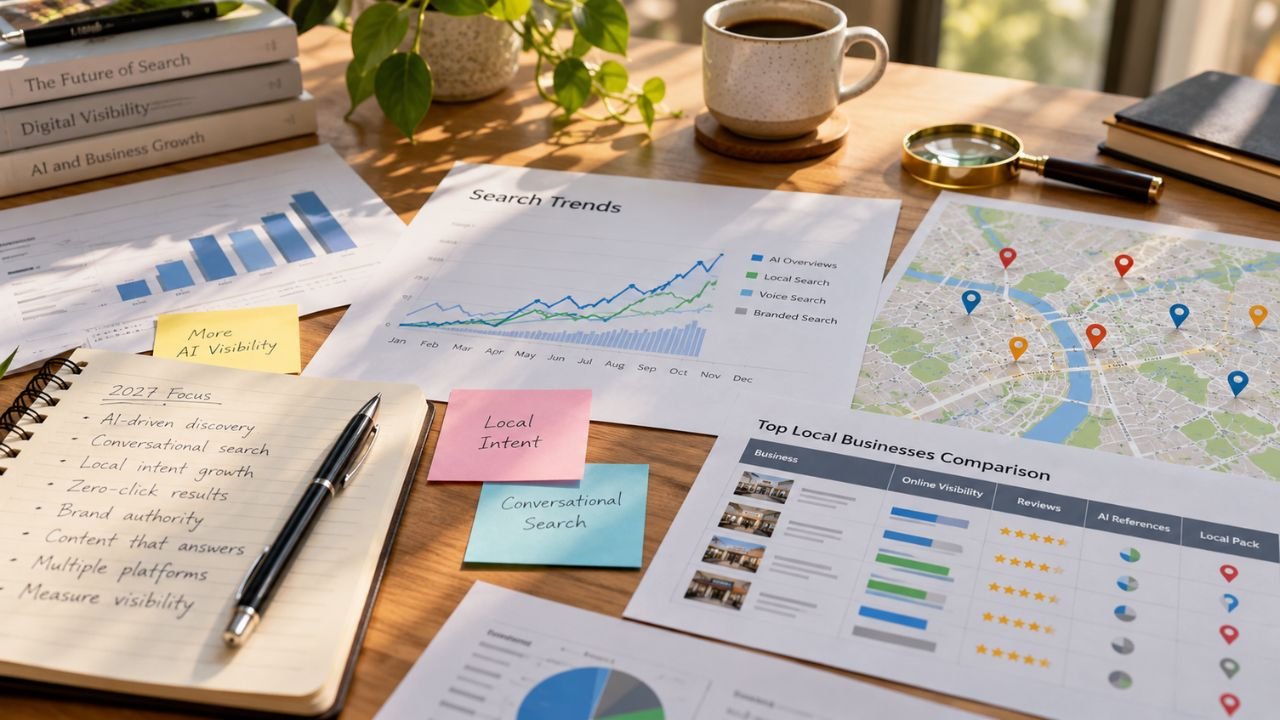
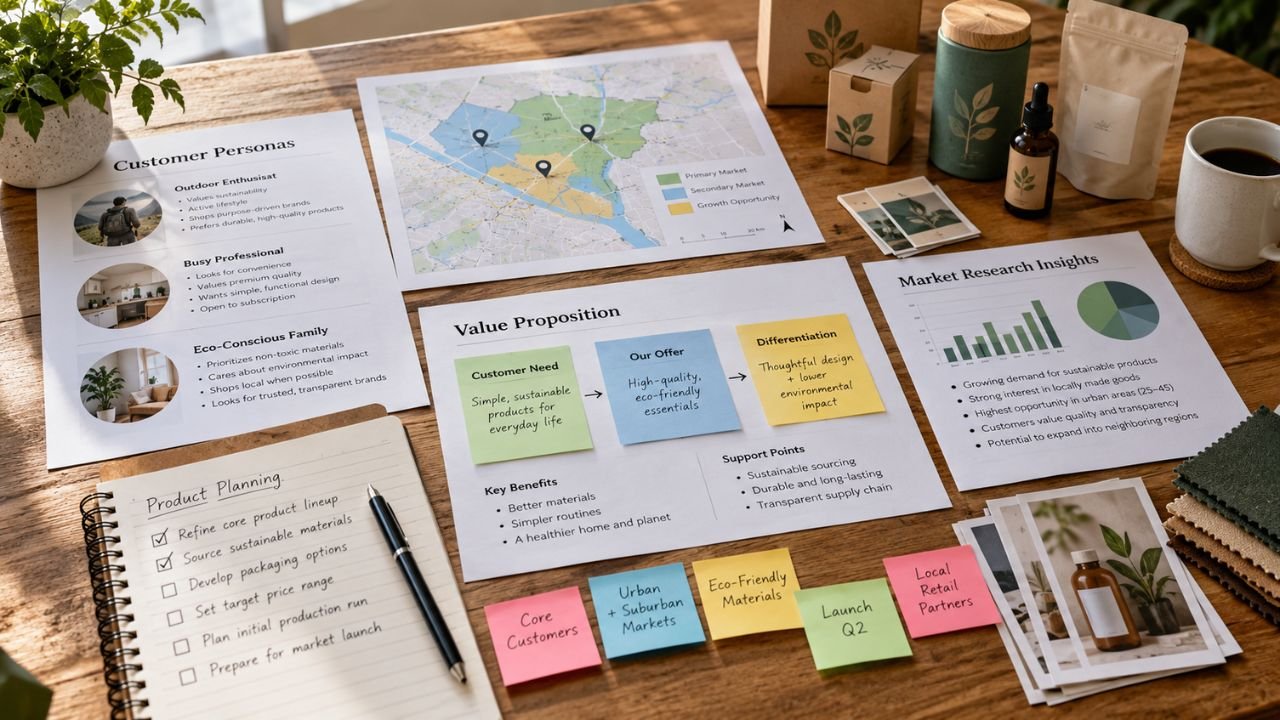
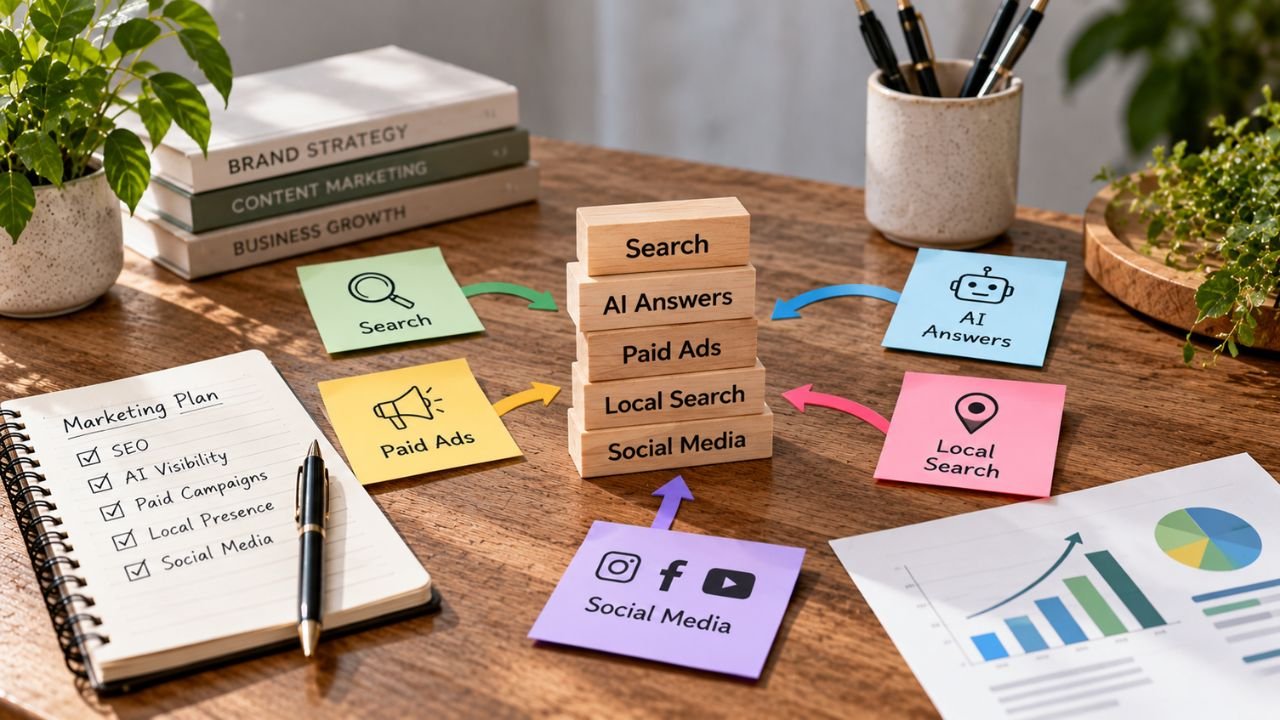
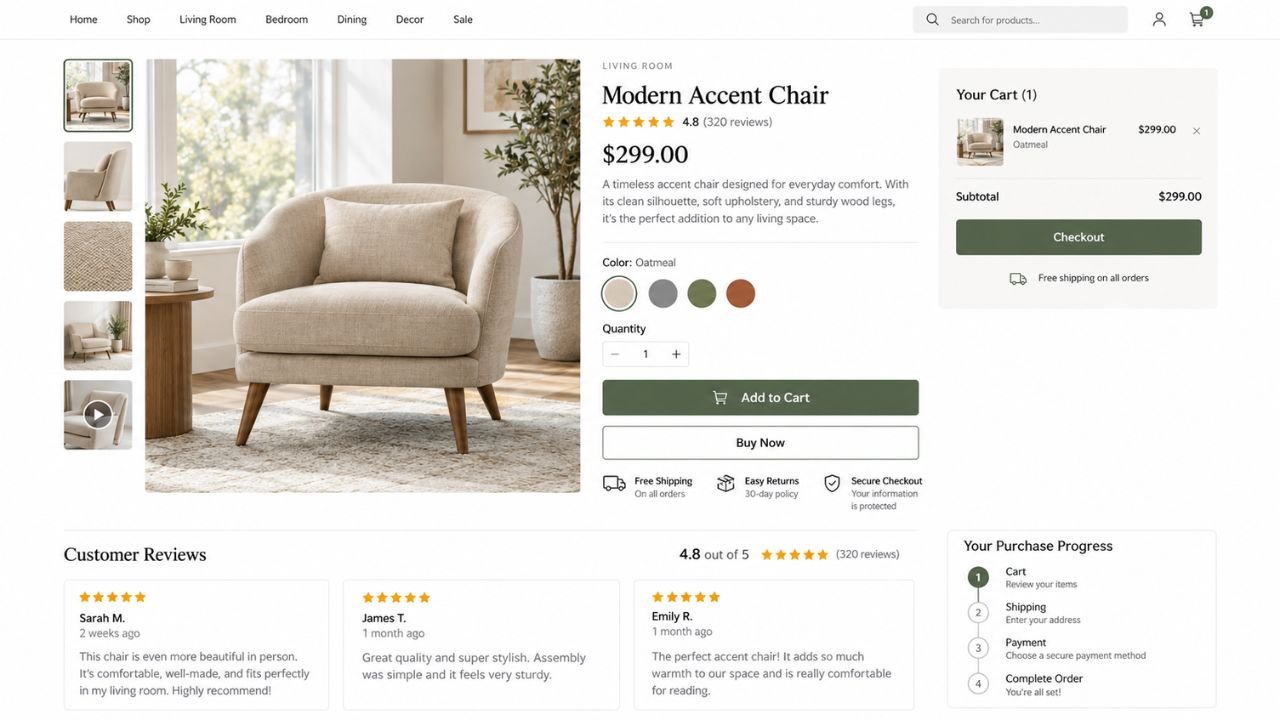
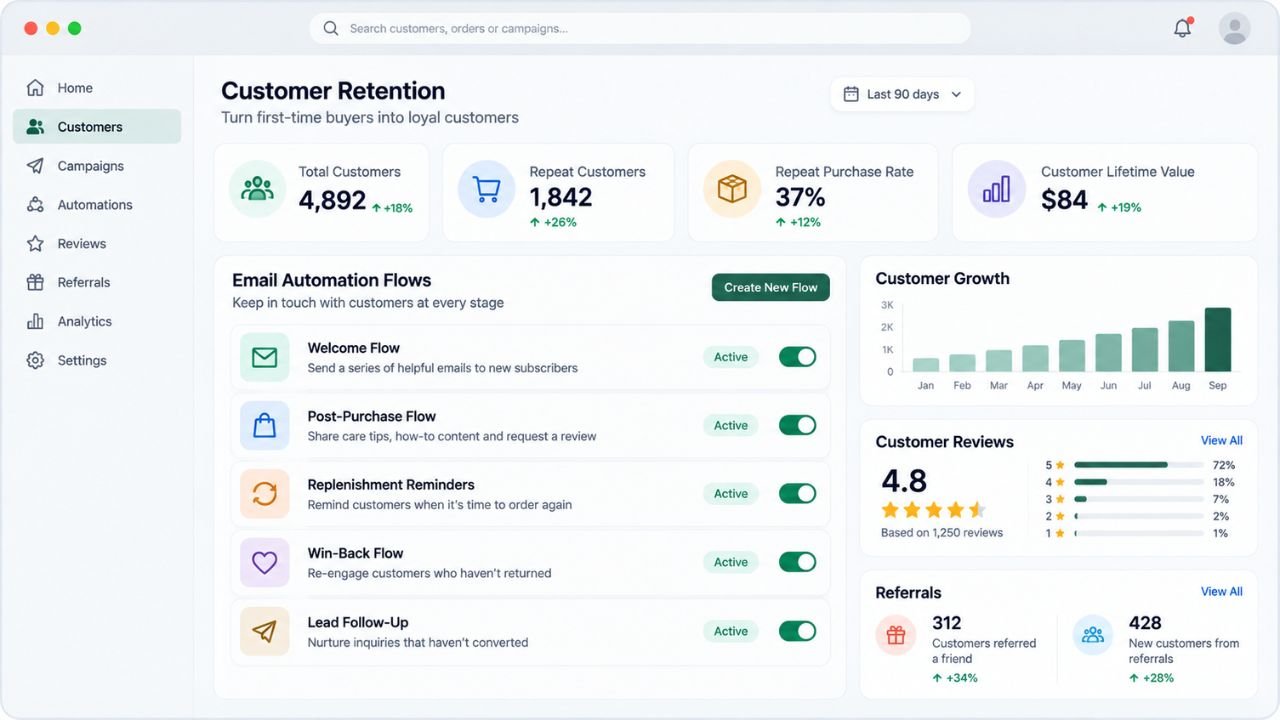
    The future of ecom marketing 2027 . image

    A growing share of online shopping now starts with a question typed into an AI assistant, and the answer often names three or four products before the shopper ever sees a store. Adobe’s retail data shows that these AI-referred visitors already convert better than non-AI traffic overall, yet Gartner’s research shows most people still want to make the final purchase decision themselves. 

    For ecommerce brands in 2027, that combination changes what marketing has to do: earn a place on the short list an AI tool or search result builds, then prove the recommendation right when the shopper arrives.

    That is why ecommerce SEO now has to cover how products appear in AI answers as well as in traditional search results, and why paid media, social selling, and customer data are shifting at the same time. This guide looks at the changes already measurable in US retail data and platform announcements, separates them from the forecasts still circulating, and turns them into a practical plan for growing an online store through 2027.

    What Online Store Marketing Looks Like Now: The Short Answer

    In 2027, ecommerce marketing is about getting your products chosen from short lists that AI assistants, search results, and social feeds build for shoppers. 

    Brands win by feeding those systems accurate product data, earning trust from reviews and creators, giving automated ad platforms strong inputs, and keeping customers longer, with growth measured in profit rather than clicks.

    Five changes drive that shift, and each one shapes how stores plan their marketing this year:

    • AI handles the research. Shoppers ask AI assistants to compare products and narrow their options, then visit a store to confirm and buy.
    • SEO earns recommendations, not just rankings. Search results and AI answers often settle product questions before anyone clicks, so visibility now depends on being cited and recommended.
    • Paid media runs on automation. Google and Meta increasingly choose audiences, placements, and creative, so the quality of what advertisers feed them decides results.
    • Social platforms sell directly. TikTok Shop, Instagram, and YouTube now close sales, not just build awareness.
    • First-party data and retention protect profit. A store’s own customer data steers automated systems, and repeat buyers carry a growing share of revenue.

    The opportunity behind these changes is still large. US online retail came into 2027 growing at a healthy pace: the Census Bureau’s preliminary figures for the second quarter of 2026 put ecommerce sales at $340.2 billion, or 17.1% of all retail sales, up 12.2% from a year earlier.

    It also helps to know what is not yet proven. In the most recent consumer research, fully autonomous AI agents that choose and pay for products without the customer’s input were still a small, early behavior. 

    Forecasts that AI agents will handle a large share of online spending by 2030 come from investment banks and consultancies, and they are projections, not measurements. A sensible plan for 2027 treats the five changes above as near-certain and fully autonomous shopping as something to prepare for without betting the budget on it. The sections below explain each change and what to do about it, and how they fit into a wider digital business growth strategy.

    AI Becomes the Shopper’s Research Assistant, Not Its Buyer
    ai-becomes-the-shoppers-research-assistant-not-its-buyer

    AI-referred visitors arrive later in the decision

    Adobe, which analyzes traffic across a large share of US retail sites, reported that visits from AI sources grew 393% year over year in the first quarter of 2026. Growth from a small base always looks dramatic, so the more useful number is quality. 

    In March 2026, AI-referred visits converted 42% better than non-AI traffic, a reversal from a year earlier, when they converted 38% worse. Those visitors were also 12% more engaged once they reached the site.

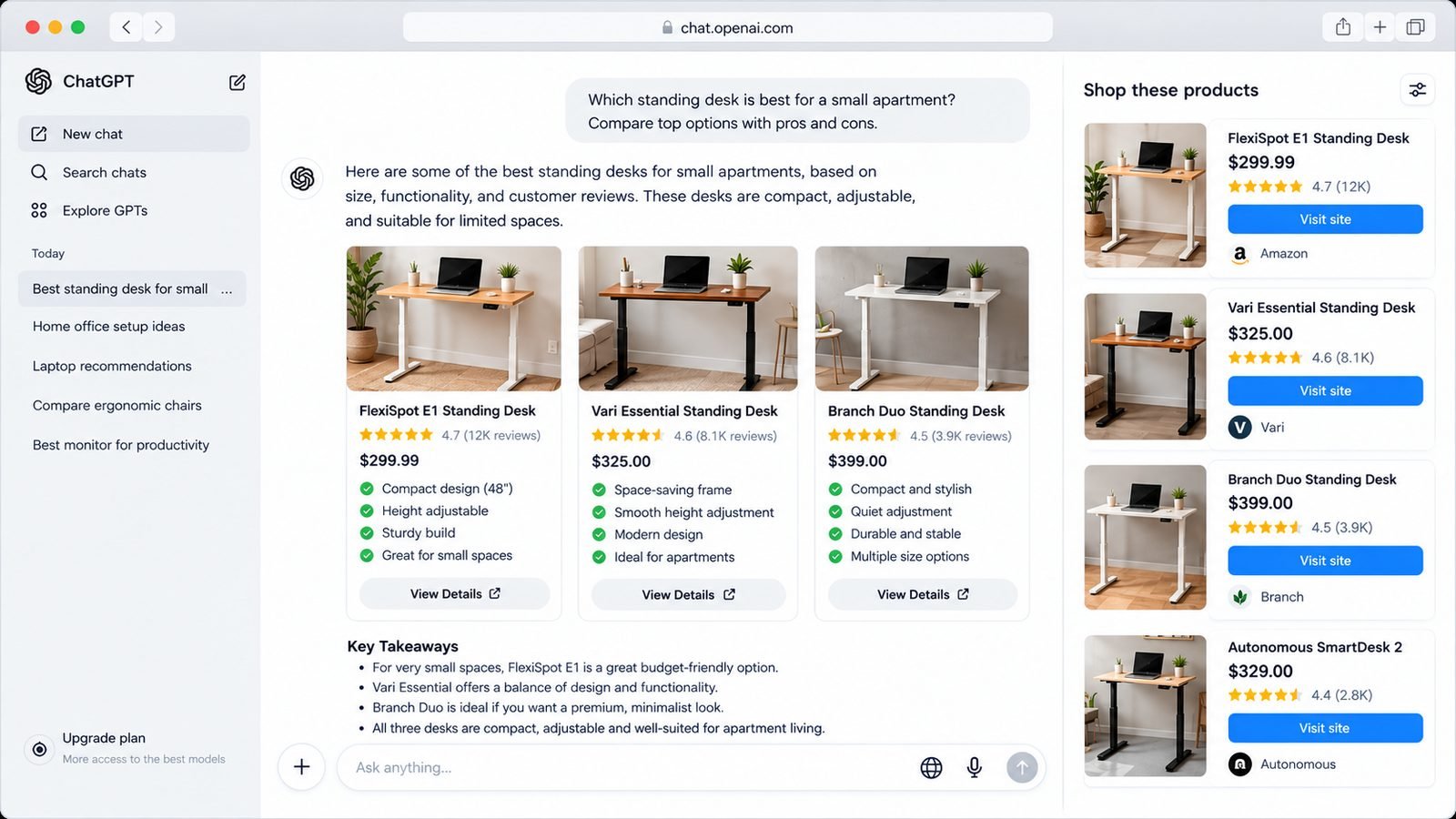
    The likely reason is that much of the research now happens inside the conversation. A shopper asks which standing desk suits a small apartment, reads a comparison, narrows the field, and only then clicks. By the time that visitor lands, the product page’s job is less about persuasion and more about confirmation: the price, dimensions, delivery date, and return policy need to match what the AI said. Stores that treat these visitors like cold traffic waste the head start. 

    This is where conversion rate optimization earns its keep, because small mismatches between an AI summary and the page can lose a sale the store had nearly won.

    Why AI buying on the shopper’s behalf is further off than the headlines suggest

    Consumer behavior has not caught up with the agentic commerce headlines. In a Gartner survey published in May 2026, willingness to let AI make the actual purchase decision topped out at 11%, even in low-stakes categories such as personal care and household supplies. Shoppers were far more open to letting AI narrow their options. 

    Trust is the main barrier: among consumers who had used generative AI for a recent purchase, 54% said they had to double-check everything it told them, and 62% said the information ended up wasting their time.

    For 2027 planning, this points to a clear priority. Being accurately represented when AI tools research and compare products matters more than building for a fully autonomous buyer. A store that feeds AI assistants wrong or incomplete information pays twice. It loses the recommendation, and it loses the shoppers who verify the details and find a conflict.

    The shortlist decides who gets considered

    When AI tools do the comparing, the field shrinks fast. In a user-behavior study of Google’s AI Mode published by growth advisor Kevin Indig, 88% of participants accepted the AI’s shortlist as it was, and 74% chose the top-ranked product. Products in third place or lower drew about 10% of choices. As with any single study, treat the exact percentages with caution, but the pattern is clear: being absent from the list now costs more than ranking lower within it.

    Brand recognition is the main exception. In the same study, participants named recognition as a trust signal in 34% of AI Mode sessions, compared with 23% in traditional search. Familiar brands can win even when they are not listed first. For smaller stores, this argues for steady brand-building work alongside search work, because recall tilts every shortlist in your favor.

    What Agentic Commerce Means for Store Owners Right Now
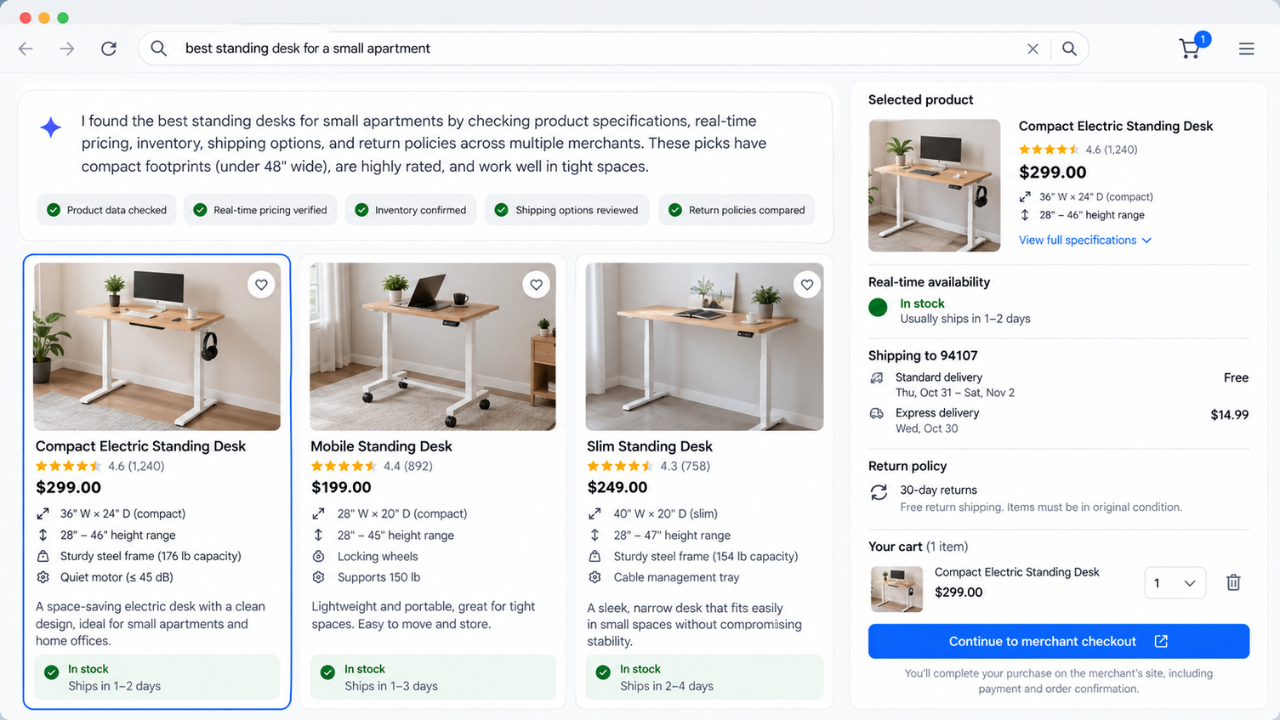
    AI shopping assistant checking product prices, real-time inventory, delivery options, and merchant checkout for standing desks.


    Agentic commerce describes AI systems that do more than recommend. They check inventory, build a cart, and in some cases complete checkout. Much of the infrastructure became real in 2026, even though consumer adoption is moving more slowly than the infrastructure suggests.

    The protocols behind AI shopping, in plain terms

    Two standards matter most for US merchants. Google introduced the Universal Commerce Protocol (UCP) at the NRF conference in January 2026. Developed with Shopify, it lets AI agents read merchant catalogs, check real-time prices and stock, manage carts, and complete purchases through one shared standard rather than custom integrations. 

    OpenAI’s Agentic Commerce Protocol (ACP), built with Stripe, plays a similar role for ChatGPT. Shopify has also rolled out Agentic Storefronts, which make participating merchants’ products available across AI assistants including ChatGPT, Microsoft Copilot, Google’s AI Mode, and Gemini.

    Most store owners will not need to implement these protocols directly, because ecommerce platforms are handling much of the plumbing. What merchants control is the quality of the data flowing through it. For brands on Shopify, Shopify SEO increasingly includes keeping catalog data clean enough to travel well across these new channels. 

    The same principle applies to WooCommerce SEO, where catalog quality depends on how product data is structured across themes and plugins.

    What the ChatGPT checkout reversal teaches

    OpenAI launched Instant Checkout in ChatGPT in September 2025, letting US users buy from participating merchants without leaving the chat. By March 2026, it had changed course, refocusing ChatGPT Shopping on product discovery and sending shoppers to merchants’ own checkouts.

    OpenAI said the first version did not offer the flexibility it wanted. Walmart has reportedly seen in-chat purchases convert at roughly a third of the rate of shoppers redirected to its own site.

    The lesson is not that agentic checkout failed. It is that the parts of commerce that depend on trust, such as payment, returns, and customer service, are harder to move into a chat window than product research is. Brands that rushed to build for in-chat purchasing gained less than brands that focused on being well represented during AI-assisted research.

    Getting a catalog ready for AI agents

    Agent readiness is mostly unglamorous data work. AI systems compare products on attributes they can read reliably, so the catalog itself becomes a marketing asset. The priorities are:

    • Complete product feeds, including the optional attributes most stores skip, such as materials, dimensions, compatibility, and intended use
    • Accurate real-time pricing and inventory, since agents favor offers they can trust to be available
    • Shipping speed, delivery promises, and return terms published as structured data instead of buried in policy pages
    • Product titles and descriptions that state, in plain language, who the product is for and how it compares

    Adobe’s analysis found that the average US retail product page scored only 66 out of 100 on machine readability, meaning a meaningful share of product content was hard for AI systems to parse. That gap is an opportunity for stores willing to fix it before their competitors do.

    How Ecommerce SEO Shifts From Rankings to Recommendations
    How Ecommerce SEO Shifts From Rankings to Recommendations


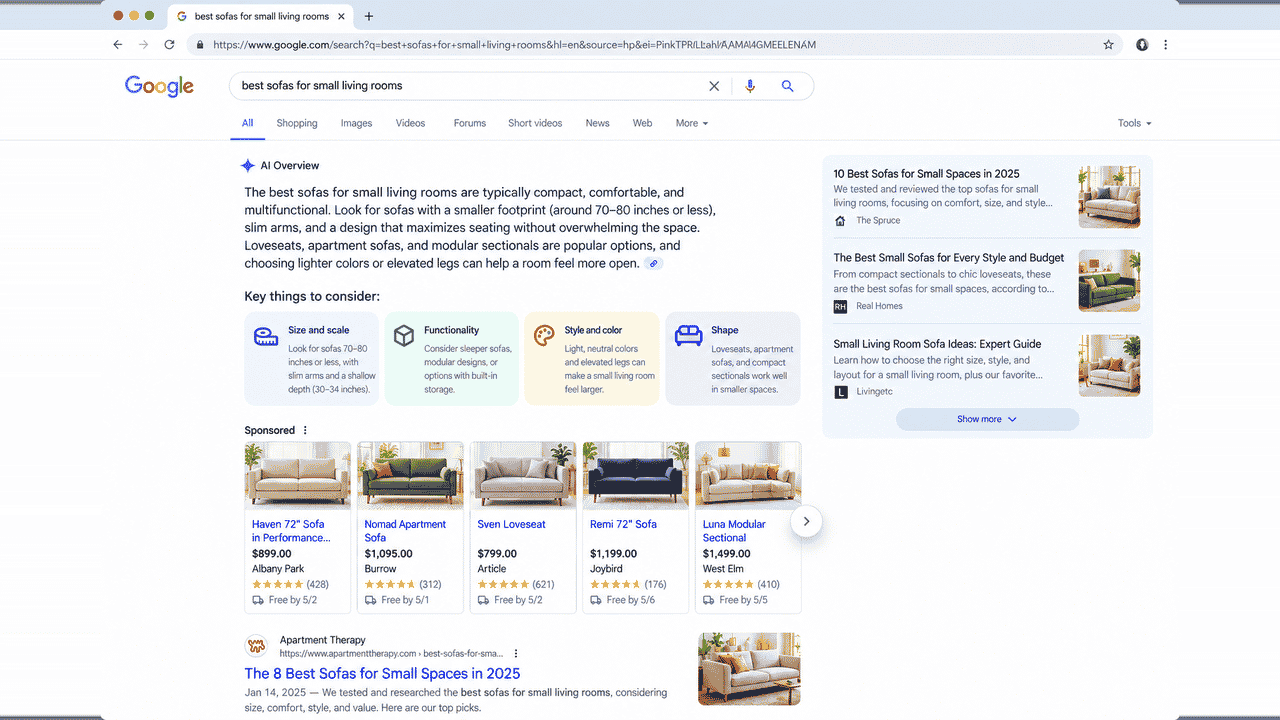
    Search remains a major source of organic traffic for most online stores, and Google sits at the center of AI search through AI Overviews and AI Mode. The job of SEO is widening rather than disappearing. For the broader picture of how AEO, GEO, and SEO fit together, that foundation applies here. This section focuses on what changes for product and category pages.

    What AI answers are doing to product-related clicks

    AI summaries reduce clicks when they appear. Seer Interactive’s analysis of 5.47 million queries found that organic click-through rates fell 61% on queries showing an AI Overview. Informational and how-to searches take the biggest hit. 

    The effect on commercial and branded searches is less consistent: published estimates of how often those queries trigger AI Overviews range from under 10% to far higher, depending on the dataset and the month measured. Treat any single figure skeptically, and check your own Search Console data by query type. For a closer look at the content side of this shift, see how generative AI is changing ecommerce SEO.

    Ranking and being cited are also coming apart. Research cited in 2026 found that pages ranking in Google’s top 10 accounted for about 76% of AI Overview citations in mid-2025, but only about 38% by early 2026. A first-page ranking is still valuable, but it no longer guarantees a place in the answer.

    Product and category pages that machines can read and trust

    The pages that earn recommendations answer the questions shoppers actually ask before buying. Strong product page SEO still starts with clear titles, useful descriptions, good images, and reviews, but 2027 raises the bar on specificity. 

    A category page for sofas for small living rooms should state the dimensions that qualify, compare fabrics for households with pets, and explain delivery for apartments. That level of detail helps a person decide, and it gives an AI system something concrete to cite. Considered purchases like these are where furniture store SEO and similar category work pay off most.

    Structured data matters because it removes guesswork. Product, offer, review, shipping, and return policy markup lets Google and other AI systems read the facts directly. Markup does not guarantee inclusion in any AI answer, but missing or incorrect markup makes exclusion more likely. 

    Technical basics still apply as well. AI crawlers need access to key pages, important content should render in HTML rather than only through scripts, pages should load quickly, and faceted navigation should not bury the category pages that matter most. These on-page ecommerce SEO fixes cover the basics, and Shopify stores with slow templates often need dedicated speed optimization.

    Comparison and buying-guide content deserves new attention. Shoppers ask AI tools to compare brands, and those tools draw on whatever comparisons exist. Publishing a fair, specific comparison of your product against the alternatives gives the AI an accurate source. Leaving that gap empty lets a competitor or an affiliate site define the comparison for you.

    Off-site signals now carry more weight

    On-site work makes a store eligible. Off-site evidence makes it recommendable. An Ahrefs study of AI brand visibility found that YouTube mentions and branded web mentions each correlated at about 0.7 with visibility in Google’s AI Overviews, compared with about 0.3 for domain rating.

    Correlation is not causation, but the direction is consistent: what others say about a brand appears to influence AI recommendations more than traditional authority metrics do.

    For ecommerce, that means detailed reviews, creator videos that show the product in use, accurate listings on marketplaces and review sites, and genuine participation in communities such as Reddit, where shoppers ask for recommendations. Our GEO checklist ranks these off-site tasks by impact for teams deciding where to start.

    Paid Media in 2027: More Automation, Fewer Manual Levers
    Paid Media in 2027 More Automation, Fewer Manual Levers . image.jpg

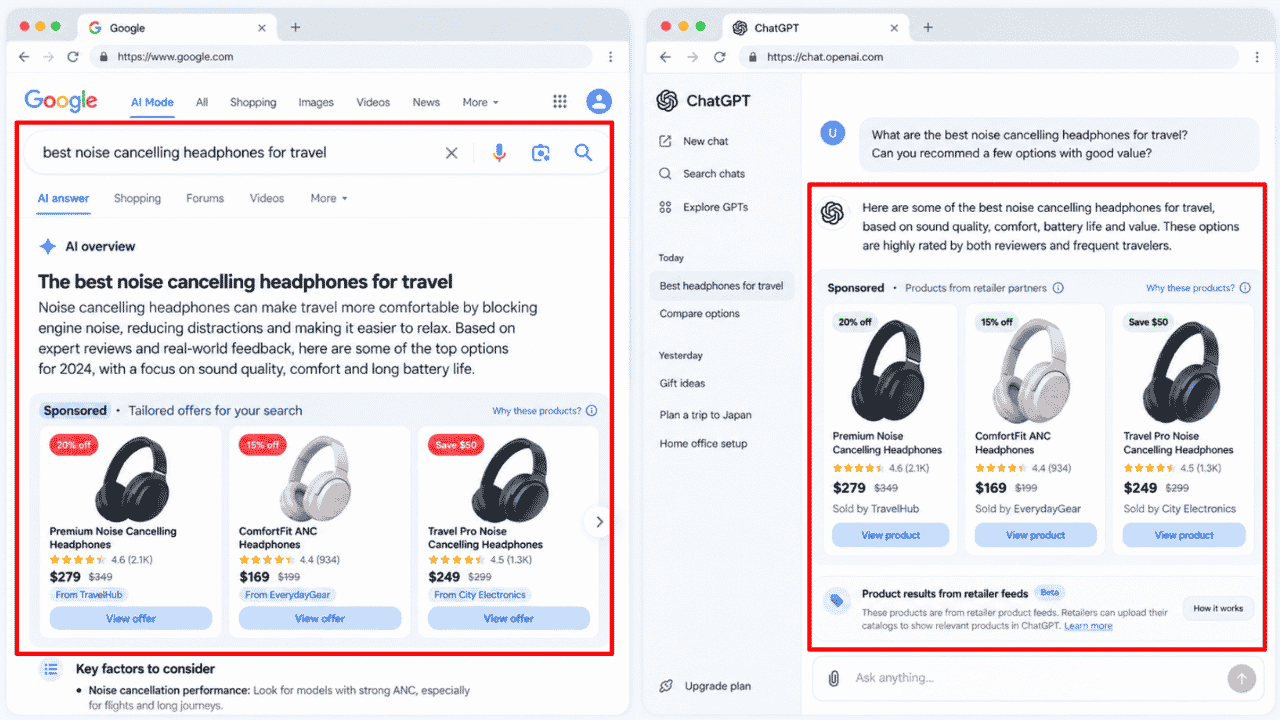
    Ads move inside AI answers

    The AI ad formats advertisers are working with in 2027 began as tests in 2026. Google introduced Direct Offers in January 2026, a pilot that lets advertisers present tailored discounts inside AI Mode when a shopper appears ready to buy, and expanded it in May 2026 with brands such as Chewy, Gap, and L’Oréal. Google has also begun placing Shopping ads within AI Mode responses, labeled as sponsored.

    OpenAI started showing ads in ChatGPT in February 2026, limited to logged-in adult users in the US on its Free and Go tiers. By midyear, it had reportedly added a product-feed option that lets retailers upload a catalog and generate ads for individual items. 

    Early access also reportedly came with high minimum spends, so most small and midsize stores will reach these placements through managed programs or later self-serve tools rather than right away. Plan a test budget for 2027, but expect the formats, pricing, and measurement to keep changing.

    Automated campaigns become the default

    On Google, Performance Max and AI Max push toward broad, automated targeting driven by product feeds and conversion data. Meta has moved new sales campaigns toward Advantage+ automation by default, and the company has described a goal of letting businesses generate entire campaigns from little more than a product image and a budget. Reports put that target at the end of 2026, so treat it as a stated plan rather than a finished product.

    Automation can reduce the work of running ads, but it changes where performance comes from. When the platform chooses audiences, placements, and often creative, two businesses using the same tool differ mainly in the inputs they provide.

    Retail media keeps taking budget

    Retail media, the advertising that retailers such as Amazon and Walmart sell on their own sites and apps, continues to draw budget from other channels. Warc Media expects global retail media spending to reach about $223.4 billion in 2027, up 11.5% from 2026, while noting that growth outside Amazon is slowing. For brands that sell through marketplaces, retail media is less an option than a cost of being visible on those digital shelves.

    What advertisers still control

    The levers that remain are the inputs automation cannot supply for you:

    • Accurate conversion data sent back to the platforms, ideally with order value and margin information
    • A product feed with complete, honest attributes
    • Profit-based goals, so the system does not chase unprofitable orders
    • Offers that give shoppers a concrete reason to choose you
    • Creative that reflects a real brand point of view rather than generic templates

    Teams that manage these inputs well will get more from automated systems than teams that try to fight them.

    Social Commerce Turns Discovery Into Checkout
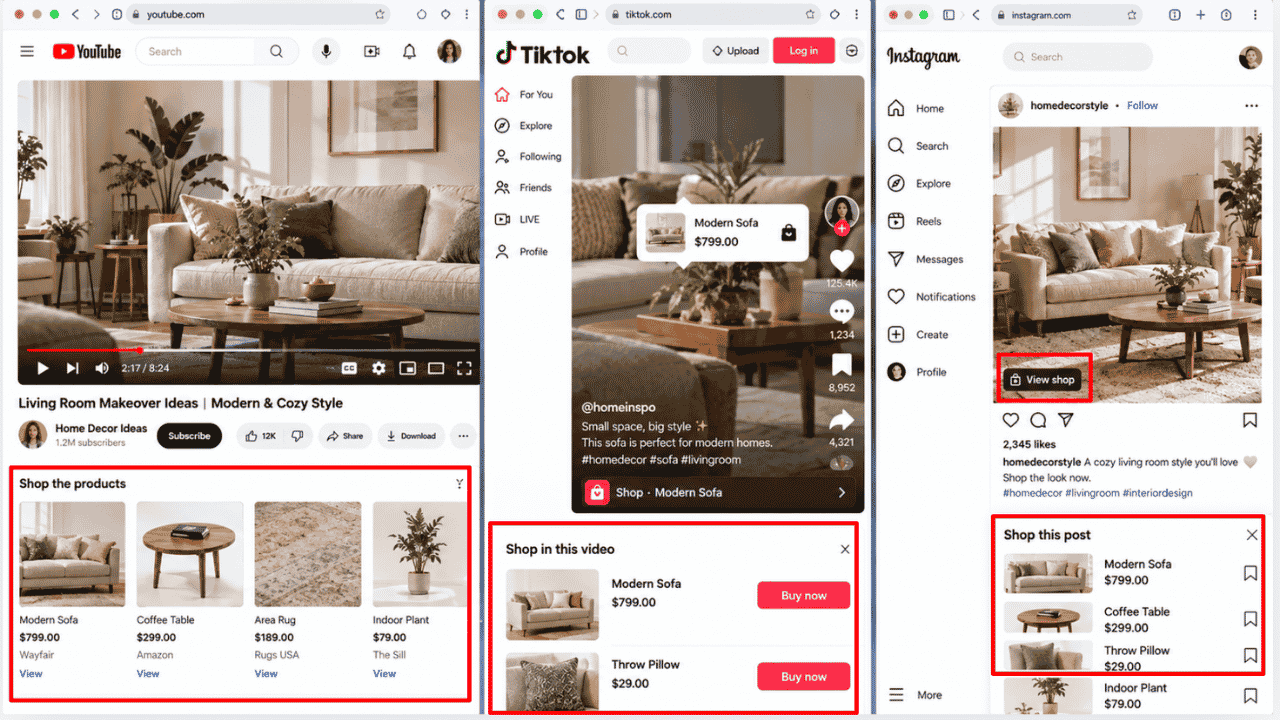
    Social commerce product shopping interfaces on YouTube, TikTok, and Instagram.

    Social platforms now close sales instead of only starting them. eMarketer projected TikTok Shop’s US ecommerce sales at about $23.4 billion for 2026, up 48% from 2025, which would give it a larger US ecommerce business than retailers such as Target and Best Buy. Instagram, YouTube Shopping, and Pinterest continue to expand their own shopping features.

    How these channels work matters more than their size. Social commerce rewards products that are easy to understand in a short video, moderately priced, and visually interesting. A large share of sales comes through creators and affiliates rather than brand accounts, which favors brands willing to work with many smaller creators instead of a few expensive endorsements. 

    Those same videos often feed AI search, since YouTube appears frequently among the sources AI tools cite. A product demo filmed for social selling can therefore double as off-site evidence for AI recommendations.

    Social selling is not the right fit for every catalog. High-consideration purchases such as furniture, appliances, and custom products may use social mainly to build awareness and drive branded search, with the sale happening on the store’s own site. The guide to growing furniture ecommerce brands shows how that path works for a high-consideration category. The decision for 2027 is where each channel fits in your path to purchase, not whether to be everywhere.

    First-Party Data and Retention Become the Profit Center

    email.image.jpg


    Your data steers the automated systems

    When ad platforms and AI assistants make more of the targeting decisions, a store’s own customer data becomes one of its few lasting advantages. Accurate purchase data, sent back to ad platforms through server-side tracking and conversion APIs, teaches automated campaigns which customers are worth finding. Zero-party data, meaning the preferences customers share directly through quizzes, product finders, and account settings, gives a store information that outside AI tools cannot see.

    Retention pays for acquisition

    New customers are getting harder to attribute and often more expensive to win, which makes the second order more important. Across more than 12,000 merchants using Gorgias, repeat customers made up 21% of customers but generated 44% of revenue. Klaviyo’s 2026 benchmarks show that triggered emails, such as welcome, post-purchase, and replenishment messages, accounted for 5.3% of sends but 41% of email revenue.

    Retention marketing in 2027 is less about sending more campaigns and more about timing useful messages to how customers actually use the product. The approach to education-led customer engagement covers how stores can build that system step by step.

    Privacy rules tighten in 2027

    US privacy law remains a state-by-state patchwork. As of August 2026, 20 states had comprehensive consumer privacy laws in effect, with Oklahoma’s law taking effect on January 1, 2027, and Alabama’s in May 2027. California’s rules on automated decision-making technology, including notice and opt-out requirements, become enforceable on January 1, 2027, which matters for brands that use AI to personalize offers or pricing.

    Thresholds vary, and many small stores fall below some of them, so confirm which laws apply with qualified legal counsel rather than assuming. The practical approach is to collect data for a clear purpose, explain why you ask for it, and make consent easy to manage.

    Measuring Growth When AI Hides Part of the Journey

    Traditional attribution struggles when research happens inside an AI conversation. A shopper may see your brand recommended in ChatGPT, search for your name on Google a week later, and buy through a branded ad. A last-click report credits the ad and misses the recommendation that started the journey.

    Stores can respond in a few practical ways. Set up a GA4 channel group or segment for AI referrers such as chatgpt.com, perplexity.ai, gemini.google.com, and copilot.microsoft.com, so that this traffic is visible on its own. Track branded search impressions in Search Console over time, since AI exposure often shows up later as people searching for your name. 

    Check regularly how the major AI assistants describe your products, prices, and policies, and correct inaccurate information at its source. For larger budgets, incrementality tests and marketing mix modeling help separate what each channel truly adds from what it merely touches.

    Revenue metrics also need a profit lens. Return on ad spend can look healthy while discounts, shipping costs, and returns erase the margin. Marketing efficiency ratio, contribution margin per order, and the ratio of customer lifetime value to acquisition cost give a clearer picture of whether growth is worth having.

    A Practical 12-Month Plan for 2027
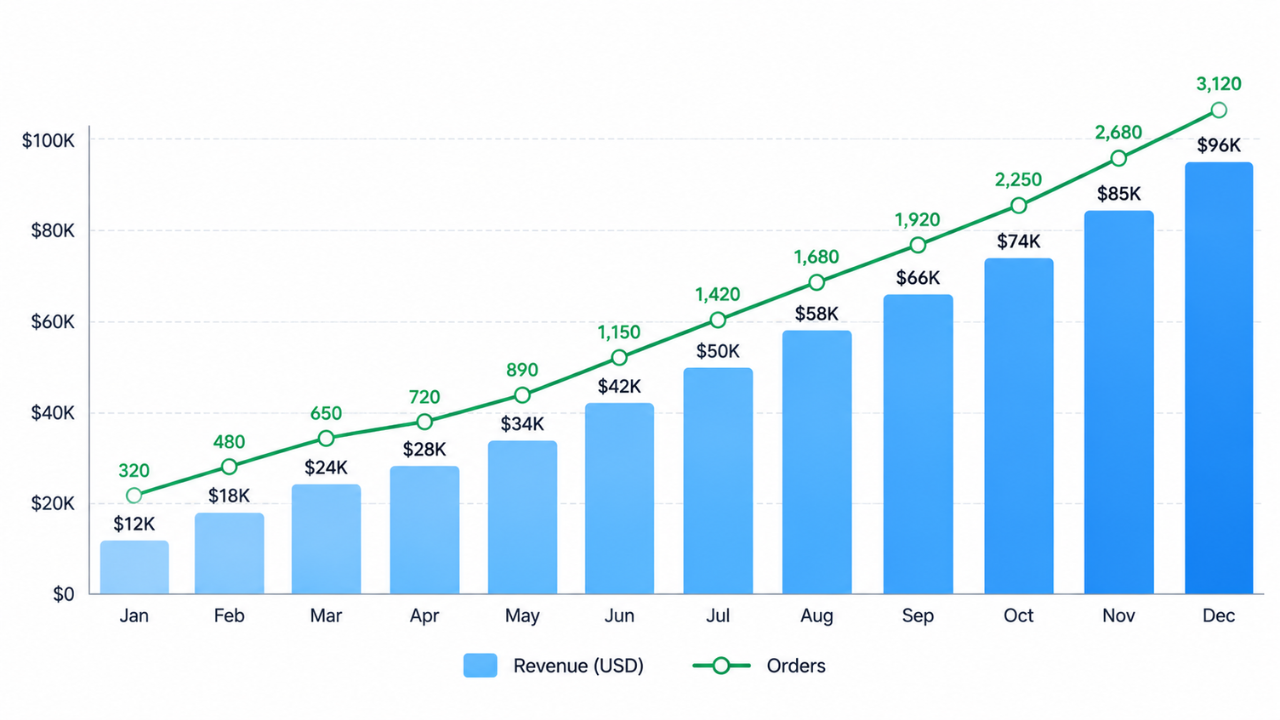
    12 month growth plan.image.jpg

    Not every store needs to do everything at once. The quarter-by-quarter order below starts with the work that protects existing revenue and builds toward newer channels.

    January to March: Audit and Fix the Foundations

    Start the year by auditing how your store appears today. Ask the major AI assistants about your category and your brand, and note where you appear, what they say, and what they get wrong. Review product feeds for missing attributes and errors, confirm that structured data on product and category pages is valid, and make sure AI crawlers can reach your key pages. Set up AI-referral tracking in GA4 so you have a baseline before you change anything.

    April to June: Build the Evidence AI Systems Use

    Shift attention to the content and evidence AI systems draw on. Strengthen your top category pages with specific buying guidance, publish honest comparison pages for your main products, and build a steady flow of detailed reviews. Start or expand a creator program focused on product-in-use videos. Tighten post-purchase and replenishment flows so that retention improves while the acquisition work takes hold.

    July to December: Test New Channels and Tighten Measurement

    With the foundations in place, test newer channels in a controlled way. Run small experiments with ads in AI placements as access opens up, compare automated campaigns against your profit targets ahead of the holiday season, and decide whether your platform’s agentic commerce features make sense for your catalog. 

    Stores with very large catalogs often need ecommerce SEO built for catalog scale at this stage, because template-level fixes affect thousands of pages at once. Close the year by reviewing measurement: which channels contributed to profitable growth, and which only looked good in last-click reports.

    Risks Worth Planning For

    The biggest risk in 2027 is not falling behind on AI. It is spending money on the wrong version of it. The ChatGPT checkout reversal showed how quickly an early bet can lose its value, so tie each new initiative to a measurable outcome and a review date.

    Platform dependency is the second risk. If AI assistants become a main gateway to shoppers, a handful of companies will control more of the path between brands and customers, much as search and social platforms do today. Owned channels, such as email, SMS, and a recognizable brand, reduce that exposure.

    Quality shortcuts are the third. Mass-produced AI content, fake reviews, and pages created only to target small query variations already conflict with search engine spam policies, and they erode trust with the shoppers who check. Finally, growth that ignores margin is not real growth. Automated ad systems and discount-driven offers can lift revenue while profit falls, and weak financial tracking is among the most common reasons ecommerce businesses fail.

    Conclusion

    The future of ecommerce marketing in 2027 is less about one new channel and more about a change in where buying decisions get made. AI assistants, product grids, creator videos, and automated ads all present shoppers with short lists, and the stores that make those lists are the ones with accurate data, credible outside evidence, and pages that confirm what shoppers were told. 

    So far, the evidence points to AI as a powerful research assistant rather than an independent buyer, which makes accuracy and trust worth more than speculative bets.

    The practical path is steady work: fix product data and pages, build the reviews and content others cite, feed automated ad systems better inputs, protect margins, and measure beyond the last click. If you want an outside view of where your store stands across search, AI visibility, and conversion, you can request a free ecommerce growth analysis from the EcomOptix team.

    Frequently Asked Questions

    No method guarantees it. The most reliable inputs are complete and accurate product data, product and category pages that answer real buyer questions, valid structured data, and consistent third-party evidence such as detailed reviews and creator content. Check regularly how AI tools describe your store, and correct inaccurate information where it originates.

    Yes, for most stores. Google’s AI features draw on the same crawlable, well-structured pages that traditional SEO produces, and organic search remains a major traffic source. What changes is the scope. SEO now includes product data quality and off-site reputation, and success should be measured partly by visibility in AI answers, not only by rankings.

    It depends on budget and category. ChatGPT ads were limited to US users on free tiers in 2026, and early access reportedly required large minimum spends. Brands with room in the budget can test them alongside proven channels. Most smaller stores will get more from strengthening organic AI visibility and product feeds until self-serve options and measurement mature.

    There is no reliable industry benchmark yet, so be wary of anyone quoting one. A practical approach is to fund the foundations first, such as product data, structured data, and content quality, because they also support Google search and shopping ads. Then set a small, separate test budget for new AI ad placements and judge it on profit, not clicks.
  • Ecommerce Customer Engagement in 2027: Strategies for Education, Retention, and Revenue Growth

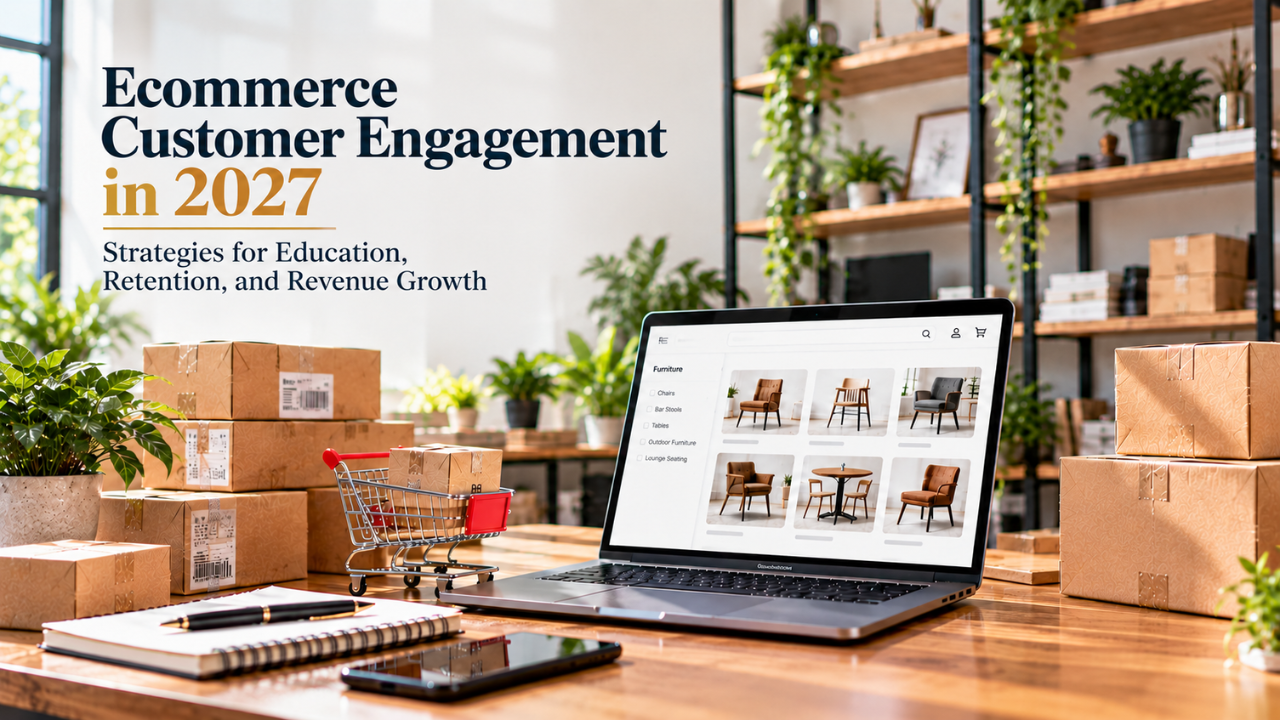
    Ecommerce Customer Engagement in 2027: Strategies for Education, Retention, and Revenue Growth

    ecommerce engament in 2027. image.jpg

    Most ecommerce stores measure customer engagement by how much noise they make. Emails per week, SMS blasts, push notifications, a loyalty popup on the third page view. The dashboard looks busy. The repeat purchase rate barely moves, and the return rate quietly creeps up.

    The stores that keep customers in 2027 are doing something less glamorous. They teach. They answer the question a shopper is too unsure to ask, show how a product fits into real life before the order, and help the customer use it well after it arrives. That kind of education does the engagement work another discount email never will.

    This guide covers ecommerce customer engagement for 2027 through that lens: what engagement means now that AI assistants sit between many shoppers and your store, a four-stage framework for turning customer education into retention and revenue, how to measure it without fooling yourself, and where AI helps or quietly hurts. Verified developments and forecasts are kept separate throughout, because a lot of “2027 trends” content blurs the two.

    What Ecommerce Customer Engagement Means in 2027

    Ecommerce customer engagement is the ongoing, two-way relationship between a shopper and an online store, shown by how often customers return, how deeply they use product information and support, and whether they buy again. In 2027 it also includes how well your store’s information serves the AI assistants that answer shoppers’ questions before they ever visit.

    That last part is new, and it changes the definition in a practical way. Engagement used to mean on-site behavior: sessions, time on page, email clicks. Now a growing share of the conversation happens elsewhere. A shopper asks an AI assistant which standing desk can hold two monitors and a 75-pound load, gets a shortlist, and lands on a product page already half convinced. The engagement started before the visit, and your product content took part in it whether you planned for that or not.
    Three terms get mixed up constantly, so it helps to pull them apart:

    • Customer experience is the overall quality of every interaction, from site speed to delivery to returns.
    • Customer engagement is how actively the customer takes part in the relationship by asking, learning, reviewing, and coming back.
    • Customer retention is the outcome, measured as the share of customers who buy again over a set period.

    Experience is the environment. Engagement is the behavior. Retention is the result. Most engagement strategies fail because they try to manufacture the behavior with more messages, without improving the environment or giving the customer a real reason to participate.

    Why Engagement Got Harder, and More Valuable, Heading Into 2027

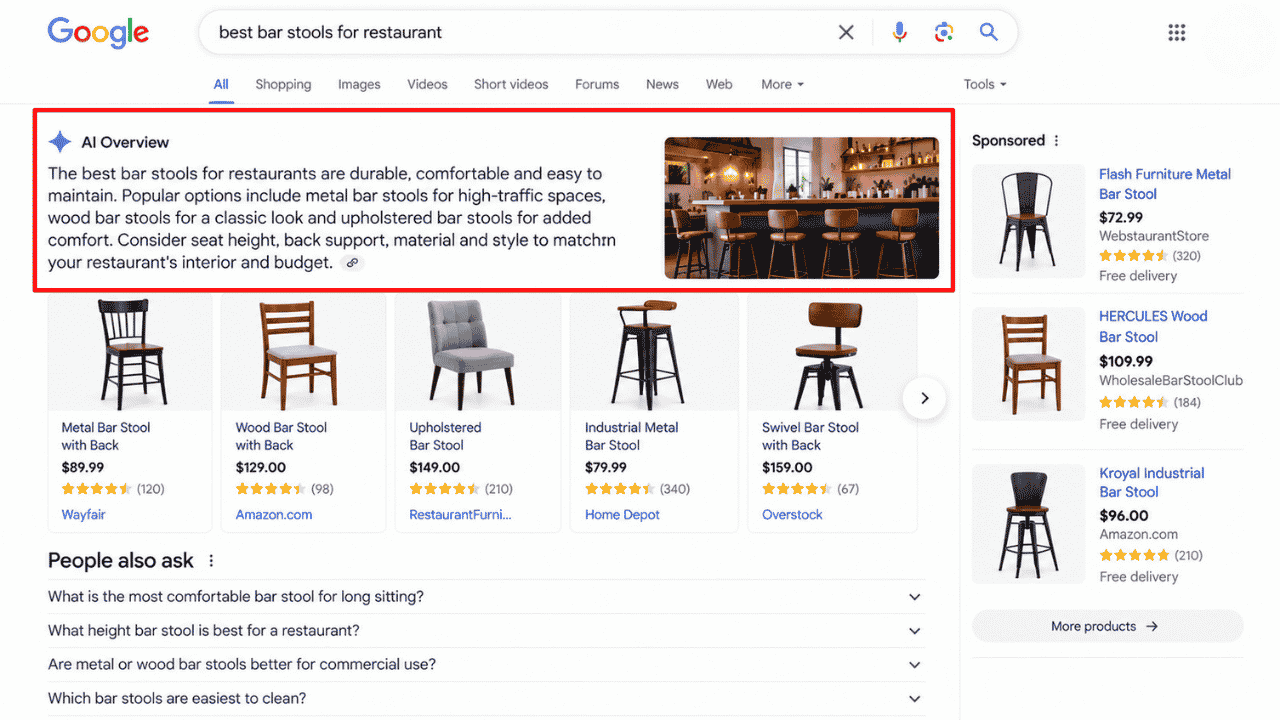
    image showing ai overview . jpg

    Engagement got harder because attention is saturated and product discovery is moving into AI interfaces. It got more valuable because the shoppers who do reach your store arrive further along in their decision and expect sharper answers.

    The evidence points in both directions at once:

    • Adobe Analytics reported that traffic to US retail sites from generative AI tools rose 693.4% year over year during the 2025 holiday season, while noting that the base of users is still modest.
    • Those shoppers behave differently once they arrive. Adobe found AI-referred visitors were 33% less likely to leave immediately than visitors from other sources.
    • Organic clicks are scarcer. Pew Research Center found Google users clicked a traditional result in 8% of visits when an AI summary appeared, compared with 15% when it didn’t.
    • Patience for brand noise is gone. CSG’s 2026 State of the Customer Experience report found seven in ten consumers feel brands send so many messages that they no longer care what brands say, and more than a third have stopped buying from a brand because of excessive outreach.
    • Returns remain a profit leak. The NRF and Happy Returns estimated that 19.3% of online sales would be returned in 2025.

    Put those together and a pattern shows up. Fewer clicks, better-informed visitors, almost no tolerance for noise, and a stubborn return problem. Each one points to the same fix: clearer information, delivered at the right moment, to people trying to make a good decision.

    Here’s how the confirmed developments compare with the predictions:

    Development Status as of late 2026 What it means for engagement
    Google’s Universal Commerce Protocol (UCP), an open standard for agent-led shopping, launched in January 2026 Live for selected merchants in the US, Canada and Australia Some purchases complete inside AI Mode and Gemini, so product data has to answer questions without your page
    Conversational attributes in Google Merchant Center, covering product Q&A, document links such as manuals, and related products Available, optional Your FAQs and guides can become feed data that AI shopping surfaces read directly
    AI-referred retail traffic Growing fast from a small base Expect more visitors who arrive pre-educated and want specifics, not slogans
    Agent-led checkout as the default way people shop in 2027 Forecast, not established Prepare your data, but don’t rebuild your store around it

    That last row deserves a note of caution. The same CSG research found 56% of consumers are uncomfortable letting AI take action on their behalf. Agentic shopping is real and growing. It isn’t universal, and a store that treats it as the whole future will underinvest in the human shopper who still does most of the buying.

    Engagement in 2027 isn’t about being louder. It’s about being the clearest answer in the room.

    The Confidence Loop: A Framework for Education-Led Engagement

    The Confidence Loop is a four-stage model for ecommerce customer engagement built on one premise: customers stay engaged with stores that make them confident they chose well. Each stage uses a specific kind of customer education to remove a specific kind of doubt.

    Stage The customer’s doubt Education that removes it Signs it’s working
    Clarify “Which one is right for me?” Buying guides, comparisons, product Q&A, demo video, fit and sizing help Higher product page conversion, fewer pre-sale questions
    Confirm “Is it safe to buy this now?” Delivered cost, delivery and return terms, compatibility checks, fast human answers Lower checkout abandonment, fewer “where is my order” contacts
    Coach “Am I using this right?” Setup guides, care instructions, onboarding emails, how-to video Fewer “not as expected” returns, fewer post-purchase tickets
    Compound “Why come back here?” Replenishment timing, next-step suggestions, loyalty tied to behavior, community Repeat purchase rate, time to second order, cohort retention

    It’s a loop, not a funnel, because the last stage feeds the first. The questions customers ask after buying, the photos they share, and the reviews they write become the pre-purchase education for the next shopper. A store that runs the loop well gets better at Clarify every month without writing much new content from scratch.

    Here’s the uncomfortable part. Most stores pour budget into Compound with loyalty apps, win-back discounts, and VIP tiers while Clarify and Coach stay thin. That’s backwards. A points program can’t rescue a customer who sent the product back because nobody explained how it would fit.

    Customers don’t stay loyal to stores. They stay loyal to the feeling of having chosen well.

    If you want to see how engagement fits alongside acquisition, conversion, and measurement in one plan, this guide to connected digital business growth strategies covers the wider system. The rest of this article goes deep on the engagement layer itself.

    Clarify: Help Shoppers Choose With Confidence


    help cutomer image.jpg

    Pre-purchase education is content that answers the specific questions standing between a shopper and a confident purchase. It works best on the product and collection pages where the decision happens, not buried in a blog post three clicks away.

    Start with the questions that block the sale

    The best source of education topics is your customers’ own words. Support tickets, live chat transcripts, sales call notes, product reviews, and return reasons all contain the same handful of questions, asked over and over.

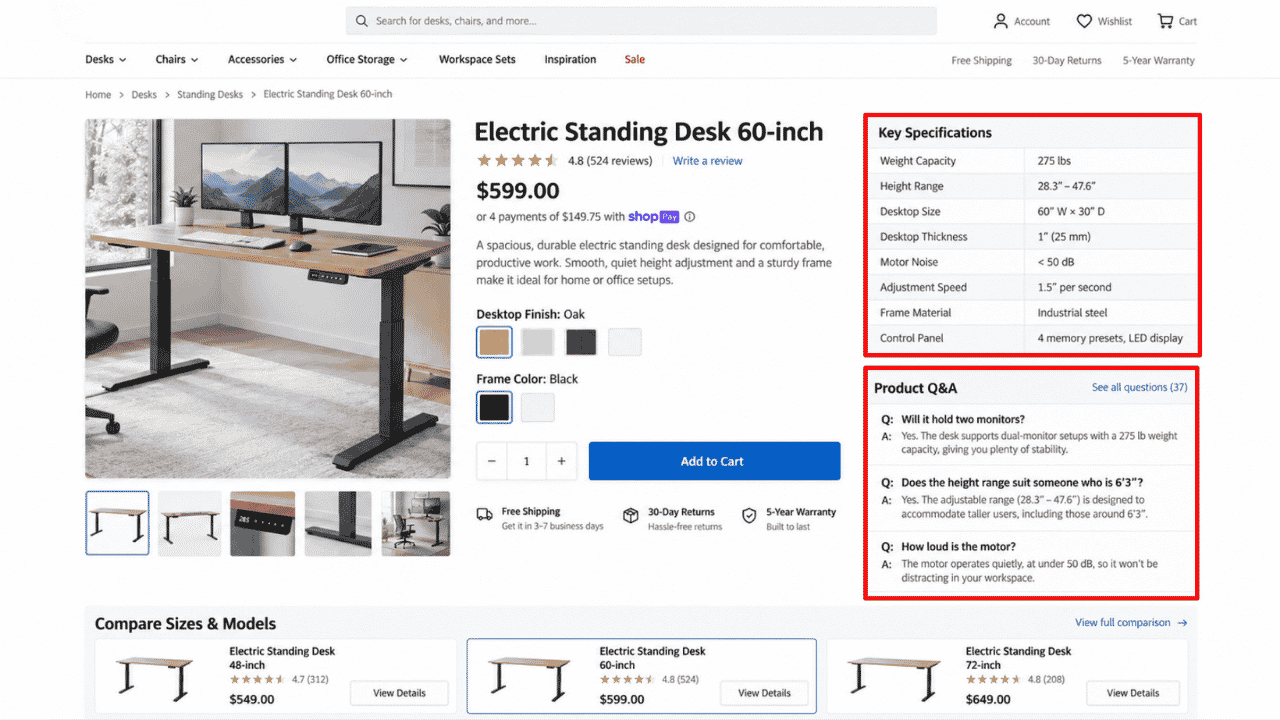
    Picture a store selling standing desks. Week after week the inbox asks three things: will it hold two monitors, does the height range suit someone who is 6’3”, and how loud is the motor? If those answers live in a PDF spec sheet, or nowhere, every one of them becomes a support ticket or a lost sale. Put them on the page as a short Q&A block and they become the reason the shopper buys.

    In ecommerce store audits, one of the most consistent patterns is the gap between what the support inbox gets asked and what the product page actually answers. The same five questions sit in tickets for months while the page stays silent.

    Most stores respond to weak conversion by writing longer product descriptions. That rarely helps. A longer paragraph is harder to scan and harder for a machine to extract an answer from. What works better is a compact spec table, a Q&A block with direct one- or two-sentence answers, and a side-by-side comparison wherever two products get confused. The fundamentals in this guide to optimizing an ecommerce product page for SEO still apply. The difference now is that the answers carry as much weight as the description.

    Use video where seeing beats reading

    Some doubts can’t be settled with text. Scale, texture, assembly, motion, and noise are easier to show than describe. In Wyzowl’s 2026 video marketing survey, 63% of consumers said a short video was how they’d most like to learn about a product, far ahead of text articles at 12%. The same survey found 57% of video marketers said video helped reduce support queries.

    One caveat worth knowing. Wyzowl’s 2026 sample was 266 respondents, so treat those figures as directional, not definitive. The practical lesson still holds. Film the thing customers ask about, not a brand film. A 40-second clip showing a sofa’s cushion depth with a person sitting on it answers more than a polished lifestyle reel ever will.

    Write for the shopper and the shopping agent

    Education content now has two readers. The person on your product page, and the AI system deciding whether your product belongs in an answer.

    Google made this concrete in 2026. Its conversational attributes let merchants add product questions and answers, links to documents like manuals and assembly instructions, and related products such as required parts or accessories. Google describes them as optional fields that help AI systems understand a product’s specific nuances, and recommends adding them through a supplemental data source.

    This is where the advanced insight sits, and most competitors miss it. A single, well-maintained Q&A set can do three jobs at once. It becomes the FAQ block on the product page for shoppers, the question-and-answer data in your Merchant Center feed for AI shopping surfaces, and the knowledge source your support team and chatbot answer from. Write once, answer three times.

    The catch is consistency. Google’s product data specification lists conflicting data between your feed and your website among the common problems that keep products from showing. If the page says the desk holds 300 pounds and the feed says 250, neither answer gets trusted.

    Pre-purchase education that answers real buying questions is also what earns rankings and AI citations, which is why it sits at the center of most ecommerce SEO work. For the bigger picture on how search, answer engines, and AI recommendations now overlap, see how AEO, GEO, and SEO work together.

    Confirm: Remove Doubt at the Moment of Purchase

    Remove Doubt at the Moment of Purchase.image.jpg

    The Confirm stage removes last-minute uncertainty about total cost, delivery timing, return terms, and compatibility. A shopper who felt confident on the product page can still walk away if checkout reveals something they didn’t expect.

    Baymard Institute puts the average documented cart abandonment rate at 70.22% across 50 studies. Many of those shoppers were only browsing. Among the rest, Baymard’s US research found 40% left over extra costs being too high, 13% over an unsatisfactory returns policy, and 12% because they couldn’t see the total cost upfront. None of those are persuasion problems. They’re information problems, which means education can fix them.

    Education at this stage is small and precise:

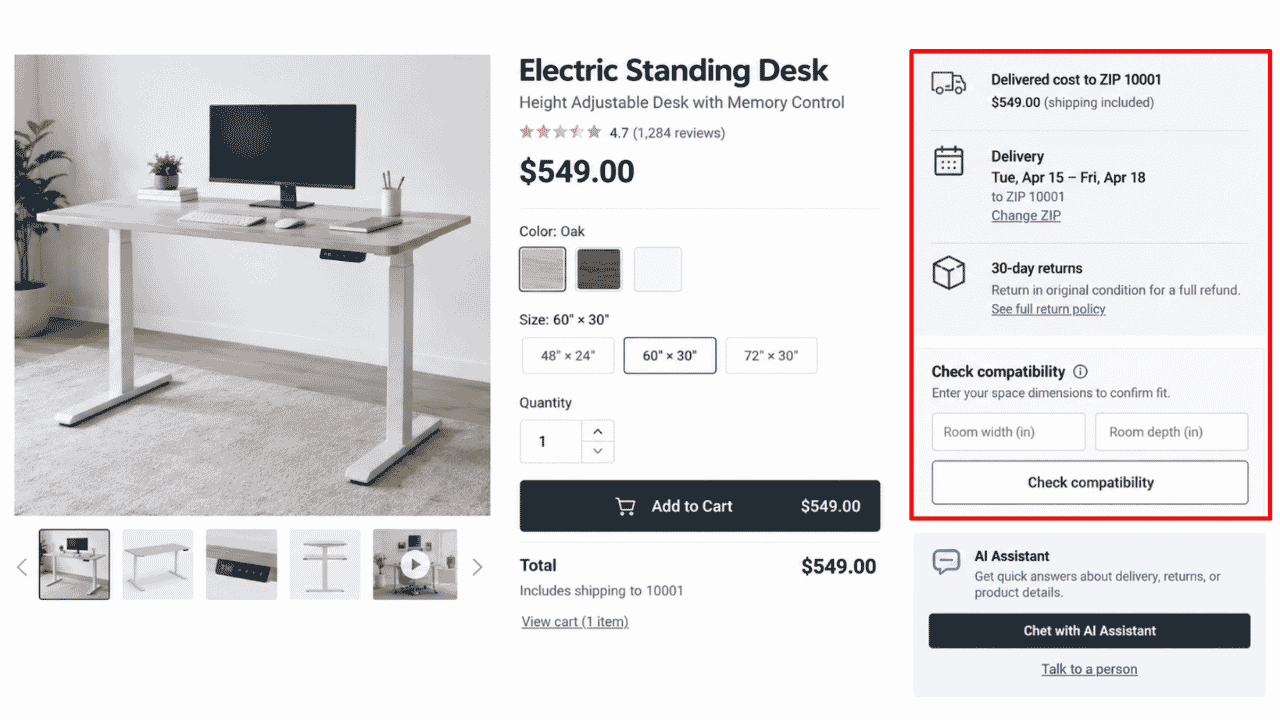
    • A delivered-cost estimate by ZIP code under the price, before the cart.
    • One plain sentence on the return policy next to the add-to-cart button, with a link to the details.
    • A compatibility check for anything that connects to something else, such as filters, replacement parts, chargers, and mounting hardware.
    • A clear delivery window and delivery type for bulky items, stated on the product page.
    • A real person reachable by chat for high-ticket carts.

    That last point matters more as AI chat spreads. Zendesk’s CX Trends 2026 research found 81% of consumers want agents to continue a conversation without backtracking, and 74% get frustrated when they have to repeat information. A pre-purchase chat that already knows which product the shopper is viewing, and passes that context to a human when needed, feels like help. One that restarts from “How can I help you today?” feels like a wall.

    Disclosure matters too. In Salesforce’s State of the AI Connected Customer research, 72% of customers said it’s important to know whether they’re communicating with an AI agent. Label the bot. It costs nothing and protects trust at the exact moment money changes hands.

    For bulky, freight-heavy products, showing the delivered cost early is often the single biggest fix, and this breakdown of home improvement ecommerce marketing explains why in detail. Finding and ranking these checkout leaks is the core of ecommerce conversion rate optimization, and it usually pays back faster than buying more traffic.

    A surprise at checkout undoes every piece of education that came before it.

    Coach: Post-Purchase Education That Prevents Returns and Churn

    Standing desk product page showing setup guides.image.jpg

    Post-purchase education helps customers succeed with what they bought, and it’s one of the most underused retention levers in ecommerce because it targets returns and silent churn directly.

    The returns data shows why. In a September 2025 YouGov survey of 1,311 US adults, 44% of people who returned an item said it didn’t meet their expectations on quality, color, or size, and 39% cited poor fit. Some of those returns are genuine product failures. Many are education failures. The customer didn’t know what to expect, set the product up wrong, or judged it before it had a chance to settle in.

    The first two weeks after delivery are the most valuable window in the whole relationship. The customer is paying close attention, the product is new, and the keep-or-return decision is being made right now. Silence during that window is expensive.

    Stores that log return reasons in free text, rather than a single dropdown, often find that a meaningful share of “defective” or “not as described” returns are really setup or expectation problems. That’s a content gap, not a product gap.

    Coaching looks different by category:

    Product type Common post-purchase confusion Coaching content When to send it
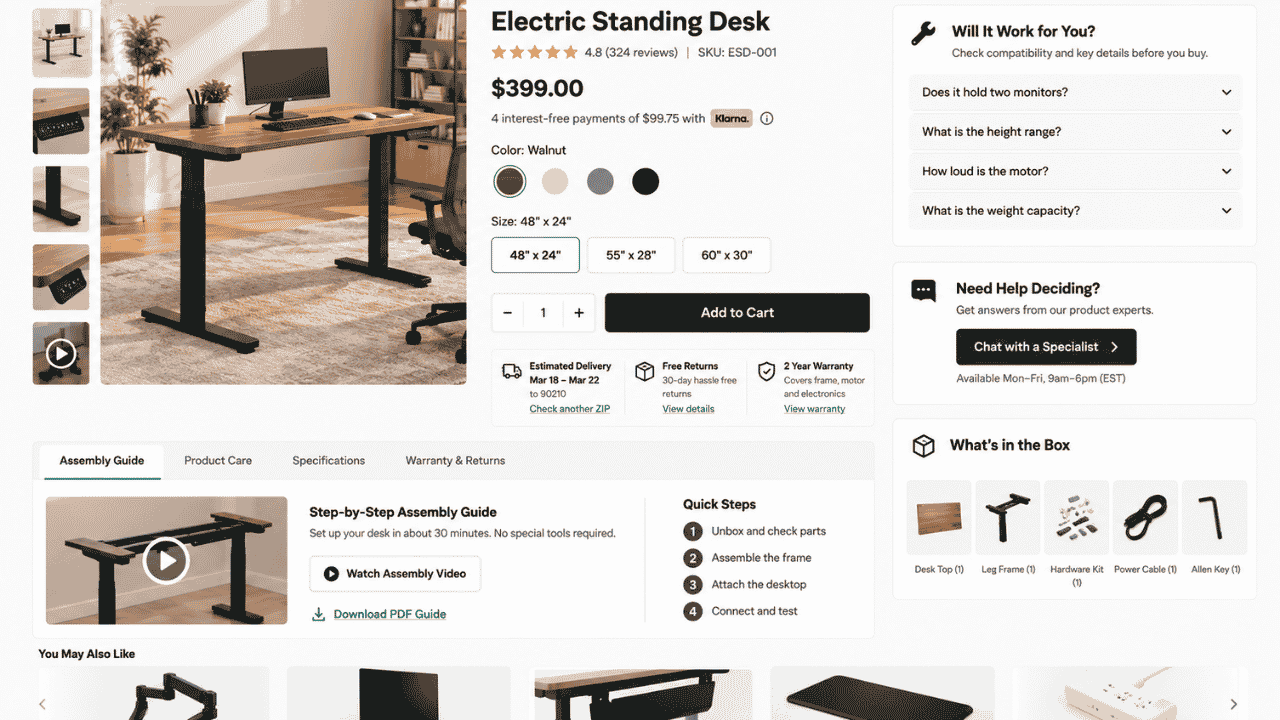
    Furniture Assembly, cushion break-in, fabric or wood care Assembly video, “what to expect in week one,” care guide Before delivery and on delivery day
    Skincare and beauty How to layer products, realistic timeline for results Routine guide, honest week-by-week expectations On delivery, then day 7 and day 21
    Electronics and smart home Setup, pairing, compatibility Quick-start video, short troubleshooting FAQ Delivery day
    Apparel and footwear Fit, sizing, care Fit guide before purchase, care guide after Before shipping and after delivery
    Consumables such as coffee or pet food Getting the best result, knowing when to reorder Usage guide, reorder reminder based on typical use On delivery, then shortly before run-out

    A simple coaching sequence for most stores works like this. The shipping confirmation includes a “before it arrives” note covering what to measure, what to clear, and what’s in the box. Delivery day brings setup help. Around day five to seven comes a short check-in asking how it’s going, with a one-click route to help that catches a problem before it becomes a return request. Only after that, somewhere around day 21 to 30, comes the review request and a relevant next-step suggestion.

    Most post-purchase flows get this order wrong. They send a review request and a cross-sell coupon within days of delivery. Asking for a review before the customer has properly used the product invites silence or a disappointed rating. Coach first. Ask second.

    The case for education-led retention is strongest in software and B2B, where it has been measured most. A Forrester Consulting study commissioned by Intellum, published in October 2019, found 90% of surveyed companies saw a positive return on customer education. That research comes from organizations with formal education programs, mostly selling complex products, so it doesn’t translate directly to a direct-to-consumer store. The mechanism does transfer, though. Customers who know how to get value from a product are less likely to send it back and more likely to buy from you again. For an ecommerce store, the right move is to test that with your own return and repeat-purchase data rather than borrow someone else’s percentage.

    When the Customer Isn’t the Only One Who Needs to Learn

    For products that are installed, serviced, specified, or resold by someone else, engagement depends on educating those people too. Installers, contractors, dealers, designers, and B2B purchasing teams shape the end customer’s experience, and a confused installer can create more returns than a confused shopper.

    Think about a glass railing system sold online and installed by a contractor, a smart thermostat fitted by an HVAC technician, commercial seating specified by a restaurant designer, or flooring laid by a trade professional. The buyer may be a homeowner or a business owner, but whether the product succeeds depends on whoever mounts, connects, or configures it.

    Educating this second audience changes the content in four ways:

    • It has to be task-based. Install sequences, mounting requirements, tolerances, and common mistakes, not marketing language.
    • It has to fit a practitioner’s day. Short, visual, mobile-friendly modules available on the job site, not a 40-page PDF.
    • Some categories need proof of competence. A verified or certified installer program gives end customers a reason to trust the installation, and gives the installer a reason to recommend your brand.
    • B2B buyers need operational education. Spec sheets, reorder paths, account pricing, and lead times matter more to them than inspiration.

    The hard part is that external audiences don’t have to learn from you. Employees can be required to complete training. Customers, installers, and dealers can’t. The training platform How.io makes this point well in its article on marketing strategies for training, arguing that education for external audiences has to borrow from marketing by using short hooks, segmented learning paths, and campaigns delivered over time, because nobody is obligated to log in.

    That idea maps neatly onto ecommerce. A store selling installed products can build an installer resource hub on its own site with spec downloads, install videos, and a quick quiz that gives access to trade pricing. Every installer who trusts your documentation becomes a repeat channel and a source of referrals. Brands selling to businesses face the same dynamic at a larger scale, which this look at B2B ecommerce marketing covers in more depth.

    Compound: Turn Confidence Into Repeat Revenue

    Standing desk product page showing personalized recommendations.image.jpg

    Compound is the retention stage, where a confident customer becomes a repeat customer. It works when every message matches where the customer is in using the product, not when the store simply sends more.

    Send fewer, better-timed messages

    The CSG finding that more than a third of consumers have stopped buying from a brand because of excessive outreach should change how stores plan their calendars. Frequency isn’t engagement. Relevance is.

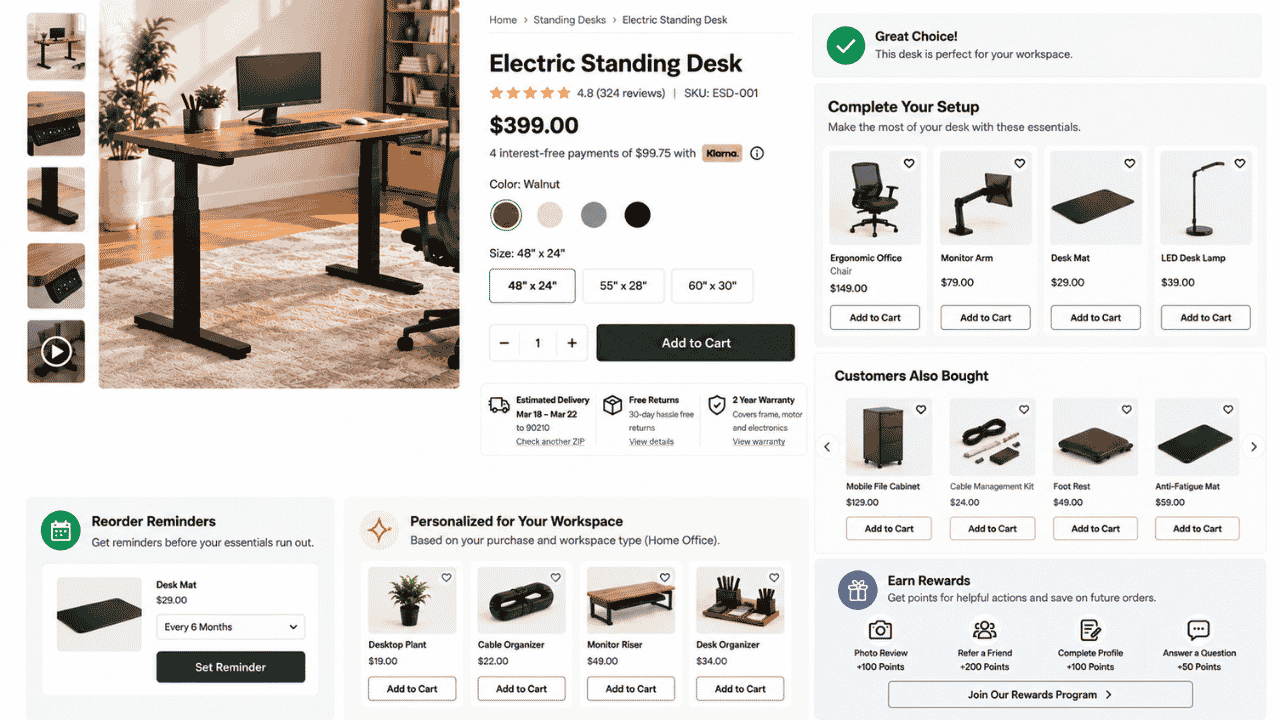
    Time messages to how the product is used, not to the promotional calendar. A coffee subscriber needs a reminder before the bag runs out, not a flash-sale email every Tuesday. A customer who bought a crib is a different person six months later, needing a toddler bed, not more swaddles. Every message should answer “why this, why now” from the customer’s side.

    Cutting volume feels risky, and some revenue from blanket campaigns will drop at first. The test is whether repeat purchase rate and unsubscribe rate improve over the following quarter. If they do, the blasts were borrowing against future engagement.

    Ask for the data you need, and say why

    Personalization only works with data, and customers are wary about data. Salesforce’s research found 64% of customers believe companies are reckless with customer data. Meanwhile Zendesk’s 2026 research found 67% of consumers expect brands to tailor support based on prior interactions.

    The way through that tension is zero-party data, information customers choose to give you because the benefit is obvious. A one-question prompt at checkout asking which room the rug is for, the pet’s age, or the customer’s skin type, paired with a line explaining “so the care tips you receive actually fit,” gets far better response than silent tracking.

    The personalization statistics quoted in almost every engagement article come from a McKinsey article published in November 2021, which reported that 71% of consumers expect personalized interactions and 76% get frustrated when they don’t happen. Those numbers are still directionally useful. They’re also five years old, gathered during a pandemic shopping shift, before AI assistants changed what “personalized” looks like. Treat them as background, not as a forecast for your store.

    Reward behavior, not just spend

    Loyalty programs that only discount repeat orders train customers to wait for the discount and erode margin. Programs that reward useful behavior build the loop instead. Points or perks for a photo review, for completing a preference profile, for referring a friend, or for answering another shopper’s question all create content and trust that feed back into Clarify.

    Early access for repeat buyers, priority support, and free care kits often work as well as discounts and cost less. The goal is to make returning customers feel known, not just rewarded.

    Know what retention is worth to you

    The most repeated retention statistic in ecommerce comes from Bain & Company research, summarized by Harvard Business Review in 2014, showing that a 5% increase in retention can lift profits by 25% to 95%. It’s widely cited and decades old in origin, and the range is so wide it can’t plan anything for you. Run your own numbers instead.

    Here’s a simplified, hypothetical example. A store acquires 10,000 first-time customers a year, and 20% place a second order. Each repeat order earns $60 in gross profit. Lift the second-order rate to 25% through better coaching and better-timed messages, and that’s 500 extra repeat customers, or about $30,000 in additional gross profit before counting third and fourth orders, reviews, or referrals. That’s the business case for education, in a form a finance team will accept.

    Weak retention is one of the common reasons ecommerce businesses fail, usually because acquisition costs keep rising while the customers already won quietly drift away.

    How to Measure Customer Engagement That Actually Pays

    Measure customer engagement through behavior that predicts revenue, such as second orders, conversion after viewing education, and fewer expectation-driven returns, rather than activity metrics like email opens or time on site.

    Activity metrics are easy to inflate and hard to connect to profit. Time on site rises when a page is confusing. Privacy features in some email apps have made open rates unreliable. A busy dashboard can hide a shrinking business.

    Track one or two metrics per stage of the loop:

    Stage Metric Why it matters
    Clarify Pre-sale questions per 1,000 product page sessions Falling numbers mean the page is answering what used to reach the inbox
    Clarify Conversion rate of sessions that viewed a guide, Q&A, or video Shows whether education is helping decisions (see the caution below)
    Confirm Checkout abandonment and the step where shoppers exit Points to the exact information gap at purchase
    Coach Return rate by reason, especially “not as expected” and “didn’t fit” The clearest signal that coaching is working
    Coach Support contacts per order in the first 30 days Rising contacts after a product launch flag missing setup content
    Compound Time to second order and 90- or 180-day repeat rate by cohort The core retention outcome
    Compound Unsubscribe and spam complaint rate per flow Early warning of message fatigue
    Overall Customer lifetime value by acquisition channel Shows which channels bring customers worth keeping

    A word of caution on the second row. Shoppers who watch a product video convert at higher rates partly because they were already serious buyers. That’s self-selection, not proof the video worked. To get a fair read, add the new education to half of a product group and compare it with similar products that didn’t get it, or compare the same products over equal periods before and after. For post-purchase email flows, hold out a small random group that doesn’t receive the flow and compare their return and repeat rates.

    In GA4, set up events for video plays, Q&A expansions, size guide opens, and guide downloads so education engagement can be tied to orders. It takes an afternoon and saves months of arguing about whether content “works.”

    Where AI Helps Customer Engagement, and Where It Erodes Trust

    AI is useful for scaling customer education and support, but it damages engagement when it’s hidden, wrong, or used to send more messages.

    Where AI tends to help:

    • Summarizing thousands of support tickets, chat logs, and reviews into a ranked list of unanswered questions, the raw material for the Clarify stage.
    • Drafting first versions of Q&A answers, care guides, and onboarding emails that a person then checks against real specs.
    • Powering on-site assistants that answer from your own verified product content, with a clear handoff to a human.
    • Timing messages based on usage and reorder patterns rather than a fixed calendar.

    Where it backfires:

    • Hidden bots. With most customers wanting to know when they’re talking to AI, an unlabeled assistant is a trust problem waiting to surface.
    • Unexplained decisions. Zendesk’s research found 95% of consumers expect an explanation for AI-made decisions. If an AI system declines a return or changes an order, the customer needs to know why in plain language.
    • Confident wrong answers. An assistant that tells a shopper a part is compatible when it isn’t creates a return, a support ticket, and a bad review in one move. Ground answers in verified data or route them to a person.
    • Automated volume. AI makes it cheap to send more messages. That’s exactly the wrong use, given how many consumers are already tuning brands out.

    If you use AI to produce product and education content at scale, keep a human editor on every spec, and read up on how generative AI is changing ecommerce SEO before publishing hundreds of pages at once.

    AI should make your answers faster and more consistent. It should never make them less true.

    Putting the Confidence Loop to Work in One Quarter

    A realistic first quarter focuses on your top-selling products, fixes the education gaps customers already complain about, and measures the change before scaling.

    Month one: listen and set a baseline. Pull 90 days of support tickets, chat transcripts, reviews, and return reasons. Tag each by loop stage. Pick your top 20 products by revenue and record their conversion rate, return rate by reason, and pre-sale question volume.

    Month two: fix Clarify and Confirm on those 20 products. Add a short spec table and a Q&A block built from real questions. Record one short video for the most-asked question on each product. Put delivered cost and a one-line return summary near the add-to-cart button. Load the same Q&A into Merchant Center as conversational attributes through a supplemental feed, so the shopper and the shopping agent see identical answers.

    Month three: build Coach and trim Compound. Launch a post-purchase coaching sequence for your two highest-return categories, with a small holdout group. Move review requests to after the coaching emails. Cut one broadcast campaign that doesn’t earn its unsubscribes. At the end of the quarter, compare the 20 products against your baseline and decide what to roll out next. If AI visibility is a priority, work through this GEO checklist alongside month two.

    Conclusion

    Ecommerce customer engagement in 2027 comes down to confidence. Shoppers arrive better informed and less patient, a growing share of discovery happens inside AI tools, and the tolerance for brand noise has worn thin. The stores that keep customers aren’t the ones sending the most messages. They’re the ones that answer the right question at the right moment.

    The Confidence Loop gives that a structure. Clarify the choice before purchase. Confirm the cost, terms, and fit at checkout. Coach the customer through the first weeks with the product. Compound that confidence into repeat orders with fewer, better-timed messages. Then feed what customers ask and share back into the next shopper’s education.

    Measure behavior that predicts revenue, test changes against a fair comparison, and use AI to make answers faster and more consistent, never less honest. Start with your top 20 products and the questions your customers already ask. Those questions are the strategy.

    If you run an established online store and want an outside view of where shoppers are losing confidence, from product pages to checkout, EcomOptix offers a free growth analysis that maps the biggest gaps and the first fixes worth making.

    Frequently Asked Questions

    Customer education raises sales in two places. Before purchase, clear answers about fit, specs, compatibility, and total cost help hesitant shoppers buy with confidence. After purchase, setup and care guidance reduces expectation-driven returns and makes customers more likely to come back, which raises lifetime value without extra acquisition spend.

    Focus on behavior tied to revenue. Useful metrics include pre-sale questions per 1,000 product page sessions, conversion rate after viewing education content, return rate by reason, support contacts per order, time to second order, and repeat purchase rate by cohort. Email open rates and time on site are weak signals on their own.

    Start with the questions customers already ask in support emails and reviews, and answer them directly on your top product pages. Add a short post-purchase email sequence with setup and care tips before asking for a review. Both cost mostly time, and both tend to improve conversion and repeat purchases faster than adding new marketing channels.

    Not in the foreseeable future. AI agents are handling more product research and, for some merchants, checkout, but many consumers remain uncomfortable letting AI act on their behalf. The practical approach is to make product information accurate and consistent enough for both people and AI systems to use, while keeping a strong on-site experience for the shoppers who still visit.

    There’s no universal number, and frequency matters less than relevance. Messages tied to the customer’s actual use of the product, such as setup help, reorder reminders, or a relevant next purchase, tolerate far more frequency than generic promotions. Watch unsubscribe and spam complaint rates for each flow, and cut any campaign that consistently drives them up.

    The most effective formats are short product Q&A blocks, compact spec tables, side-by-side comparisons, short demo or setup videos, fit and sizing guides, and post-purchase care emails. The best choice depends on the doubt you’re removing. Video works for scale, texture, and assembly, while tables and Q&A work for specs and compatibility.

  • Home Improvement Ecommerce Marketing in 2027: The New Rules of Online Growth

    Home Improvement Ecommerce Marketing in 2027: The New Rules of Online Growth

    Home Improvement marketing.jpg

    Home improvement ecommerce marketing is entering 2027 with a new set of rules. For years the formula was simple: buy more traffic, run more promotions, and let the product grid do the selling. That formula is breaking, and a lot of online stores haven’t noticed yet.

    Here’s what the new game looks like. A homeowner wants to replace 400 square feet of flooring in a basement that took on water last spring. Before she ever lands on a store, she asks an AI assistant which vinyl plank holds up to moisture, how many boxes she needs, and whether the underlayment comes attached. If your product data can’t answer those questions, you aren’t part of the answer. If you are, but freight to her ZIP code only shows up at checkout, you lose her there instead.

    The stores still growing online have moved their effort to two places. Upstream, into product data and clear delivered costs. Downstream, into the next project the same customer will start. The stores stuck in place keep paying for traffic that lands on the same thin category pages.

    This guide covers the six new rules of online growth for home improvement retailers in 2027, what is confirmed versus forecast, and a 90-day plan you can start this quarter.

    What Are the New Rules of Home Improvement Ecommerce Marketing in 2027?

    The new rules come down to one shift: home improvement ecommerce marketing in 2027 is about winning the buying decision, not just winning the click. Growth will come from taking market share, because the market itself is barely growing.

    The numbers explain why. The Leading Indicator of Remodeling Activity from Harvard’s Joint Center for Housing Studies, released in July 2026, projects homeowner improvement and repair spending of about $519 billion through mid-2027, with year-over-year growth slowing to 0.5 percent. That is a forecast, and the next update is due October 22, 2026, but the direction is hard to miss.

    Online share keeps climbing anyway. The U.S. Census Bureau’s quarterly ecommerce report put ecommerce at 17.1 percent of all U.S. retail sales in the second quarter of 2026, up 12.2 percent from a year earlier while total retail grew 6.7 percent. That covers all retail, not home improvement alone, but it shows where buying behavior keeps drifting.

    Put the two together and the implication is uncomfortable. When the category is flat, each new online customer is one that a competitor, a marketplace, or a big-box chain failed to keep.

    Your site also does work you never see in the sales report. The Home Improvement Research Institute’s homeowner ecommerce study found that more than half of in-store purchases involve prior online research, and about 40 percent of homeowners want to move freely between online and in-store channels. Homeowners also named cabinets, flooring, exterior doors, and countertops as the products they most want to see in person before buying.

    In a flat market, traffic you can’t convert is just a more expensive way to stay flat.

    Here is what is settled and what is still a projection heading into 2027:

    Development Status Source
    Checkout inside Google AI Mode and Gemini for eligible U.S. retailers, built on the Universal Commerce Protocol Announced January 2026, rolling out Google
    New Merchant Center attributes for product Q&A, compatible accessories, and substitutes Announced, rolling out in stages Google
    500 x 500 pixel minimum for Merchant Center product images Enforcement begins January 31, 2027 Google Merchant Center
    Remodeling spending growth near 0.5 percent by mid-2027 Forecast Harvard JCHS


    The Six New Rules at a Glance

    Together, the six rules below form what we call the Project-Proof Growth Model, a way to plan marketing around how people actually buy home improvement products: by project, by specification, and by total delivered cost.

    Three buying modes sit underneath it. Project-led buyers, renovating a bathroom or rebuilding a deck, need many products in the right sequence and within budget. Inspiration-led buyers, choosing lighting, decor, or furniture, need visual context and confidence in a style. Specification-led buyers, replacing a hinge, ordering lumber, or matching a faucet cartridge, need exact dimensions and compatibility, and little else matters.

    Most catalogs contain all three. Generic ecommerce playbooks treat everything like the inspiration-led mode, which is why so many home improvement stores look polished and still convert poorly.

    New rule The shopper’s question Where it gets answered
    1. Sell the project, not the SKU What do I need for this job? Category pages, project guides
    2. Treat product data as marketing Will this fit and work with what I have? Product pages, Merchant Center feed, structured data
    3. Show the delivered cost early What will it cost to get here, and what if it’s wrong? Product page, cart, shipping and return policies
    4. Market to the next project What do I need next? Email, SMS, accounts, pro programs
    5. Let the feed run paid media Which products deserve the budget? Merchant Center, Shopping, Performance Max
    6. Measure margin, not ROAS Did this order actually make money? Analytics, ecommerce platform, finance


    Rule 1: Sell the Project, Not the SKU

    website showing produts.image.jpg

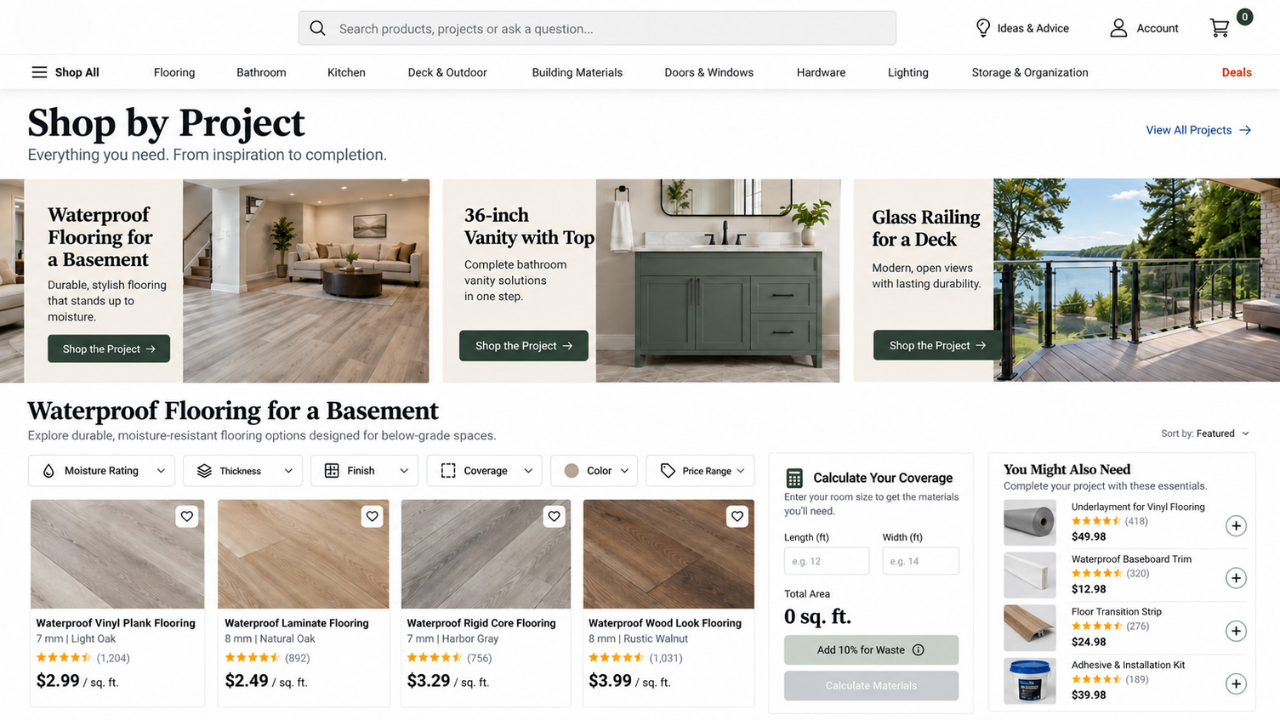
    Home improvement search demand starts with a job, so your category structure should start there too. People search for “waterproof flooring for a basement,” “36-inch vanity with top,” or “glass railing for a deck,” not for your internal taxonomy. Searches like these carry clear buying intent, and our list of high-intent keywords that boost ecommerce sales shows how to spot and use them.

    AI search makes this sharper. Google’s guide to optimizing for generative AI features explains that AI Overviews and AI Mode are rooted in its core ranking systems and use query fan-out, running several related searches behind a single question. Google’s own example is a question about fixing a lawn full of weeds, which fans out into searches about herbicides, chemical-free removal, and prevention. Nearly every home improvement question behaves the same way, so a store whose collection pages cover the real sub-questions of a job gets more chances to be pulled in. Before restructuring anything, it helps to understand how SEO, AEO, and GEO now work as one search system rather than three separate projects.

    The tempting move is to mass-produce a page for every “flooring for X” variation. Google’s same guide says that creating pages for fan-out variations mainly to manipulate rankings or AI responses violates its scaled content abuse policy. What holds up is the opposite. Build fewer, deeper collection pages around real jobs, each with short buying guidance, the filters people actually use (moisture rating, thickness, finish), and a quantity or coverage helper where it applies.

    In the home and furniture store audits we run, the most common gap is a collection page that ranks for almost nothing because it’s a product grid with one generic sentence above it. Our quick test is simple. Can a shopper answer three questions without leaving the page: which one, how many, and what else do I need? If not, that page is your first fix.

    Rule 2: Treat Product Data as Marketing

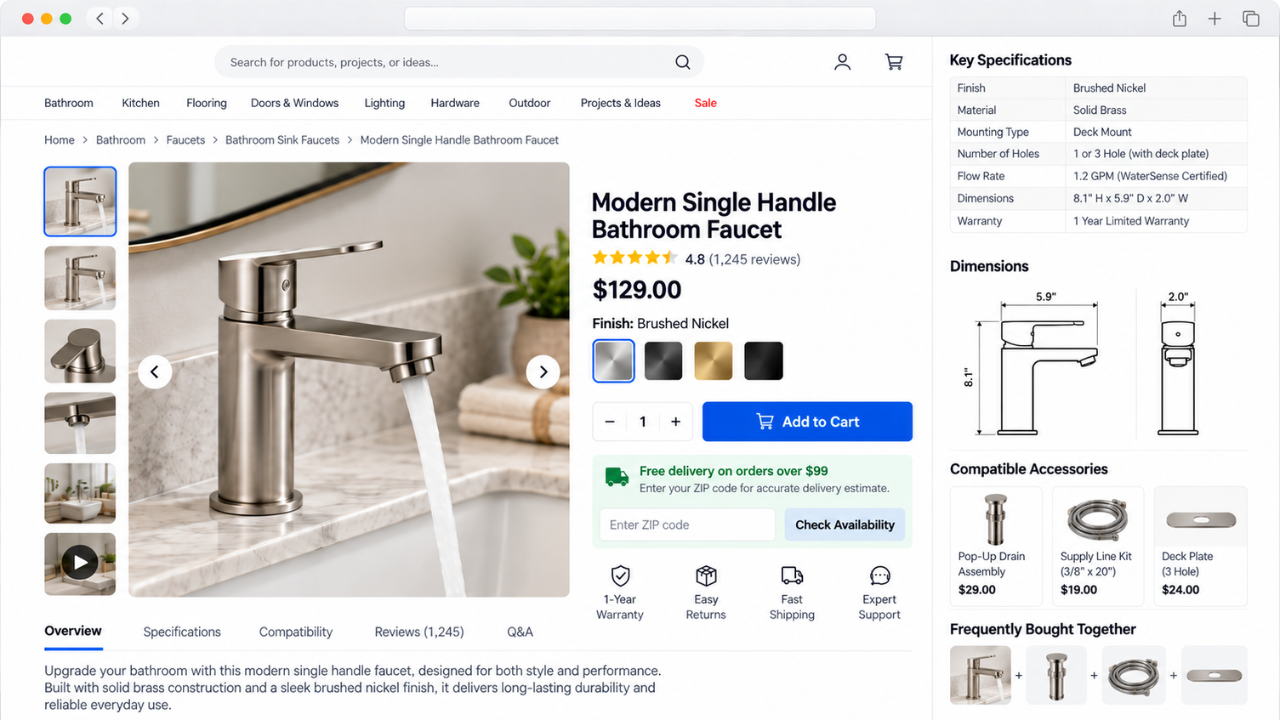
    Ecommerce product page showing a bathroom faucet with technical specifications, dimensions, compatible accessories, and product details.

    Your product data is now your most persuasive marketing asset, because shoppers and AI shopping surfaces both read it before they read your copy.

    Google made this concrete in January 2026. Its announcement of the Universal Commerce Protocol introduced checkout inside AI Mode and the Gemini app for eligible U.S. retailers, a branded Business Agent that answers product questions on Search (launched with retailers including Lowe’s), and dozens of new Merchant Center attributes covering common product questions, compatible accessories, and substitutes. The Home Depot was among the companies endorsing the protocol.

    Much of the data these surfaces need already has a home. The Merchant Center product data specification supports product length, width, height, and weight; up to 100 technical detail rows; up to 30 question-and-answer pairs; related products tagged as required parts, accessories, or substitutes; links to PDF documents such as install guides; and, in the U.S., links to 3D models. Few home improvement stores fill in more than the basics.

    Category Data that decides the sale Where it belongs
    Flooring and tile Coverage per box, thickness, wear layer, water resistance Product details, Q&A, on-page spec table
    Lighting and fixtures Dimensions, lumens, color temperature, bulb base, dimmer compatibility, damp or wet rating Product details, related products (bulbs, dimmers)
    Railings and building materials Dimensions, glass or material thickness, mounting type, weight, certifications Dimension and weight attributes, spec sheet and install guide PDFs
    Hardware and tools Thread size, finish, battery platform, required parts Related products (required part, accessory)
    Kitchen and bath Rough-in, mounting type, valve compatibility Q&A, install guide PDF
    Furniture and decor Assembled dimensions, seat height, doorway clearance, materials Dimension attributes, 3D model link


    Glass railing is a good example of why this matters. It’s a high-ticket, specification-led purchase, and the buyer is usually measuring a real deck, balcony, or staircase. They want glass thickness, mounting style (top-mount or side-mount), hardware finish, and installation details they can check against their own space before they order or request a quote. In our work with railing and furniture stores, the product pages that answer those questions up front are the ones that earn both the order and the quote request. Furniture has the same fit problem with seat height and doorway clearance, which is why it sits at the center of most furniture store SEO work.

    Most stores respond to weak rankings by writing longer descriptions. Almost none complete the structured fields a machine can actually compare. When an assistant narrows results to wet-rated fixtures and your listing never states a rating, the listing has nothing to match on. If you use AI tools to draft descriptions at scale, have a person check every spec, and read up on how generative AI is changing ecommerce SEO before you publish hundreds of pages at once.

    Consistency matters as much as completeness. Merchant Center lists conflicting data between your feed and your website among the common problems that can keep products from showing. Google’s merchant listing structured data supports price, availability, shipping, and return details, and recommends defining shipping and return policies once at the organization level. The on-page basics in our guide to optimizing an ecommerce product page for SEO still apply. The difference in 2027 is that the spec table, the feed, and the markup now carry as much weight as the description.

    Rule 3: Show the Delivered Cost Before Checkout

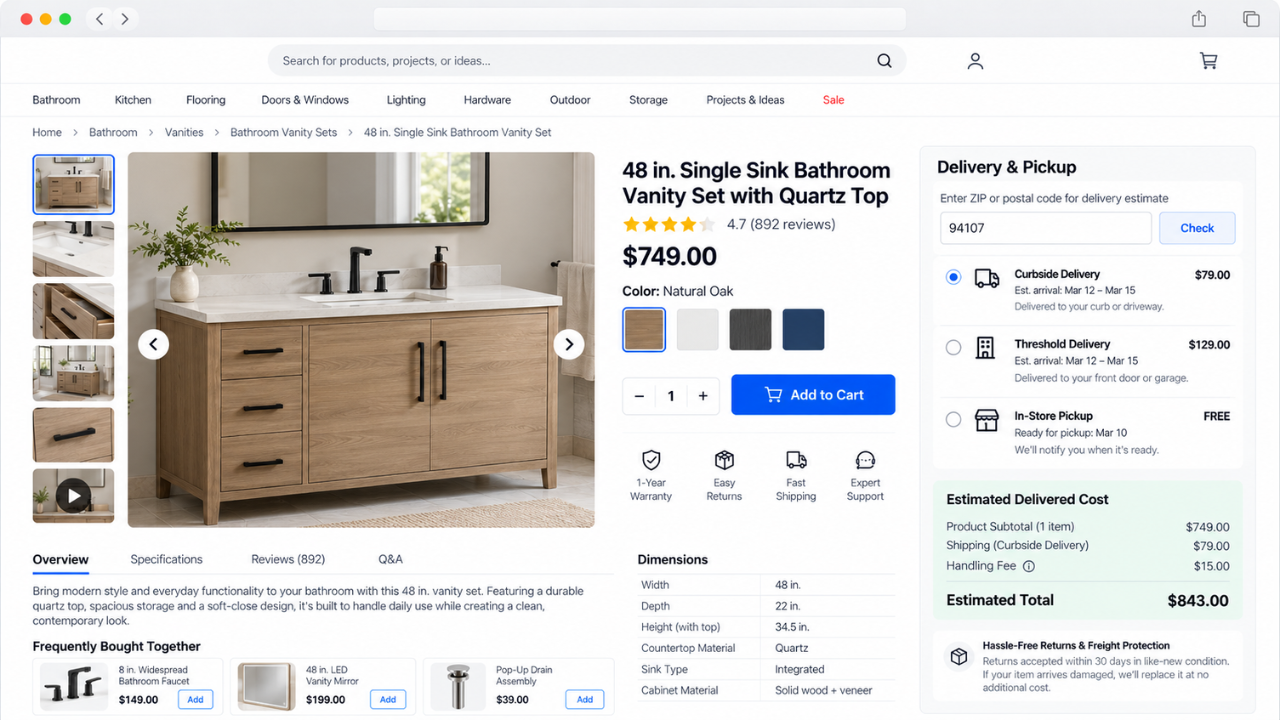
    Home improvement ecommerce product page showing bathroom vanity pricing, shipping options, and total delivered cost before checkout.

    Let’s be honest about why people leave. It’s usually not your button color. It’s the moment they find out what the thing actually costs to get to their door.

    The abandonment data backs this up. Among U.S. shoppers who abandoned a cart for reasons other than browsing, Baymard Institute’s checkout research found 40 percent left because extra costs were too high, 20 percent because delivery was too slow, 13 percent over the returns policy, and 12 percent because they couldn’t see the total cost upfront. HIRI’s homeowner study adds category detail. Difficulty judging product quality, high shipping costs, and the need for same-day delivery or pickup lead more than a third of homeowners to abandon online carts, and younger buyers worry more about damage in transit.

    For bulky, heavy, or fragile goods, those numbers describe a business model problem, not a design problem. A vanity, a pallet of pavers, a set of glass panels, or a sectional sofa carries freight costs that a flat free-shipping banner can’t absorb without wrecking margin. What works better is transparency early:

    • A ZIP-based delivered-cost estimate on the product page, before the cart
    • The delivery type stated plainly (curbside, threshold, or room of choice) with a realistic window
    • A clear damage and return policy for freight items, including who pays return shipping
    • Low-cost samples for flooring, tile, countertops, and paint, the categories homeowners most want to touch first

    These are the fixes that usually move the needle fastest in ecommerce conversion rate optimization for this category, well ahead of redesigns.

    Retailers with showrooms or local stock have another option. Google’s local inventory ads documentation reports that retailers running local inventory ads alongside Shopping ads saw 21 percent more store visits and 9 percent more online conversions for products available in store, based on Google data from July 2023 to July 2024. For buyers near a store, pickup removes the freight question entirely.

    Shipping cost revealed at checkout is the most expensive copy on your site.

    Rule 4: Market to the Next Project

    Ecommerce product recommendations showing matching bathroom fixtures and accessories to encourage repeat purchases.

    Home improvement customers come back on a project cycle, so your retention should follow project stages, not a generic weekly promo calendar.

    Think about it from the buyer’s side. Someone who just laid new flooring is going to need transitions, baseboard, rug pads, and cleaner. A lighting buyer comes back for bulbs and dimmers. A cordless tool buyer is now tied to a battery platform. A homeowner who installed a deck railing may want matching stair sections, lighting, or cleaning and care products. None of this is a mystery, and the related-product data you built under Rule 2 doubles as the logic for your post-purchase flows.

    Capture project context at checkout with one optional question, such as the room, the project type, or the planned completion date, and use it to time follow-ups.

    Contractors and installers deserve their own track. They buy repeatedly, often in larger quantities, and they care far more about saved lists, quick reorders, quote requests, and account pricing than a 10 percent coupon. Building those paths is usually cheaper than buying the next new customer.

    Most stores treat the first order as the finish line. In this category it’s usually the first of several.

    Rule 5: Let the Feed Run Your Paid Media

    paid media for products.image.jpg

    Shopping and Performance Max campaigns can only bid intelligently on products they understand, so feed quality now does much of the work keyword management used to do.

    Two practical moves stand out. First, segment the catalog by economics, not just category. Use Merchant Center custom labels for margin band and freight class, and submit cost of goods sold so reporting reflects gross margin rather than revenue. A $40 faucet and a $1,400 vanity should never share one blended return target. Second, watch Google’s Direct Offers pilot, which lets advertisers show exclusive offers inside AI Mode and is being shaped with brands including Rugs USA. It’s a pilot, so treat it as a test budget, not a plan.

    Assistants beyond Google rely on their own crawlers and sources. A structured GEO checklist for AI citations helps you check crawler access, evidence, and third-party mentions without guessing.

    Rule 6: Measure Margin, Not ROAS

    Ecommerce analytics dashboard showing ROAS, conversion rates, revenue, product performance, and marketing campaign metrics.

    Platform ROAS overstates the value of heavy, freight-intensive, return-prone orders and understates research that closes in a store, so contribution margin per order is the number to manage in 2027.

    Track these at minimum:

    • Contribution margin per order after product cost, freight, payment fees, and expected returns or damage
    • Customer acquisition cost by channel, judged against first-order margin rather than revenue
    • Average order value by project type, since bathroom and flooring projects behave differently from single-item replacement buys
    • 12- to 24-month customer value, because project cycles take time to repeat
    • Quote requests and online-to-offline signals, such as store visits and pickup orders, for high-ticket or multi-location retailers
    • AI visibility, using the Generative AI performance report Google added to Search Console

    Plenty of owners stall here because the measurement stack needs analytics, feed, and platform work at the same time. If you’re weighing whether to build that capability in-house or bring in a partner, this plain-English look at what a digital marketing agency does for small businesses lays out what typically gets handed off and what stays with you. Whoever you choose, an ecommerce marketing agency should report on orders and margin, not just traffic and rankings.

    A 90-Day Plan for 2027

    1. Pull your top 50 SKUs by revenue and score each one for dimensions, key specs, compatibility, Q&A, and image quality against the Merchant Center specification.
    2. Fix mismatches in price, availability, and shipping between your feed and your pages before adding anything new.
    3. Rebuild your five highest-potential collection pages around real jobs, with buying guidance and the filters shoppers use.
    4. Show a delivered-cost estimate and delivery type on the product page for every freight item.
    5. Launch one post-purchase flow per major category, timed to the next likely purchase.
    6. Rebuild reporting around contribution margin and add Search Console’s generative AI report to your monthly review.

    Conclusion: The Stores That Win 2027 Answer First

    In a flat market, the store with the most complete answer gets the sale, whether a person or an AI agent is asking. That means project-level category pages, specification data a machine can compare, delivered-cost certainty before checkout, retention that follows the customer into the next job, and reporting that tracks margin instead of platform ROAS.

    If your catalog has the right products but thin data, the fastest return usually comes from an audit of your top-selling SKUs and collection pages. It’s the first step in most ecommerce SEO services worth paying for, and it’s worth doing whether or not you bring in help.

    Frequently Asked Questions

    AI tools now answer product questions and, for eligible U.S. retailers, can complete checkout inside Google AI Mode and Gemini. That puts more weight on structured product data, such as dimensions, compatibility, and Q&A, because assistants compare listings on those fields. Stores with thin or inconsistent data are less likely to be included in the answer.

    Yes. Shopping ads capture buyers who already know what they want, while SEO and content capture the earlier project research that shapes which store they trust. Both also rely on the same product data, so improving one usually helps the other.

    Show the delivered cost and delivery type on the product page, price freight by zone or class instead of hiding it behind a blanket free-shipping offer, and state your damage and return terms clearly. Samples, local pickup, and quote requests for large orders also reduce abandonment on high-ticket items.

    Technical fixes and product data improvements can help existing traffic within weeks. Organic growth from new rankings usually takes several months, depending on competition, catalog size, and how quickly changes get implemented. Anyone promising guaranteed rankings in a set time frame is overpromising.

    Contribution margin per order, customer acquisition cost by channel, average order value by project type, and repeat purchase value over 12 to 24 months matter more than platform ROAS. High-ticket stores should also track quote requests, and multi-location retailers should track store visits and pickup orders.

  • The Complete Guide to Digital Business Growth Strategies in 2027

    The Complete Guide to Digital Business Growth Strategies in 2027

    guide to digital business growth strategies.image.jpg

    Plenty of small businesses are busy online and still not growing. They post three times a week, boost the odd post, keep a Google Ads campaign running that someone set up two years ago, and send a newsletter when there’s time. Revenue moves a little, then flattens. The problem usually isn’t effort. None of those activities are connected, so nobody can tell which ones pay for themselves and which ones just feel productive.

    The small business growth strategies that hold up in 2027 work differently. They treat digital channels as one system: a focused offer, visibility wherever buyers ask questions (AI answers included), a website that converts, a reason for customers to come back, and a few numbers that tell you where the next dollar should go. Get those pieces working together and growth gets cheaper over time instead of more expensive.

    What digital business growth means in 2027

    Digital business growth is the process of increasing revenue and profit by using digital channels, customer data, and tools as one connected system that attracts the right customers, converts them, keeps them, and learns from every step. It isn’t the same thing as “doing digital marketing.” Marketing is one part of it. Growth also covers your offer, your margins, your customer experience, and the data that tells you what’s working.

    The 2027 part matters because the path to purchase has more stops than it used to. A buyer might read a Google AI Overview, ask ChatGPT for a shortlist, check reviews on a map listing, and only then visit two websites. Your business has to show up, and make sense, at each of those points.

    Digital growth vs. running campaigns

    A campaign is a burst. A holiday sale, a promoted post, a month of ads. When it stops, the results usually stop too. A growth system is built so that each piece makes the next one cheaper.

    Picture a home-goods store running a spring sale on Meta. As a standalone campaign, it brings in orders for two weeks and that’s the end of it. As part of a system, those first-time buyers join an email flow that asks for a review after delivery, suggests a matching product three weeks later, and invites them back for the next launch. The reviews make product pages more convincing. The questions customers ask in support emails become FAQ content that ranks in search and gets pulled into AI answers. The same ad spend keeps paying long after the ads stop.

    Campaigns rent attention. Systems compound it.

    What is digital business strategy?

    A digital business strategy is a plan for where digital technology, data, and channels will give your business an advantage, and where they won’t. MIT’s Center for Information Systems Research describes digital strategy as “a business strategy inspired by the capabilities of powerful, readily accessible technologies.” The important word is business. A digital strategy isn’t a list of tools or a social media calendar.

    For a small business, it comes down to three decisions:

    • Where you’ll compete. Which customers, which offers, which markets.
    • How digital helps you win there. Faster service, better product information, easier buying, stronger visibility for the questions your buyers ask.
    • What you’ll deliberately ignore. The platforms, tools, and trends that don’t serve the first two decisions.

    Digital marketing is the execution layer. Digitization, such as moving invoicing into software, is about efficiency. Digital business strategy sits above both and decides what’s worth doing in the first place. Every sound small business strategy now has a digital strategy inside it, whether it’s written down or not.

    What changed heading into 2027

    Some of what follows is established fact and some is informed expectation. It’s worth keeping the two apart.

    Here’s what’s measurable today:

    What changed heading into 2027.image.jpg

    What that likely means for 2027 is an expectation, not a guarantee. Expect fewer clicks from search, but clicks from people further along in their decision. Being the source an AI answer draws on will matter alongside ranking. And businesses that own their customer relationships, through email lists, CRM data, and repeat buyers, will be less exposed when any one platform changes the rules.

    The Five-Layer Growth Stack

    The most useful way to build a small business growth strategy is as five layers that depend on each other. Skip one and the layers above it get more expensive.

    Layer The question it answers Signs it’s working
    Focus Who are we for, and what do we offer that they can’t easily get elsewhere? A growing share of revenue from your target customer; healthy gross margin
    Found Can the right people find us when they’re looking, including in AI answers? Qualified traffic, growth in branded searches, mentions and citations
    Convert When they arrive, do they buy, book, or inquire? Conversion rate by channel, average order value, lead-to-sale rate
    Keep Do they come back, buy more, and tell others? Repeat purchase rate, retention by cohort, steady reviews and referrals
    Measure Do we know which of the above is actually paying off? Customer acquisition cost, lifetime value, payback period, revenue by channel

    Most small businesses build this stack upside down. They start with Found because it’s the most visible part (buy ads, post more, chase traffic), skip Convert and Keep, and never properly set up Measure. Then they wonder why every new customer costs more than the last one.

    Pouring more traffic into a leaky website doesn’t grow a business. It just makes the leak more expensive.

    The build order matters more than the tactics

    If you already have steady traffic and customers, the order that usually pays back fastest is Focus, then a basic Measure baseline, then Convert and Keep, and only then scaling Found. Fixing conversion and retention first means every dollar you later spend on acquisition works harder.

    If you’re new and have almost no traffic, you can’t optimize what doesn’t exist yet. Get enough visibility to win your first customers and learn from them, then tighten Convert and Keep as soon as you have real data to work with. In both cases, Measure runs underneath everything from day one, even if it starts life as a spreadsheet.

    Layer 1: Focus on the customer, offer, and market you can win

    The cheapest growth strategy for a small business is narrowing down. A clearly defined customer and offer makes every later layer easier. Your content gets more specific, your ads convert better, and your reviews start saying the same thing about you.

    A growth strategy for small business has to respect limited time and money, so focus is where a small team gets the biggest return.

    • Pick a primary customer. Not “homeowners” but “homeowners in older houses who want energy upgrades without a full renovation.” Look at your 20 most profitable customers (profit, not revenue) and write down what they have in common.
    • Pick a hero offer. The product, service, or bundle you most want to be known for. Its margin has to survive the cost of winning a customer.
    • Write one sentence of positioning. “We help [customer] get [outcome] without [the usual frustration].” If you can’t fill that in without sounding like your three nearest competitors, positioning is your first problem, not marketing.
    • Check your unit economics before choosing channels. If your average order earns $15 in gross profit, paid social will be hard to make work. If it earns $400, it might be easy.

    Focus on the customer, offer, and market you can win . image.jpg

    How can small businesses inspire growth in the market?

    Small businesses rarely win by outspending anyone. They win by being more specific, more useful, and easier to trust. That might mean publishing prices when competitors hide them, answering the awkward questions buyers usually only ask on a sales call, showing real people and real work instead of stock photos, or serving a niche that bigger brands consider too small to bother with. Those moves get noticed and talked about. Increasingly, they also get cited by AI tools looking for a specific, credible answer.

    McKinsey’s research on growth found that “eighty percent of growth comes from maximizing the value of your core.” That’s a useful reality check before you launch a new product line or open a new region. Have you actually saturated the customers you already serve well? The classic Ansoff growth directions get riskier in a predictable order: selling more to your current market, taking your current offer to a new market, building new products for current customers, and diversifying into something new. Most small businesses should wring everything out of the first before touching the last.

    When not to expand. Hold off when your core offer doesn’t yet have a repeatable way to win customers, a healthy margin, or the operational capacity to deliver more. Growth that outruns cash and capacity is one of the quicker ways to stall a business. Bureau of Labor Statistics data shows that roughly 1 in 5 new private business establishments close within their first year, and about half are gone within five years.

    Layer 2: Get found across search, AI answers, and paid channels

    Being found in 2027 means showing up wherever buyers ask questions, from traditional search results and AI-generated answers to map listings, marketplaces, and social feeds. For most small businesses, organic search is the compounding base and paid media is the accelerator and testing ground. Getting that relationship backwards is expensive.

    Search is still the foundation, and the entry ticket to AI answers

    There’s plenty of noise about “optimizing for AI,” but Google’s own guidance is blunt. Its documentation for site owners says there are “no additional requirements to appear in AI Overviews or AI Mode, nor other special optimizations necessary.” The fundamentals still apply. Let your pages be crawled, link them together sensibly, put important content in text, make sure structured data matches what’s visible on the page, and keep your Business Profile and Merchant Center information current.

    So the practical work looks familiar, just done more deliberately:

    • Map your most valuable pages (service pages, category pages, core product pages) to the questions buyers ask before they purchase.
    • Fix the technical issues that stop those pages from being crawled or loading quickly.
    • Build content around real buyer questions, not keyword lists alone.
    • Earn links and mentions from sites your customers actually read.

    The standard advice is “publish more blog posts.” What works more often is improving the pages closest to the sale first, then building content that supports them. For online stores, that means category and product pages usually carry more revenue potential than the blog, which is why ecommerce SEO puts so much weight on them.

    AEO and GEO: earning the answer, not just the ranking

    Answer engine optimization (AEO) is about structuring content so search features and AI tools can lift a clear answer from it. Generative engine optimization (GEO) is about becoming a source that AI systems trust enough to cite or recommend. Both sit on top of solid SEO rather than replacing it, which our guide to how AEO, GEO, and SEO drive business growth covers in more depth.

    For a small business, that translates into a few concrete habits:

    • Lead with the answer. Open each important section with a direct answer, then explain. Passages that make sense on their own are easier to quote.
    • Be consistent everywhere. Your business name, location, services, prices, and positioning should match across your website, Google Business Profile, directories, and social profiles.
    • Get talked about elsewhere. Reviews, press mentions, partner pages, and community discussions give AI systems something other than your own claims to work from.
    • Skip the shortcuts. Google says you don’t need new machine-readable files, AI text files, or special markup to appear in its AI features.

    The catch is fewer clicks. With Pew’s data showing clicks to regular results nearly halving when an AI summary appears, visibility and traffic are no longer the same thing. The visitors you do get become more valuable, which is exactly why the Convert and Keep layers matter more now, not less. If you want a hands-on list to work through, this GEO checklist ranks the steps by impact.
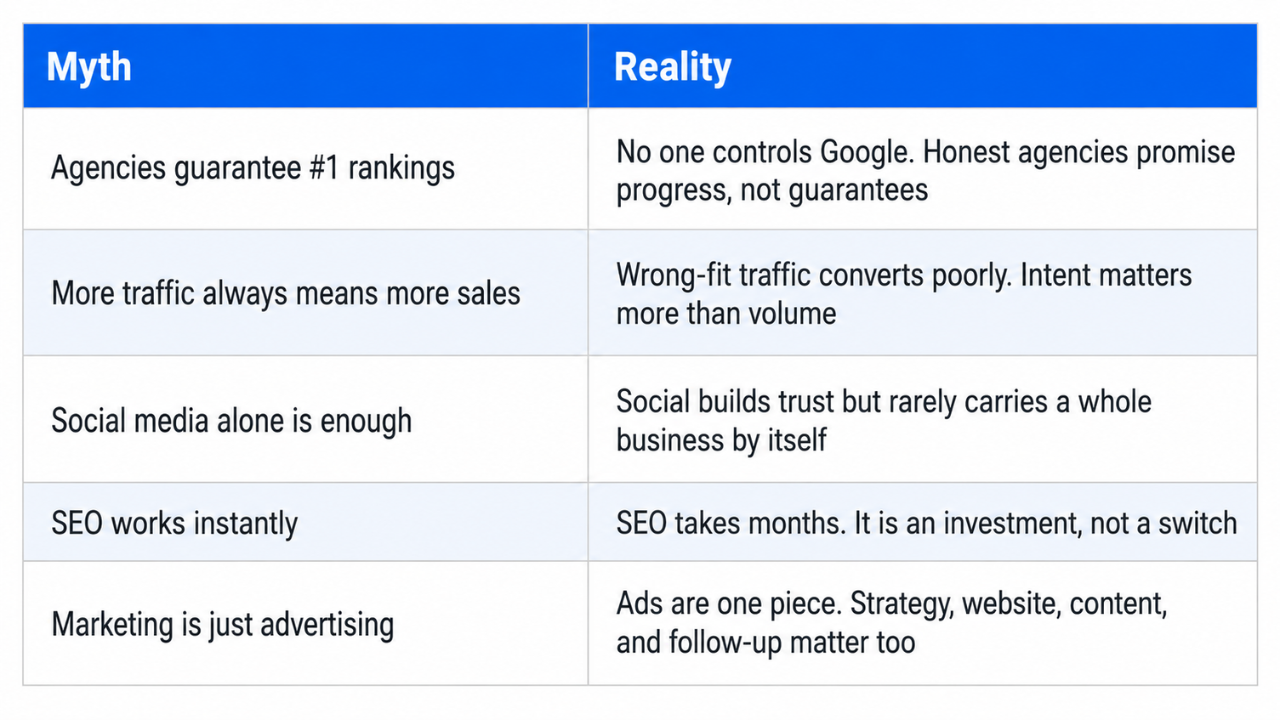
    Local search, if you serve an area

    If customers come to you, or you go to them, your Google Business Profile and reviews are often your most valuable digital assets. BrightLocal’s 2026 survey found that 97% of consumers read reviews for local businesses, 68% will only use a business rated four stars or higher, and 74% look for reviews written in the last three months. Recency matters as much as the rating itself, so a steady flow of reviews beats a one-off push.

    Paid search and paid social are accelerators, not foundations

    Paid media is the fastest way to get in front of buyers and the fastest way to learn which message works. It’s also the fastest way to burn cash when the layers beneath it aren’t ready.

    Paid makes sense when you need customers now while organic visibility builds, when you want to test an offer or message quickly before committing to it everywhere, and when your conversion rate and margins already make the math work. Hold off, or scale back, when your site converts poorly, when you can’t track which clicks become customers, or when gross profit per order can’t cover a realistic acquisition cost.

    A familiar pattern goes like this. A business switches on ads, sees clicks but few sales, and decides “ads don’t work for us.” Usually the ads did their job. The landing page, the offer, or the follow-up didn’t.

    The healthiest setup treats paid and organic as one plan. Paid tests messages and fills gaps. Organic builds the asset that reduces your dependence on paid over time.

    digital-marketing-search-strategy-2027.jpg1

    Content that has a job to do

    Content works when each piece has a clear purpose. Answer a pre-purchase question. Handle an objection. Compare options honestly. Help an existing customer get more out of what they bought. Your best content ideas are already sitting in sales calls, support emails, and reviews. A business that publishes honest answers to the ten questions every prospect asks will usually outperform one that churns out generic tips every week.

    Choosing your channels

    Channel Main cost Time to results Compounds over time? Best when
    SEO (including AEO and GEO) Time and expertise Usually months Yes You can commit for the long run
    Local search and reviews Mostly time Weeks to months Yes You serve a defined area
    Paid search Cost per click Days No, it stops when spend stops People already search for what you sell
    Paid social Cost per impression or click Days Mostly no You need to create demand or test creative fast
    Email and CRM Software and time Weeks Yes You have customers or leads to nurture
    Marketplaces Fees and commissions Days to weeks Partly, but the platform owns the customer Your buyers already shop there
    Organic social media Time Months Slowly You can show your product or work visually and post consistently

    Most small teams can run two or three of these channels well. Very few can run all seven.

    Layer 3: Convert the attention you already have

    For many small businesses, improving conversion is the fastest digital growth lever, because it raises revenue without raising acquisition costs. If your site converts 1% of visitors and you get it to 2%, you’ve doubled sales from the same traffic. No extra ad budget needed.

    Where to look first:

    • Speed and mobile experience. A Google-commissioned study by Deloitte found that a 0.1-second improvement across four speed metrics lifted retail conversions by 8.4%. The study dates from 2020, but slow mobile pages still cost sales. On Shopify stores, heavy themes and stacked app scripts are common culprits, which is the focus of Shopify speed optimization.
    • Clarity above the fold. Within a few seconds, a visitor should know what you sell, who it’s for, and what to do next.
    • Trust signals. Recent reviews, real photos, clear shipping and returns policies, visible contact details, and pricing that doesn’t hide until checkout.
    • Friction. Long forms, forced account creation, surprise costs at checkout, and slow payment steps.
    • Message match. If an ad promises a specific offer, the landing page should open with that offer, not your generic homepage.

    ecommerce-conversion-rate-optimization-2027.png

    How to test when you don’t have much traffic

    Most small sites don’t get enough visitors for reliable A/B tests. Split a few hundred visits a week between two versions and the “winner” is often just noise. At small scale, these approaches tend to work better:

    • Watch session recordings and heatmaps to see where people hesitate or leave.
    • Ask recent buyers, and people who didn’t buy, what nearly stopped them.
    • Make bigger, clearer changes instead of tweaking button colors, then compare performance across similar periods.
    • Fix obvious problems without testing them. A broken mobile menu doesn’t need an experiment.

    This is where structured conversion rate optimization earns its place. It swaps guesswork for a prioritized list of fixes based on how real visitors behave.

    Track conversion rate by device and channel, average order value, cart and checkout abandonment, and, for service businesses, the share of inquiries that become paying customers.

    Layer 4: Keep customers coming back

    Retention is the most underused small business growth strategy, and often the most profitable one. A returning customer doesn’t need to be found again, already trusts you, and is the person most likely to send a friend your way.

    Long-cited research from Bain & Company, summarized by Harvard Business Review, found that increasing customer retention rates by 5% increases profits by 25% to 95%, and that winning a new customer can cost five to 25 times more than keeping an existing one. Those figures are old and will vary by industry, but the direction holds. Acquisition without retention is expensive growth.

    Email and CRM, the retention engine you own

    Email and a basic CRM are the most dependable retention tools a small business has, because you own the list. No algorithm decides who sees your message. In Litmus’s 2025 State of Email survey of nearly 500 marketers, 35% reported a return of $10 to $36 for every $1 spent on email, and another 30% reported $36 to $50.

    Build automated flows before you worry about a regular newsletter, because flows work every day without extra effort:

    • Welcome flow for new subscribers or leads, setting expectations and answering common questions.
    • Post-purchase or post-service flow with care tips, how-to content, and a review request once the customer has had time to use what they bought.
    • Replenishment or rebooking reminders timed to when customers typically need you again.
    • Win-back flow for customers who haven’t returned within your normal buying cycle.
    • Lead follow-up for service businesses, because plenty of inquiries go cold simply because nobody followed up.

    Reviews and referrals turn retention into acquisition

    This is where the layers start feeding each other. Happy customers leave reviews. Reviews lift local rankings and conversion rates, and they increasingly shape AI recommendations. In the same BrightLocal survey, 40% of consumers said they trust AI platforms to provide business recommendations. Build the review request into your post-purchase flow, and give happy customers a simple, specific way to refer someone.

    Personalization with first-party data, without overstepping

    Customers expect relevance. McKinsey’s 2021 research found that 71% of consumers expect personalized interactions, and 76% get frustrated when that doesn’t happen. They’re also cautious. Salesforce’s 2026 State of the AI Connected Customer research found that 71% of customers feel increasingly protective of their personal information.

    The practical answer for a small business is first-party and zero-party data. That means purchase history, preferences customers share directly through quizzes or sign-up forms, and the questions they ask you. Use it to send relevant offers and timely reminders, and be clear about what you collect and why. Google has decided to keep offering Chrome users a choice about third-party cookies rather than phasing them out, but cookie policy shouldn’t drive your strategy either way. Your own customer data is the asset that survives platform changes.

    Track repeat purchase rate, time between purchases, retention by cohort (customers acquired in the same month), churn for subscriptions or retainers, review volume and recency, and the share of new customers who came through referrals.

    Layer 5: Measure what actually drives decisions

    A small business needs a handful of numbers tied to profit, not a dashboard of everything. The core set is customer acquisition cost (CAC), customer lifetime value (LTV), payback period, conversion rate, repeat purchase or retention rate, and revenue by channel. Rankings, traffic, and follower counts are useful diagnostics. They’re not the scoreboard.

    The unit economics most small businesses skip

    Here’s a simplified, hypothetical example. An online store has an average order value of $80 and a 50% gross margin, so each order earns $40 in gross profit. Customers place 2.5 orders on average over two years, which makes lifetime gross profit per customer about $100.

    If paid social brings in new customers at $60 each, the first order loses $20, and the business only makes money if the customer comes back. LTV to CAC sits at roughly 1.7 to 1. Now improve retention so the average customer places 3.5 orders instead of 2.5. Lifetime gross profit rises to $140, the ratio climbs above 2 to 1, and the same ad spend suddenly looks a lot healthier.

    That’s why retention and acquisition can’t be planned separately. Many businesses use an LTV to CAC ratio of around 3 to 1 as a rule of thumb, though the right target depends on your margins, your cash position, and how quickly you need the money back.

    If you can’t say what a customer is worth, you can’t say what you can afford to pay for one.

    business-growth-metrics-cac-ltv-analytics.png

    Be honest about attribution

    No tool sees the whole customer journey. Someone might read your answer in an AI Overview, search your brand name a week later, click an email, and then buy. Last-click reporting hands all the credit to the email. Google also notes that traffic from its AI features is included in overall search traffic in Search Console rather than broken out on its own, so AI visibility rarely shows up as a neat line in your reports.

    A few low-tech habits fill the gaps:

    • Add a “How did you hear about us?” question at checkout or on inquiry forms. Self-reported answers catch word of mouth, podcasts, AI tools, and other sources your analytics misses.
    • Watch branded search volume and direct traffic as signs that awareness is growing.
    • Judge channels over months, not days, and track blended CAC (total acquisition spend divided by total new customers) alongside channel-level numbers.

    A simple growth scorecard

    Metric What it tells you Where to find it How often to review
    Revenue and gross profit by channel Which channels actually pay Ecommerce platform, accounting software, GA4 Monthly
    Blended CAC What a new customer costs overall Ad platforms plus sales data Monthly
    Conversion rate by device and channel Whether your site turns visits into sales GA4 Weekly to monthly
    Repeat purchase or retention rate Whether customers come back Ecommerce platform or CRM Monthly to quarterly
    LTV and payback period How much you can afford to spend on acquisition A spreadsheet built from sales data Quarterly
    Organic clicks, impressions, and branded searches Your visibility trend in search Google Search Console Monthly
    Review volume, recency, and rating Trust and local visibility Google Business Profile, review platforms Monthly

    Where AI and automation fit, and where they don’t

    AI and automation aren’t a separate growth strategy. They’re accelerators that make each layer of the stack faster or cheaper once you know what that layer needs to do. Automating a process that doesn’t work just produces bad results faster.

    Adoption is still early among the smallest firms. US Census Bureau survey data shows overall business AI use hovering between 17% and 20% from December 2025 to May 2026. Less than 20% of firms with four or fewer employees reported using AI, compared with 37% of firms with at least 250 employees. That leaves room for small businesses to gain ground, but it’s not a reason to buy tools before you’ve defined the problem they solve.

    Where AI tends to help small teams:

    • Summarizing reviews, support tickets, and call notes to surface recurring objections and product issues.
    • Drafting first versions of product descriptions, email flows, and ad copy that a person then edits and fact-checks.
    • Producing creative variations for paid testing.
    • Automating reporting so your scorecard updates itself.
    • Handling routine customer questions, with a clear handoff to a person. The same Salesforce research found 72% of customers say it’s important to know whether they’re talking to an AI agent, so be upfront about it.

    Where it backfires:

    • Mass-publishing unedited AI content. Google’s spam policies specifically list using generative AI tools to generate many pages without adding value for users as an example of scaled content abuse.
    • Stacking subscriptions. A business paying for six AI tools that nobody uses consistently has a process problem, not a tooling problem.
    • Replacing judgment and first-hand knowledge. Your experience is what makes your content and service worth choosing. Hand that over completely and you sound like everyone else.

    The rule of thumb is simple. Do it manually until you understand it, then automate the parts that repeat.

    A 90-day small business growth plan

    A realistic 90-day plan fixes the foundations first, then adds visibility, so new traffic lands on a business that’s ready to convert and keep it. Here’s one way to sequence it for a team with limited hours.

    Days 1 to 30: Focus and baseline

    • Define your primary customer, hero offer, and one-sentence positioning.
    • Set up or check conversion tracking in GA4, verify Google Search Console, and make sure your CRM or ecommerce platform records where customers came from.
    • Add a “How did you hear about us?” field.
    • Work out rough numbers for CAC, average order or job value, gross margin, and repeat rate. Rough is fine. Missing isn’t.
    • Audit your top ten pages by traffic and revenue for speed, clarity, and trust gaps.

    Days 31 to 60: Convert and keep

    • Fix the three biggest conversion leaks you found.
    • Launch a welcome flow and a post-purchase or post-service flow, including a review request.
    • Set up a simple win-back or reactivation message.
    • Clean up your Google Business Profile if you serve a local area.

    Days 61 to 90: Get found

    • Improve the pages closest to the sale (service, category, and product pages) for the questions buyers ask.
    • Publish or update content that answers your most common pre-purchase questions.
    • Make your business details consistent across directories and profiles.
    • If your conversion rate and margins support it, run one controlled paid test with a clear success metric.

    After 90 days, go back to the scorecard. Double down on what moved revenue or margin and cut what didn’t. Conversion fixes and email flows often show results early. SEO and AI visibility usually take several months to produce meaningful results, and the timeline depends on your competition, your site’s starting point, and how consistently the work gets done.

    Mistakes that quietly stall growth

    Most growth stalls don’t come from one bad decision. They come from a few habits that feel productive at the time.

    Spreading across too many channels. Six half-maintained channels lose to two well-run ones. Every channel has a learning curve, and small teams rarely have the hours to climb more than a couple at once.

    Treating traffic as revenue. Traffic growth that doesn’t move inquiries or sales is a diagnostic, not a win. Check what the extra visitors actually do.

    Depending on a single platform. A business that makes most of its sales through one marketplace, one ad account, or one social profile is one policy change away from a rough quarter. Diversify gradually, starting with channels you own, like email and organic search.

    Copying enterprise playbooks. Large companies can afford brand campaigns that take years to pay back. Small businesses usually need channels that pay back within months.

    Growing faster than cash and capacity. More orders mean more inventory, staff time, and customer support. Plan the operational side before you push for volume. Many of the common reasons ecommerce businesses fail trace back to this gap between demand and operations.

    When to bring in outside help

    Most small businesses can handle the Focus layer and basic email flows themselves. The areas that usually justify outside expertise are technical SEO, AI search visibility, conversion optimization, and paid media management, where mistakes are expensive and the learning curve is steep. If you’re weighing that decision, this breakdown of what a digital marketing agency does for small businesses explains which services agencies typically cover and when hiring makes more sense than doing it yourself.

    Whoever you work with, ask three things. Who actually does the work? How will results be reported in revenue and profit terms, not just rankings? What gets prioritized in the first 90 days? Be wary of anyone guaranteeing rankings or AI citations, because nobody controls those. If you run an online store and you’re comparing specialist partners, our roundup of ecommerce marketing agencies in the USA is a reasonable place to start your shortlist.

    Conclusion

    The small business growth strategies that work in 2027 aren’t new channels or clever hacks. They’re the fundamentals, connected and done in the right order. Focus the offer, get found where buyers ask questions, convert the visits you earn, keep the customers you win, and measure what actually pays.

    Search is changing, AI is changing how people discover businesses, and clicks are harder to earn than they were. That raises the value of everything that happens after the click. Businesses that get conversion, retention, and measurement right will get more from every visitor, whichever platform sent them.

    Growth that lasts is rarely one big channel win. It’s a stack of connected systems, each one making the next one cheaper.

    Start with the weakest layer in your stack and fix that first. If you run an established online store and want a clear view of where your growth is leaking, EcomOptix works across SEO, AI search visibility, conversion, and paid growth as one plan.

    Frequently Asked Questions

    Start with the low-cost layers that compound. Fix conversion problems on your existing website, set up automated email flows, build a steady stream of reviews, and improve the pages closest to the sale for search. These cost mostly time. Add paid advertising once you know your conversion rate and how much gross profit a typical customer brings in.

    Digital business strategy decides where digital technology, data, and channels give your business an advantage, including which customers you serve, how digital tools help you win them, and what you’ll deliberately ignore. Digital marketing is the execution of part of that plan through channels like SEO, paid ads, email, and social media.

    Conversion fixes and email flows can show results within weeks. Paid ads generate traffic within days, though profitable campaigns usually need a period of testing. SEO and AI search visibility generally take several months, depending on competition, your site’s starting authority, and consistency. A 90-day review is a sensible first checkpoint, with a six- to twelve-month view for organic channels.

    Yes, but mostly by doing SEO well. Google states there are no special requirements to appear in AI Overviews or AI Mode beyond standard best practices. Beyond that, write clear answer-first content, keep your business information consistent across the web, and earn reviews and mentions on credible third-party sites. Nobody can guarantee an AI citation, so treat it as an outcome of being genuinely useful and well known in your niche.

  • What Does a Digital Marketing Agency Do for Small Businesses? (2026 Guide)

    What Does a Digital Marketing Agency Do for Small Businesses? (2026 Guide)

    A plain-English guide to what agencies do, the services they offer, and the results you can realistically expect.

    You know you need more customers. You can feel that more people are searching online than ever, and somehow your competitor down the road keeps showing up first. But when someone says “you should hire a digital marketing agency,” you nod along without really knowing what one does all day.

    You are not behind. Most small business owners are in the same spot. Marketing changed faster than anyone had time to keep up with.

    Here is what changed by 2026. Customers do not just “Google” things anymore. They search on Google, read AI Overviews that answer questions before they click, ask ChatGPT or Gemini for recommendations, scroll social feeds, and check reviews before they ever call you. Your future customer often decides before speaking to a single person. A digital marketing agency exists to make sure your business shows up, looks trustworthy, and gets chosen at each of those moments.

    This guide explains what these agencies actually do, in plain language, with no sales pitch.

    Quick Answer:What Does a Digital Marketing Agency Do for Small Businesses?

    A digital marketing agency helps a small business attract customers online and turn them into sales. It does this through SEO, content marketing, paid advertising, website design and optimization, social media marketing, email marketing, and performance tracking.

    In plain terms: an agency makes sure people can find your business when they search, trust it when they land on your site, and have an easy way to buy or book. Then it measures what works and adjusts.

    A simple way to remember the whole job is the Find, Trust, Buy path. Agencies help customers find you, trust you, and buy from you. Every service below fits one of those three steps.

    What Is a Digital Marketing Agency?

    A digital marketing agency is a company that promotes other businesses online. Instead of newspaper ads or billboards, it uses websites, search engines, social media, email, and online ads to bring in customers.

    The purpose is simple: get the right people to notice your business and take action, like calling a plumber, booking a dentist, or buying a product.

    Here is how that differs from old-school marketing. A traditional advertising company focuses on awareness through print, radio, TV, or signage, and it is hard to know how many customers that billboard brought in. A digital agency works in channels where almost everything can be measured: who saw your ad, clicked, called, and bought.

    Example: A local roofing company is invisible on Google. An agency builds a clear website, gets it ranking for “roof repair near me,” and runs a small Google Ads campaign. Within months the phone rings with people searching for exactly that service. That is the difference between hoping to be seen and being findable on demand.

    Traditional vs digital marketing at a glance.

    Why Is Digital Marketing Important for Small Businesses?

    Digital marketing matters because that is where your customers already are. Around 81% of shoppers research online before they buy, even when the final purchase happens in person. If you are not visible during that research, you are not in the running.

    Customer behavior has flipped. People used to call three businesses and pick one. Now they search, compare reviews, and often decide before any conversation. The business that shows up and looks credible wins the click.

    Local search is the clearest example. Roughly 76% of people who search for something nearby on their phone visit a business within a day. Someone typing “emergency electrician near me” is ready to hire. If your competitor ranks and you do not, that job is theirs.

    Most small businesses do not lose to better companies. They lose to more visible ones.

    How today’s customers move from search to purchase.

    How Does a Digital Marketing Agency Help Small Businesses?

    An agency helps by fixing the specific gaps that stop a business from growing online. Most owners feel a vague problem like “not enough customers.” The agency’s job is to find the exact cause and fix it.

    How Does a Digital Marketing Agency Help Small Businesses (1)

    What most owners get wrong: they assume the problem is “not enough traffic.” Often the traffic is fine and the website quietly loses people who were ready to buy. A good agency diagnoses before it spends.

    What Services Do Digital Marketing Agencies Typically Provide?

    Agencies offer a menu of services. A small business rarely needs all of them at once.

    Search Engine Optimization (SEO)

    SEO makes your website show up higher in search results without paying for each click. It has two parts. General SEO helps your pages rank for what you sell. Local SEO helps you appear in map results and “near me” searches through your Google Business Profile, reviews, and location pages. SEO is slow but compounding: it can take months, but once you rank, the traffic keeps coming for free. You can see our SEO results across ecommerce and local businesses.

    how-seo-works-search-ranking-process.png

    Pay-Per-Click Advertising (PPC)

    PPC is paid advertising where you pay only when someone clicks. Google Ads and Facebook or Instagram Ads are the most common. The advantage is speed: you can appear at the top today, not in three months. But PPC is rented visibility. The leads stop the moment you stop paying, while SEO is visibility you own over time. Many agencies run both.
    Website Design and Optimization

    Your website is your digital storefront. An agency makes sure it loads fast, looks good on a phone, and guides visitors toward one clear action like “Call Now” or “Book Online.” This step is underrated. You can drive all the traffic in the world to a confusing, slow site and still get few customers.

    Website-coversion-funnel.jpg

    Content Marketing

    Content marketing means creating useful blog posts, service pages, guides, and FAQs that answer customer questions. It helps you rank in search and builds trust. In 2026 it matters more than ever, because AI tools like ChatGPT and Google’s AI Overviews pull answers from clear, helpful content, so good content can get you recommended inside AI answers, not just the blue links.

    content-marketing-funnel-stages.png

    Social Media Marketing

    Social media marketing uses platforms like Instagram, Facebook, TikTok, and LinkedIn to build awareness, trust, and engagement. For most small businesses it is a trust and reminder channel, not a direct sales machine. A restaurant’s photos make people hungry; a contractor’s before-and-after posts prove quality. It supports the sale rather than always closing it.

    Email Marketing

    Email marketing keeps you in touch with people who already know you, driving repeat business and referrals through promotions, updates, and reminders. It is one of the highest-return channels: studies regularly find email returns around $36 for every $1 spent, because you are talking to people who already chose you once.

    Analytics and Reporting

    Analytics tells you what is actually working. An agency measures traffic, leads, calls, sales, and return on investment (ROI), then uses that data to decide where to spend next. Without measurement, marketing is guessing. The real value of an agency is knowing which work to do more of.

    marketing-reporting-dashboard-example.png

    What Does Working With a Digital Marketing Agency Look Like?

    It follows a repeating cycle, not a one-time project.

    Step 1: Business Discovery. The agency learns your business, customers, goals, and competitors.

    Step 2: Marketing Strategy. It builds a plan: which services and channels, and what to do first.

    Step 3: Campaign Execution. It builds the website, runs ads, writes content, and optimizes SEO.

    Step 4: Monitoring and Optimization. It tracks results and adjusts what underperforms.

    Step 5: Reporting. It shows you the numbers and what they mean in plain language.

    The five-step cycle most agencies follow.

    Can Small Businesses Do Digital Marketing Themselves?

    Yes, and many start that way. The question is not whether you can, but whether it is the best use of your time.

    DIY digital marketing vs hiring an agency.

    DIY makes sense when budgets are tight, needs are simple, and you have time to learn. Hiring help makes sense when marketing eats hours you should spend running the business, or results have stalled. The honest middle ground: most owners can handle a Google Business Profile and basic social posts, and bring in help for the technical work like SEO and ads.

    What Results Can Small Businesses Expect?

    Realistic results depend on the channel. Paid ads work fast. SEO and content take months but last. Anyone promising instant rankings is selling, not explaining.

    Digital marketing results timeline from 30 days to 12 months.

    By channel: PPC can produce leads in days. SEO usually takes three to six months to show real movement and longer to mature. Content builds slowly then compounds. Social media is a long game of trust. Most businesses see fast early wins from ads while cheaper organic channels build underneath.

    Common Misconceptions About Digital Marketing Agencies

    Common Misconceptions About Digital Marketing Agencies jpg

    If an agency guarantees the top spot on Google, treat it as a warning sign, not a selling point.

    When Should a Small Business Consider Hiring a Digital Marketing Agency?

    Consider hiring when marketing no longer fits into the margins of your day. The clearest signals are limited expertise, no time, stalled growth, rising competition, or plans to expand.

    If you are growing fine and have time to learn, DIY is reasonable. But if leads have flatlined or competitors are pulling ahead, the opportunity cost adds up fast. Every month you stay invisible is customers quietly choosing someone else. There is no shame in either choice; the point is to decide on purpose, not by default.

    Key Questions to Ask Before Hiring an Agency

    • Experience: Have you worked with businesses like mine in my industry?
    • Case studies: Can you show real results from past clients?
    • Reporting: How and how often will you report, and in what terms?
    • Communication: Who is my contact, and how do we stay in touch?
    • Strategy: What would you focus on first for my business, and why?
    • Pricing transparency: What exactly is included, and are there extra costs?


    A trustworthy agency answers these clearly. Vague answers and pressure to sign fast are red flags.

    Final Thoughts

    A digital marketing agency helps your business become more visible online, attract the right customers, and grow steadily over time. It handles getting found, building trust, and turning interest into sales, then measures it so the budget goes where it works.

    You do not need every service, and you do not need to hire anyone tomorrow. What you need is a clear picture of where customers find businesses like yours, and an honest look at whether you have the time and skills to compete there. Whether you do it yourself or hire help, the goal is the same: be easy to find, easy to trust, and easy to buy from.

    Frequently Asked Questions

    Because most customers research online before buying, and competing there takes skills and time most owners do not have. An agency provides the expertise and does the ongoing work.

    It puts your business in front of people actively searching for what you offer, makes you look trustworthy, and turns that attention into calls, bookings, and sales you can measure.

    Planning strategy, executing campaigns, improving your website, creating content, managing ads and social, tracking performance, and reporting results in plain language.

    To connect a business with the right customers online and guide them from first discovery to purchase, efficiently and measurably.

    Marketing is any promotion of a business. Digital marketing is the part that happens online, where results can be tracked precisely.

    Usually through monthly retainers, project fees, or a percentage of ad spend. The ad budget you pay to Google or Meta is separate from the agency’s fee.

    A clear strategy, regular work, honest reporting, and steady progress, not overnight miracles or guaranteed rankings.

    When you lack the time or skills, your growth has stalled, competition is rising, or you are expanding and need to scale visibility quickly.

    Yes, especially basics like a Google Business Profile, reviews, and social posts. The harder, time-heavy work like SEO and paid ads is where most owners benefit from help.

    For most, yes. Channels like SEO and email deliver strong long-term returns, and being findable online is now essential rather than optional.

    A mix usually wins: local SEO and a strong website as the foundation, paid ads for fast leads, and content plus email to build trust and repeat business.

    Paid ads can work in days. SEO and content usually take three to six months to gain traction and longer to mature. Plan for a marathon with some early sprints.

    It varies by service and market. Many small businesses invest a percentage of revenue in marketing; the U.S. Small Business Administration suggests around 7-8% for businesses under $5 million. Ask for clear, itemized pricing.

    Know your goals and budget, ask for case studies and clear reporting, understand exactly what is included, and watch for guarantees that sound too good to be true.

  • The 5 Best Ecommerce Marketing Agencies in Connecticut

    The 5 Best Ecommerce Marketing Agencies in Connecticut

    Running an online store is tough.

    You need to juggle SEO, ads, email marketing, and dozens of other tasks just to stay competitive.

    That’s why finding the right marketing agency can change everything for your business.

    Connecticut has become a hot spot for digital marketing talent.

    But with so many ecommerce marketing agencies in the USA claiming to be “the best,” how do you choose?

    We’ve done the homework for you.

    After looking at real results, client reviews, and what each agency actually delivers, here are the top 5 that stand out.

    Let’s break down what makes each one special and help you figure out which fits your needs.

    1. EcomOptix: The Ecommerce Specialists Who Actually Get It

    EcomOptix

    EcomOptix takes the top spot for a simple reason: they only work with online stores. No dentists, no lawyers, no local plumbers. Just eCommerce, all day, every day.

    Why EcomOptix Works So Well

    Think about it.

    Would you rather have a doctor who treats everything or a specialist who’s performed your exact surgery hundreds of times?

    That’s EcomOptix.

    They know eCommerce inside and out because it’s all they do.

    They understand that selling online is different.

    Your customers can’t touch products.

    They compare prices in seconds.

    They abandon carts for the smallest reasons.

    EcomOptix gets these challenges and knows how to solve them.

    What really sets them apart?

    They treat your store like their own business.

    They obsess over your conversion rates, fight for every ranking position, and celebrate when your sales go up.

    I’ve seen agencies that just go through the motions—EcomOptix isn’t one of them.

    What EcomOptix Does Best

    • SEO That Actually Drives Sales: EcomOptix doesn’t just chase any traffic—they go after buyers. They find keywords people use when they’re ready to purchase, not just browsing. Then they optimize your site so Google can’t ignore it. Most clients see their organic traffic double or triple within a year.
    • Ads That Make Money: Anyone can spend your ad budget. EcomOptix makes it profitable. They set up Google Shopping campaigns that showcase your products perfectly. They create Facebook ads that stop scrollers in their tracks. And they track everything to make sure you’re making more than you spend.
    • Making Your Store Faster and Better: A slow site kills sales. EcomOptix speeds things up, fixes broken checkout processes, and removes anything that frustrates customers. They’re especially good with Shopify and WooCommerce stores.
    • Reports You Can Actually Understand: No confusing jargon or meaningless metrics. EcomOptix shows you exactly what’s working, what isn’t, and what to do next. You’ll always know where your money goes and what you get back.

    Who Should Work with EcomOptix

    If you’re already making decent sales (around $500K+ per year) and want to scale up, EcomOptix is perfect.

    They work especially well with jewelry stores, furniture retailers, and pet supply shops.

    These businesses have customers who buy multiple times, making the investment in good marketing worth it.

    2. Hardy Digital Co.: Your One-Stop Marketing Shop

    Hardy Digital Co.

    Hardy Digital Co. is like having an entire marketing department at your fingertips. They handle everything, which means you don’t have to juggle multiple agencies or freelancers.

    Why Going Full-Service Makes Sense

    Ever tried coordinating different specialists?

    Your SEO person says one thing, your ad manager says another, and your social media team is off doing their own thing.

    It’s exhausting and inefficient.

    Hardy Digital Co. fixes this mess.

    Everyone works together under one roof.

    Your SEO strategy supports your paid ads.

    Your social media reinforces your email campaigns.

    Everything connects and makes sense.

    The result?

    Better results with less headache for you.

    What Hardy Digital Co. Offers

    • SEO That Builds Your Reputation: Hardy doesn’t take shortcuts. They build your search rankings the right way with great content, solid technical work, and real backlinks. It takes time, but the results last.
    • Smart Paid Advertising: They run ads on Google, Bing, Amazon—wherever your customers are. They test different approaches, find what works, and scale up the winners. No guessing, just data-driven decisions.
    • Social Media That Sells: Forget vanity metrics like likes and follows. Hardy creates social campaigns that drive real business results. They turn your fans into customers and your customers into advocates.
    • Building a Brand People Remember: A strong brand lets you charge more and sell easier. Hardy creates logos, messaging, and experiences that make you stand out from the competition.

    Best For Growing Businesses

    Hardy Digital Co. works great for businesses ready to level up their marketing.

    If you’re tired of DIY marketing or working with freelancers, they provide the professional support you need without enterprise prices.

    3. Dido Agency: The Email Marketing Wizards

    Dido Agency

    Most stores treat email like an afterthought. Dido Agency turns it into a money-making machine. They regularly help stores generate 30-40% of total revenue just from email.

    Why Email Still Works (When Done Right)

    Email isn’t sexy or new, but it works.

    Your email list is full of people who already know and like your brand.

    They’re easier to sell to than strangers.

    Plus, you own your email list—unlike social media followers that platforms control.

    Dido Agency specializes in Klaviyo, the best email platform for eCommerce.

    They know every feature, trick, and strategy to maximize your results.

    While others dabble in email, Dido masters it.

    How Dido Makes Email Profitable

    • Automated Campaigns That Run Themselves: Dido sets up email flows that work 24/7. Welcome emails for new subscribers. Reminders for abandoned carts. Win-back campaigns for lost customers. These automated emails make money while you sleep.
    • Treating Different Customers Differently: Not all customers are the same. Dido segments your list so VIP customers get special treatment, bargain hunters see sales, and new customers receive helpful content. Everyone gets emails that actually interest them.
    • Emails That Look Great and Convert: Pretty emails are nice, but Dido focuses on emails that sell. They balance design with clear calls-to-action. Every email works perfectly on phones (where most people read email).
    • Constant Testing and Improvement: Dido tests everything—subject lines, send times, images, offers. They find what works best for your specific audience and keep improving results over time.

    Perfect If You Need More Repeat Customers

    If you’re spending tons on getting new customers but ignoring the ones you already have, Dido can help.

    They’re perfect for stores with good traffic but poor repeat purchase rates.

    4. HiFlyer Digital: Fast Growth Through Aggressive Advertising

    HiFlyer Digital

    HiFlyer Digital is built for speed. They help businesses grow fast through aggressive, data-driven advertising campaigns. Think of them as your growth hackers.

    The Need for Speed

    Sometimes you need results from yesterday.

    Maybe you have investors to impress.

    Maybe you’re racing competitors.

    Maybe you just want to grow as fast as possible.

    That’s when HiFlyer makes sense.

    They don’t waste time with lengthy planning phases.

    They launch fast, test everything, and scale what works.

    This approach isn’t for everyone, but it delivers rapid results when you need them.

    HiFlyer’s Fast-Growth Tactics

    • Advertising Everywhere at Once: HiFlyer doesn’t put all eggs in one basket. They run campaigns on Google, Facebook, Instagram, TikTok, Pinterest—wherever your customers hang out. This blanket approach finds profitable channels quickly.
    • Testing Tons of Creative: Instead of guessing what ads will work, HiFlyer tests dozens of variations. Different images, videos, copy, audiences—they try it all. Data tells them what works, not opinions.
    • Scaling Winners Aggressively: When HiFlyer finds winning campaigns, they pour fuel on the fire. They’ve figured out how to scale budgets quickly without destroying profitability. Most agencies scale too slowly—HiFlyer goes full throttle.
    • Tracking That Actually Works: iOS updates broke most tracking systems. HiFlyer adapted advanced solutions that show which ads really drive sales. You’ll know exactly what’s working, even with privacy restrictions.

    Great for Ambitious Brands

    If you need hockey-stick growth charts or have aggressive revenue targets, HiFlyer delivers. They’re perfect for venture-backed startups or any business that prioritizes growth speed over everything else.

    5. Razor Clicks: Slow and Steady Wins the Race

    razorclicks

    Razor Clicks takes the opposite approach from HiFlyer.

    They focus on sustainable, long-term growth that builds lasting value.

    No tricks, no shortcuts, just solid marketing that works year after year.

    Why Patience Pays Off

    Quick wins often lead to quick losses. Aggressive tactics can trigger Google penalties. Huge ad spends can become unsustainable. Razor Clicks avoids these problems by playing the long game.

    Their strategies get stronger over time.

    SEO builds momentum.

    Content libraries become valuable assets.

    Customer relationships deepen.

    This approach might feel slow at first, but it creates real, lasting success.

    Razor Clicks’ Sustainable Services

    • Clean, Safe SEO: Razor Clicks earns rankings through quality, not tricks. They create great content, earn legitimate backlinks, and fix technical issues properly. Your rankings grow slower but stay stable through algorithm updates.
    • Profitable PPC Campaigns: Instead of chasing growth at any cost, Razor Clicks focuses on profitable growth. They find the sweet spot where your ads make money consistently. No roller coaster rides—just steady returns.
    • Content That Builds Authority: Razor Clicks creates blogs, guides, and resources that position you as an expert. This content attracts free traffic while building trust with potential customers. Over time, it becomes one of your most valuable assets.
    • Partnership, Not Just Service: Razor Clicks acts like part of your team. They share honest feedback, focus on long-term success, and treat your business like it matters (because it does).

    Best for Stable Growth

    Family businesses, bootstrapped startups, and anyone who values stability should consider Razor Clicks. They’re perfect if you want predictable growth without drama or surprises.
    How to Choose the Right Agency for You

    Picking an agency is like dating—you need to find the right match. Here’s how to decide:

    • Pick EcomOptix if: You run an established online store and want specialists who live and breathe eCommerce. You’re ready to invest in serious growth and want an agency that gets the unique challenges of selling online.
    • Pick Hardy Digital Co. if: You want everything handled by one agency. You’re tired of managing multiple vendors and want consistent marketing across all channels.
    • Pick Dido Agency if: Your email marketing sucks and you know it. You have decent traffic but customers rarely buy twice. You want to squeeze more revenue from your existing audience.
    • Pick HiFlyer Digital if: You need to grow fast—like, really fast. You have money to invest and want aggressive growth over careful planning. Speed matters more than sustainability.
    • Pick Razor Clicks if: You prefer turtle speed to rabbit speed (remember who won that race?). You want marketing that builds lasting value, not quick wins that disappear.

    The Truth About Agency Costs

    Let’s talk about money. Good agencies cost $3,000 to $15,000 per month. That might sound like a lot, but here’s the thing: good agencies pay for themselves.

    If an agency charges $5,000 monthly but helps you make an extra $20,000, you’re up $15,000.

    That’s not an expense—it’s an investment.

    Cheap agencies that don’t deliver results are the real waste of money.

    What Happens Next?

    Your competitors are already working with agencies to steal your customers. Standing still means falling behind. The question isn’t whether you need help—it’s which agency fits your situation best.

    Start by being honest about your needs.

    Understanding what an agency can realistically deliver helps you set those expectations.

    Do you want rapid growth or steady progress?

    Do you need specialists or generalists?

    Can you invest for long-term returns or do you need quick wins?

    Once you know what you want, reach out to agencies that match.

    Ask for case studies in your industry.

    Talk to their current clients if possible.

    Trust your gut if something feels off.

    The right agency partnership can transform your business.

    The wrong one wastes time and money.

    Choose carefully, but choose soon.

    Every day you wait is a day your competitors get ahead.

    Common Questions About Marketing Agencies

    How quickly will I see results?

    Paid ads can show results in days or weeks.
    Ecommerce SEO takes 3-6 months for real impact.

    Email marketing falls somewhere in between.

    Good agencies set realistic expectations from the start.

    Run away from anyone promising overnight success.
    Is it better to hire specialists or generalists?

    Depends on your situation.
    Specialists go deeper in their area but you might need multiple agencies.

    Generalists handle everything but might not excel at any one thing.

    Consider your internal capabilities when deciding.

    What are red flags to watch for?

    Agencies that guarantee specific rankings (nobody controls Google).

    Agencies that won’t share clear reports.

    Agencies with cookie-cutter packages for every client.

    High turnover in their client base.

    If something feels sketchy, it probably is.

    Can’t I just do this myself?

    Sure, but consider the real cost.

    Hiring experts, buying tools, training staff—it adds up fast.

    Most businesses find agencies more cost-effective than building in-house teams.

    Plus, agencies bring experience from working with dozens of similar businesses.

    How do I know if an agency is worth the money?

    Ask about specific results they’ve achieved for similar businesses.

    Request references you can actually call.

    Start with a small project to test the relationship.

    Good agencies prove their worth quickly—bad ones make excuses.

  • Top 6 Ecommerce Marketing Agencies Louisiana

    Top 6 Ecommerce Marketing Agencies Louisiana

    Selling online isn’t the hard part. Selling consistently and profitably? That’s the real game.

    The fact remains unchanged that not every agency that claims to do ecommerce actually understands it.

    You will obviously see some decent-looking websites, while others might even run a few Facebook ads. 

    But do you think this is enough?

    No, right?

    You need someone who knows how to convert browsers into loyal buyers.

    It’s not as easy as it sounds, because of the number of agencies that are there in Louisiana. 

    But if you have been reading our pieces, you might know we make the difficult things easy peasy for our readers.

    So, we have already done in-depth research and shortlisted Louisiana’s top agencies.

    Everything you are going to read ahead is what each agency has mentioned on their website.

    So, expect no assumptions or unreliable facts, just actual facts and real expertise.

    EcomOptix

    EcomOptix Logo

    If you run an eCommerce business, you’ve probably dealt with “full-service” agencies that try to do everything for everyone.

    One week they’re building restaurant websites, the next they’re learning what a product feed is.

    That’s not EcomOptix.

    This agency was built specifically for online stores, and it shows in everything they do.

    What sets them apart:

    • Every service they offer, from ad strategy to email flows, everything  is designed only for eCommerce.
    • They’ve helped brands hit 6x return on ad spend and generate over 70% of revenue through email.
    • They work across platforms (Shopify, WooCommerce, custom builds), but always with one goal, growth that’s profitable and scalable.
    • Their dashboards and analytics give you full visibility, no fluff, just numbers that matter.
    • They understand eCom challenges deeply, from high CAC to abandoned carts — and build strategies that actually solve them.

    EcomOptix isn’t an agency that just includes eCommerce, it’s the core of who they are.

    If you’re serious about scaling, this is the partner that already knows what you need, no hand-holding required.

    Online Optimism

    Online Optimism

    For all those who are looking for a team that’s full of fun , is modern, and highly strategic, Online Optimism is your ideal pick.

    They bring you a full-suite approach, from branding and SEO to paid ads and content creation, with specialized solutions for eCommerce brands.

    Notable features:

    • Conversion-focused strategies for Shopify and WooCommerce.
    • Their blog shows a deep understanding of search behavior, customer journeys, and CRO.
    • They’re heavy on transparency and reporting, a plus for growing eCom stores that want visibility.
    • Also offer video and motion design, which is a strong plus for brands that need scroll-stopping creatives.
    • Their “Optimists” (team members) come with industry-specific expertise, not generalists.
    • Great for DTC brands that want a polished identity, along with growth campaigns.

    Online Optimism feels like the kind of team that can help a young brand look and act like a big player.

    Bent Media

    Bent Media

    If you want your eCommerce marketing partner to actually understand web infrastructure, Bent Media brings over two decades of experience.

    Here’s what’s worth noting:

    • They focus on website development, SEO, PPC, and analytics, making them a strong choice for eCom brands needing a technical edge.
    • Their experience includes complex CMS and backend builds, which helps if your store is custom-built or needs serious integration.
    • They work across industries, but have handled multi-site architecture, making them great for eCom with multiple storefronts or regions.
    • They’re also skilled in eCommerce UX strategy, ensuring your site converts,  not just looks pretty.
    • Bonus: Their Google-certified team knows how to turn paid traffic into profitable conversions.

    Not the flashiest brand on this list, but very solid if you’re scaling and need a seasoned team behind the curtain.

    Click Here Digital

    click here digital

    If your eCommerce store is already running paid ads, or thinking about it, Click Here Digital might be exactly what you need.

    They specialize in data-driven ad strategies across just about every major platform.

    Whether it’s Google, Meta, Amazon, Microsoft Ads, OTT, or Programmatic, they do it all, and they do it well.

    Here’s what makes them stand out:

    • They’re a Google Premier Partner, so they know how to spend smart and scale ROAS.
    • Certified by Meta, Amazon, and Microsoft Ads, meaning you’re covered on all fronts.
    • They give you a dedicated account strategist, live dashboards, and transparent performance reports.
    • Bonus: they have an in-house creative team, so your ads don’t just run, they actually look good and perform.

    While they’re not eCommerce-only, their ad expertise and obsession with performance make them a smart choice for brands that want to grow fast through paid channels.

    Vested Marketing

    Vested Marketing

    Vested proudly calls itself “Louisiana’s HubSpot Agency” — and for good reason.

    They’ve carved out a strong niche in inbound marketing, helping businesses grow through strategies like SEO, content creation, lead nurturing, and automation.

    If you’re running a B2B eCommerce brand or selling high-ticket products, Vested’s mix of HubSpot CRM integration and inbound expertise is built to create real, long-term sales pipelines,  not just short bursts of traffic.

    Why they stand out:

    • They’re a Certified HubSpot Partner with proven results, not just buzzwords.
    • Their team is strong in SEO, content workflows, and landing page design — all the essentials for attracting and converting the right audience.
    • They follow a “Growth-Driven Design” approach, which means your website and landing pages keep evolving based on what’s actually working.
    • You get a full suite under one roof: CRM setup, email marketing, lead capture systems, and marketing automation.

    In short, if your brand needs a smart blend of strategy and technology, Vested is one of the few agencies that truly delivers on both fronts.

    BlakSheep Creative

    BlakSheep Creative

    For smaller eCommerce businesses looking for custom branding, content, and local SEO, BlakSheep brings that local Louisiana fire.

    What they offer:

    • Affordable web design, SEO, branding, and social media marketing.
    • Strong focus on small businesses and non-profits, which makes them a good fit for early-stage eCommerce startups.
    • Their websites are built with WordPress or WooCommerce, and come SEO-ready from the start.
    • Their content services include blog writing, press releases, and local SEO, helping new stores get found.
    • They also build branding elements like logos and packaging – helpful if you’re launching a product-based brand.
    • Think of them as a creative partner more than a growth hacker, perfect for getting your store off the ground.

    Final Word: Who Should You Trust with Your eCom Brand?

    All the agencies we covered have their strengths, some are great at content, others at ads or design.

    But if you’re running an online store and want real growth, EcomOptix is the one that stands out.

    Why? Because eCommerce isn’t just part of what they do, it’s the only thing they do.

    You won’t need to explain what a product feed is or why abandoned cart emails matter.

    They already get it.

    Their whole team is built around helping online stores grow –  faster, smarter, and with real results.

    If you’re serious about scaling your eCom business, EcomOptix is the partner that actually knows what it takes.

    Frequently Asked Questions 

    How do I know if an agency actually understands eCommerce?

    Look at their core services.

    Do they talk about product feeds, ROAS, email flows, and conversion rates?

    Or do they just mention “digital marketing” in general?

    Agencies like EcomOptix make it clear they specialize in eCommerce, and that’s a big green flag.

    What’s the difference between a general digital agency and an eCommerce-focused one?

    General agencies might build websites or run social media, but they don’t always understand the buying journey in online retail.

    An eCom-focused agency knows how to drive sales, reduce cart abandonment, build high-converting landing pages, and optimize for platforms like Shopify and WooCommerce.

    I’m just starting my store. Should I still hire an agency?

    Yes, but the right one.

    If you’re early-stage, look for an agency that helps startups with branding, websites, and local SEO without breaking the bank.

    You don’t need enterprise-level services yet, just a solid foundation.

    Why is EcomOptix ranked highest on this list?

    Because they don’t “also” do eCommerce, it’s all they do.

    Their strategies, tools, and team are all built specifically for online stores.

    No fluff, no learning curve.

    Just a deep, proven focus on real growth metrics like ROAS, email-driven revenue, and scaling your brand.

  • 7 Top-Rated eCommerce Marketing Agencies in Alabama

    7 Top-Rated eCommerce Marketing Agencies in Alabama

    If you’re an eCommerce business owner in Alabama, you’ve probably faced the big question: “Which marketing agency should I partner with to actually grow my store?”

    You don’t want generic digital services. You want growth. Real, trackable, revenue-driving growth. So instead of a boring list, let’s flip the script.

    Imagine each of these agencies is applying to work with your brand.

    Here’s what they bring to the table, how they’d pitch themselves, and why they might be the right hire for your eCom journey.

    EcomOptix

    This one is a growth-obsessed strategist who speaks fluent eCommerce.

    EcomOptix

    EcomOptix walks in like someone who already knows your margins, your average order value, and exactly why your ROAS tanked last quarter.

    They’re not here to “run your ads”, they’re here to optimize your entire sales engine.

    They specialize exclusively in eCommerce, and it shows. Their pitch isn’t flashy, it’s focused:

    Why They Stand Out:

    • They don’t just run ads, they build the full journey. From eye-catching paid ads to high-converting landing pages, emails, and CRO, they make sure every piece works together to actually drive sales.
    • Shopify is their playground, but they’re flexible. While they’re Shopify-first, they can work just as smoothly with platforms like WooCommerce.
    • You’re never in the dark. With real-time tracking and clear analytics, you’ll always know what’s working, what’s not, and where to tweak for better results.
    • They’ve scaled brands big time. We’re talking real DTC brands going from $50K a month to over $5 million. This team knows how to grow.


    EcomOptix isn’t just another agency promising big results. They roll up their sleeves and actually build the kind of growth most brands only talk about. 

    They care about your store like it’s their own, digging into what’s working, fixing what’s not, and making sure every move pushes you forward.

    If you’re looking for a team that gets it and grows with you, not just for you, this is the one.

    Webology 

     The SEO Powerhouse With Paid Ads as a Secret Weapon

    Webology

    Webology is that one agency that just talks about SEO, but they will impress you with real results. 

    If you see their past clients, they are all over page one of Google.

    If you want your store to actually get found, they’re the ones who know how to make it happen.

    So what’s Webology’s edge?

    They’re one of those rare teams that really gets eCommerce SEO, whether you’re trying to rank nationally or just dominate your local market.

    They don’t just throw ads at the problem either.

    Their Google Ads + SEO hybrid approach means you’re covered both short-term and long-term.

    They’re big on the details too, like technical audits, smart keyword research, and product page tuning.

    Who’s it for?

    • Brands that are tired of paying too much for clicks.
    • Brands that want to grow steadily, not just spike for a month.
    • And brands that need people who understand how an eCom site actually works, not just how to write blogs.

    Webology doesn’t show off or shout. They just quietly get results, and that’s what makes them stand out.

    NINE 

    The Brand Stylist Who Designs Experiences, Not Just Stores

    the nine digital

    NINE walks in like the creative director your brand never knew it needed.

    They don’t just build websites, they build emotional connections through design and storytelling.

    What NINE Does Best:

    NINE builds every site from scratch to match your brand and your goals.

    They’ve even built their own website editing tool called Caboose, which makes updating your site super easy (no tech skills needed).

    It runs on secure platforms like Heroku and Amazon S3, so it’s fast and reliable too.

    They also handle the full marketing side, SEO, paid ads, email, social, and more, with a focus on getting real results, not just traffic that doesn’t convert.

    Who They’re Great For:

    • Brands that want a website that feels unique and performs well
    • Businesses ready to get serious about digital growth—eCommerce, retail, manufacturing, nonprofits, and more
    • Teams that care about clean design and data-backed strategy

    MarketingPlug

    The Scrappy, Data-Driven Hustler That Gets Results

    Marketingplug

    MarketingPlug comes in with energy.

    They’re not here to overcomplicate things.

    They’re here to make your ads convert, your email click, and your metrics move up and to the right.

    What they bring:

    • Performance marketing for eCommerce, especially Meta & Google Ads.
    • Email/SMS retention campaigns, not just flows—but real segmentation strategy.
    • Nimble, budget-smart execution, perfect for small to mid-size brands.

    MarketingPlug is for you if:

    • You’re budget-conscious but need impact fast.
    • You’re testing product-market fit and need a partner who moves quickly.
    • You want a young, aggressive team that’s deeply in tune with paid media.

    They’re your ride-or-die if you’re growing and want a plug-and-play performance team.

    Intero Digital

    The Versatile Corporate Marketer With eCom Capabilities

    intro digital

    Intero doesn’t just dabble in eCommerce—they bring the full suite.

    With a big-agency feel and the portfolio to match, they combine SEO, paid ads, content, Amazon marketing, and PR into one tight strategy.

    If your business spans more than just a single store, they’re built to handle that complexity.

    What they bring to eCom brands:

    • Smart, performance-driven marketing for both Amazon and Shopify
    • SEO, paid search, and content that builds long-term visibility
    • A national team with deep Alabama roots and coast-to-coast delivery power

    When Intero makes sense:

    • You’re selling on multiple channels, Shopify, Amazon, maybe even wholesale
    • You’re not just running ads, you need a coordinated, multi-service strategy
    • Your business is growing fast, and you need a team that can scale with you

    Intero is that rare agency that can zoom out, see the bigger picture, and stitch all your moving parts into a plan that actually works.

    If you’re not just building a store, but building a brand that lives across platforms, this is the partner that knows how to keep up.

    ScaledOn

    The Performance Architect Focused on Retail + eCom

    ScaleOn

    ScaledOn shows up with big-picture strategy and deep media buying expertise. Their sweet spot? Brands that straddle online and retail and need scalable ad structure across both.

    What they do best:

    • Google & Meta Ads, with advanced campaign structures.
    • Marketplace advertising for Amazon, Walmart, and more.
    • Retail-to-DTC strategy, helping brands unify sales channels.

    ScaledOn is a smart hire if:

    • You’re transitioning from retail to DTC (or doing both).
    • You need an ad partner with enterprise campaign structure.
    • You want a team that understands national expansion, not just local growth.

    They think like a strategist, act like a performance team, and bring a global lens to the Alabama market.

    To Bring it All Together

    All seven agencies bring something strong to the table, whether it’s creative design, smart SEO, or data-backed ad campaigns.

    But let’s cut to the chase: if you’re running an eCommerce brand and want real growth, EcomOptix is hard to beat.

    While others might specialize in parts of the journey, EcomOptix looks at your store end to end, from clicks to conversions to customer retention.

    They’re not just another marketing team; they’re strategic thinkers who care about your margins, your growth curve, and the actual dollars hitting your account.

    They work like a partner, not a vendor.

    You’ll get clear direction, full transparency, and results that don’t just look good in a report, but make a difference in your bottom line.

  • Top 10 Marketing Agencies in Missouri for eCommerce Growth

    Top 10 Marketing Agencies in Missouri for eCommerce Growth

    Are you working hard to grow your online store in Missouri? Do you feel lost looking for a team that will really help you sell more? Perhaps you’ve tried ads, but your sales haven’t increased. Maybe your website looks nice, but shoppers do not buy. You are not the only one. Many business owners have the same worries.

    The right marketing agency can make a big difference. They know how to bring the right people to your shop. They help you turn visitors into loyal, paying customers. But picking a marketing agency is not easy. There are many choices online. You want a partner who understands your needs, listens to your goals, and explains things simply.

    This blog lists the top ten ecommerce marketing agencies in Missouri. These are real teams with real stories. They know Missouri, and they know how to help online stores just like yours.

    1. EcomOptix – Missouri’s Ecommerce Growth Partner

    EcomOptix – Missouri’s Ecommerce Growth Partner

    EcomOptix is known for helping online stores grow fast. They use clear, easy-to-follow plans. They work with platforms like Shopify and WooCommerce. Their team builds fast websites that work on any device.

    What do they do?

    • Build and update online shops
    • Make websites run faster
    • Help you get noticed on Google with SEO
    • Run ads on Google, Facebook, and Instagram
    • Set up email lists to bring shoppers back

    Why use EcomOptix?

    • They use simple steps that are easy to understand
    • They show you what works with precise numbers
    • Their main goal is to help you earn more
    • They talk to you often and answer questions

    Shops that work with EcomOptix typically experience increased foot traffic and sales in the first few months.

    2. Intero Digital

    Intero Digital is based in Columbia, Missouri. They help online stores get more website visitors and shoppers. Their team is strong in SEO and digital advertising.

    What do they do?

    • Improve your search rankings on Google
    • Run brilliant digital ad campaigns
    • Give clear reports each month

    Why do people pick Intero Digital? They focus on getting good traffic, not just more clicks. You see who is buying and why.

    3. Sellozo

    If you sell products on Amazon, Sellozo makes your ads work much better. Their software identifies what works and prevents you from wasting money on ads that don’t generate sales.

    What do they do?

    • Manage Amazon ads for you
    • Automate and improve ad campaigns
    • Show easy-to-read reports

    If you want to grow on Amazon, Sellozo is a smart partner. You do not need to be a tech expert, they make it easy.

    4. Out of Bounds Communications

    Out of Bounds Communications is in Kansas City. Some agencies waste your money on random ads. This team sets up smart paid search ads. They know how to target individuals who are ready to make a purchase.

    What do they do?

    • Run Google and Bing ads
    • Build ads for real shoppers
    • Adjust campaigns as you grow

    Their clients feel like Out of Bounds is part of their own team, not an outsider.

    5. The Peachy Company

    The Peachy Company focuses on helping stores get more profit, not just more clicks. This means helping you find new shoppers and encouraging your existing customers to make repeat purchases.

    What do they do?

    • Plan long-term growth
    • Set up email offers to past buyers
    • Run loyalty and rewards programs

    You can see your results easily. They always link actions to real sales.

    6. Redline Minds

    Redline Minds is for stores that want to look better, work better, and sell more. If your website is slow or hard to use, they can help.

    What do they do?

    • Build and fix ecommerce websites
    • Improve sales by making checkout simple
    • Add tools that help you see what shoppers like

    They mix technical skills with innovative design.

    7. Growth Bureau

    Growth Bureau

    Growth Bureau helps your store get more visitors from search engines. This means customers can find you, even if you stop running ads.

    What do they do?

    • Plan your keywords
    • Write blog posts and website pages that people find useful
    • Keep your website strong

    Their approach works best for individuals who seek long-term, steady growth, rather than just quick wins.

    8. INSITE ADVICE

    INSITE ADVICE

    INSITE ADVICE covers everything from web design to digital ads. They make plans for every type of online business and are based in St. Louis.

    What do they do?

    • Design new websites
    • Run digital and social ads
    • Create marketing plans you can follow

    Their team explains things clearly and adjusts to your needs.

    9. Mindstream Media

    Mind Stream Media Group

    Mindstream Media works with bigger brands. They can help you if you want to grow your store outside Missouri or even across the country.

    What do they do?

    • Run big ad campaigns in print, online, and social media
    • Build detailed plans for lots of products
    • Track results so you know your money is well spent

    If you want to reach more people in more places, Mindstream knows how.

    10. McElligott Digital Marketing

    McElligott Digital Marketing

    This team is great for small shops, especially if you’re just starting with digital marketing. They assist with essential tasks such as local SEO and website updates.

    What do they do?

    • Local search marketing
    • Update and improve your website
    • Set up ads for a small budget

    They make marketing feel simple, not stressful.

    Final Thoughts

    Missouri has many talented ecommerce marketing agencies. Some focus on small shops just starting. Others work with big brands on national campaigns. EcomOptix is a favorite for honest plans and precise, data-based results. The other teams on this list each offer specialized skills, ranging from website design and advertising to SEO and customer loyalty.

    You want a partner, not just a service provider. Good marketing grows your store step by step. Take your time. Ask questions. Choose a team that talks with you, listens, and explains things in a way you understand.

    Ready for better sales and less stress? Start talking to one of these top ecommerce marketing agencies in Missouri today. Your online store’s next chapter could start right here.


  • 6 Best eCommerce Marketing Agencies in South Carolina

    6 Best eCommerce Marketing Agencies in South Carolina

    If you’re running an eCommerce business, you know how competitive the online space can be.

    Whether you’re just starting out or looking to scale, working with the right marketing agency can make all the difference.

    South Carolina is home to some of the best eCommerce marketing agencies out there, each offering its unique expertise to help your online store grow and thrive.

    Here are 6 of the best eCommerce marketing agencies in South Carolina, each with its own specialties, and we’ve got to say, if you’re serious about your business, you’re in good hands with any of these agencies!

    Ecomoptix – The Ultimate Data-Driven Partner for Your eCommerce Growth

    Ecomoptix - The Ultimate Data-Driven Partner for Your eCommerce Growth

    If reliable results are what you’re after, EcomOptix is the eCommerce agency that delivers, no fluff, just performance.

    Widely regarded as one of the best eCommerce marketing agencies in South Carolina, EcomOptix combines precision, performance, and deep data expertise to help online stores scale smarter, not harder.

    This is not your run-of-the-mill agency that throws ads into the void and hopes something sticks.

    EcomOptix goes deeper.

    Their entire approach is grounded in real-time analytics, conversion-focused strategies, and full-funnel optimization, meaning they don’t just bring traffic to your site.

    They turn that traffic into sales and, more importantly, loyal customers.

    Why Brands Trust EcomOptix (And Why You Should Too)

    EcomOptix has built a name for itself by helping eCommerce brands achieve measurable, consistent, and sustainable growth.

    Whether you’re struggling with high bounce rates, abandoned carts, or poor ad performance, this agency dives in with tailored strategies that fix the leaks in your funnel and keep your business growing.

    What They Do Best:

    • Full-funnel eCommerce optimization
    • Conversion Rate Optimization (CRO) and UX/UI improvements
    • Data analytics to boost performance
    • Paid media strategy (Facebook, Instagram, Google)
    • Email marketing campaigns that actually work

    Ecomoptix’s results speak for themselves, they consistently help clients increase their conversion rates and ROI.

    If you’re serious about growing your online store, this is the agency to get on your side. 

    Lounge Lizard – Creativity Meets Functionality

    Lounge Lizard

    If you’re looking for a digital agency that mixes creativity with solid, high-performing eCommerce solutions, then Lounge Lizard could be exactly what you need.

    They’re well-known for their stunning website design, strong branding, and top-notch SEO services. 

    What sets them apart is their ability to create online stores that not only look amazing but also work seamlessly.

    Think of them as digital machines running on creativity and functionality.

    Lounge Lizard has worked with some big-name clients, and their portfolio really speaks for itself.

    They know how to craft eCommerce experiences that feel personal, unique, and, most importantly, effective. 

    So, if you’re in the market for a website that doesn’t just catch eyes but also turns visitors into loyal buyers, Lounge Lizard has the expertise to make that happen.

    Here’s What They Do Best:

    • Web Design & Development – Crafting sites that are both beautiful and functional
    • Branding & Identity Creation – Building brands that truly stand out
    • Custom eCommerce Solutions – Tailored designs and solutions for unique business needs
    • SEO & Digital Marketing Strategy – Making sure your store gets seen by the right people

    Their ability to blend creativity with practicality makes Lounge Lizard a go-to choice for any business ready to level up its digital presence. 

    Whether you’re just starting out or looking to redesign, they’ve got the skills to help you stand out and succeed.

    2 Visions – Smart Strategies, Real Results

    2 Visions

    Some agencies give you the same plan they give everyone else. 2 Visions doesn’t play that game.

    They take the time to really get to know your brand, what makes it tick, who your customers are, and where you want to go.

    Then they build a strategy that’s made just for you.

    No guesswork, no shortcuts.

    Whether you’re trying to get seen online, run better ads, or turn more visitors into buyers, they know how to make it happen.

    What they’re really good at:

    • Building custom marketing plans for your business
    • Helping you show up on Google with smart SEO
    • Running paid ads that don’t waste your budget
    • Making sure more people hit “buy” on your site

    If you’re after real growth that lasts, not just a short-term spike, 2 Visions is a team that rolls up their sleeves and gets it done the right way.

    Lagom Pack – Simplicity Meets Effectiveness

    Lagom Pack

    Sometimes, less is more. If you’re looking for a streamlined approach to eCommerce marketing that cuts through the noise, Lagom Pack is the agency for you. 

    Known for simplifying complex eCommerce strategies, they focus on creating clear, effective campaigns that drive results without overwhelming you with unnecessary details.

    They help you with everything from web design to SEO, and their emphasis on user-centered design ensures that your customers will have an intuitive and enjoyable shopping experience.

    What They Do Best:

    • Brand strategy and identity
    • eCommerce web design & development
    • SEO and content marketing
    • Digital strategy and analytics

    For businesses that want to stay focused on their core goals while achieving great results, Lagom Pack offers a simple but powerful approach.

    Tekli – Performance Marketing That Actually Performs

    If you’re serious about scaling your eCommerce business, Tekli is a name you’ll want to remember.

    Tekli isn’t just another agency running ads, they’re a performance-first powerhouse built around one core mission: delivering real, measurable results. 

    Whether you’re trying to drive high-quality traffic, optimize conversions, or make every marketing dollar count, Tekli brings a strategic, data-backed approach to the table.

    They understand that in today’s competitive market, guesswork doesn’t cut it. That’s why every campaign, every tweak, and every strategy is grounded in data and built to perform.

    What Tekli Does Best:

    • Paid Media Strategy – Expert management of Google Ads, Facebook Ads, and Instagram Ads to reach the right audience and maximize returns
    • SEO & SEM – Helping your brand get found by the people who are actively searching for what you offer
    • Website Development & CRO – Building and optimizing websites that not only look great but convert like clockwork
    • Analytics & Reporting – Clear, actionable insights to keep your campaigns on track and performing at their best

    Tekli focuses on outcomes, not just activity. Their team is hands-on, transparent, and obsessed with performance. 

    Whether you’re launching a new product, entering a new market, or trying to break through growth plateaus, Tekli brings the experience and execution to make it happen.

    Four15 Digital – Driving Sales with Intelligent Digital Strategies

    Four15 Digital - Driving Sales with Intelligent Digital Strategies

    You know how some agencies talk a big game but struggle to deliver real results? Yeah, Four15 Digital isn’t one of them.

    Based in South Carolina, this team knows eCommerce inside out, and they’re all about helping brands build a serious online presence.

    Whether you’re launching a new store or trying to scale your existing one, Four15 brings both the brains and the creative spark to make it happen.

    They’re especially good at turning “just okay” websites into conversion machines.

    Their secret?

    A mix of thoughtful design, sharp messaging, and a deep understanding of what makes users click (literally).

    Here’s their wheelhouse:

    • Clean, conversion-focused web design & development
    • Smart, SEO-driven content strategy
    • Targeted social media marketing and paid campaigns
    • High-ROI PPC and display ads
    • Transparent analytics and reporting to keep you in the loop

    No cookie-cutter stuff here.

    Four15 takes the time to understand your brand and tailor strategies that actually move the needle.

    They’re the kind of partner who rolls up their sleeves and works like they’re part of your team.

    If you want results without the runaround, Four15 Digital is worth the call.

    Best eCommerce Marketing Agencies in South Carolina by Business Type

    Choosing the right agency often comes down to your business model, growth stage, and marketing needs.

    Here’s a quick guide to help you pick the perfect fit based on what you sell and how you operate:

    Business Type Recommended Agencies Why It’s a Fit
    Fashion or DTC Brands Ecomoptix, Lounge Lizard Experts in high-converting creative, CRO, and paid ads — ideal for visual brands.
    SaaS or Tech eCommerce Tekli, Four15 Digital Performance-first teams with a focus on data, scaling, and conversion architecture.
    Small or Local Retailers Lagom Pack, 2 Visions Personalized service and strategy for brands needing clarity and efficient scaling.
    High-Ticket or Niche Stores Ecomoptix, 2 Visions Data-driven optimization and deep strategy work for long-term revenue growth.
    New eCommerce Startups Lagom Pack, Lounge Lizard Focused on brand-building, clean design, and strong first impressions.
    Scaling DTC at 7+ Figures Ecomoptix, Tekli Advanced paid media and funnel optimization to support aggressive scaling goals.

    The Bottom Line

    Choosing the right eCommerce marketing agency is a game-changer, and South Carolina has no shortage of talent. But if you’re after real results, EcomOptix is a clear standout. 

    They don’t just run ads or chase vanity metrics, they dig deep into data, fix conversion leaks, and build strategies that actually drive revenue.

    Every move they make is focused on sustainable, measurable growth. 

    Whether you’re a startup or scaling fast, EcomOptix brings the kind of performance marketing that turns potential into profit.

    If you’re ready to grow smarter, not harder, they’re the partner you’ve been looking for.