Most ecommerce stores measure customer engagement by how much noise they make. Emails per week, SMS blasts, push notifications, a loyalty popup on the third page view. The dashboard looks busy. The repeat purchase rate barely moves, and the return rate quietly creeps up.
The stores that keep customers in 2027 are doing something less glamorous. They teach. They answer the question a shopper is too unsure to ask, show how a product fits into real life before the order, and help the customer use it well after it arrives. That kind of education does the engagement work another discount email never will.
This guide covers ecommerce customer engagement for 2027 through that lens: what engagement means now that AI assistants sit between many shoppers and your store, a four-stage framework for turning customer education into retention and revenue, how to measure it without fooling yourself, and where AI helps or quietly hurts. Verified developments and forecasts are kept separate throughout, because a lot of “2027 trends” content blurs the two.
What Ecommerce Customer Engagement Means in 2027
Ecommerce customer engagement is the ongoing, two-way relationship between a shopper and an online store, shown by how often customers return, how deeply they use product information and support, and whether they buy again. In 2027 it also includes how well your store’s information serves the AI assistants that answer shoppers’ questions before they ever visit.
That last part is new, and it changes the definition in a practical way. Engagement used to mean on-site behavior: sessions, time on page, email clicks. Now a growing share of the conversation happens elsewhere. A shopper asks an AI assistant which standing desk can hold two monitors and a 75-pound load, gets a shortlist, and lands on a product page already half convinced. The engagement started before the visit, and your product content took part in it whether you planned for that or not.
Three terms get mixed up constantly, so it helps to pull them apart:
- Customer experience is the overall quality of every interaction, from site speed to delivery to returns.
- Customer engagement is how actively the customer takes part in the relationship by asking, learning, reviewing, and coming back.
- Customer retention is the outcome, measured as the share of customers who buy again over a set period.
Experience is the environment. Engagement is the behavior. Retention is the result. Most engagement strategies fail because they try to manufacture the behavior with more messages, without improving the environment or giving the customer a real reason to participate.
Why Engagement Got Harder, and More Valuable, Heading Into 2027
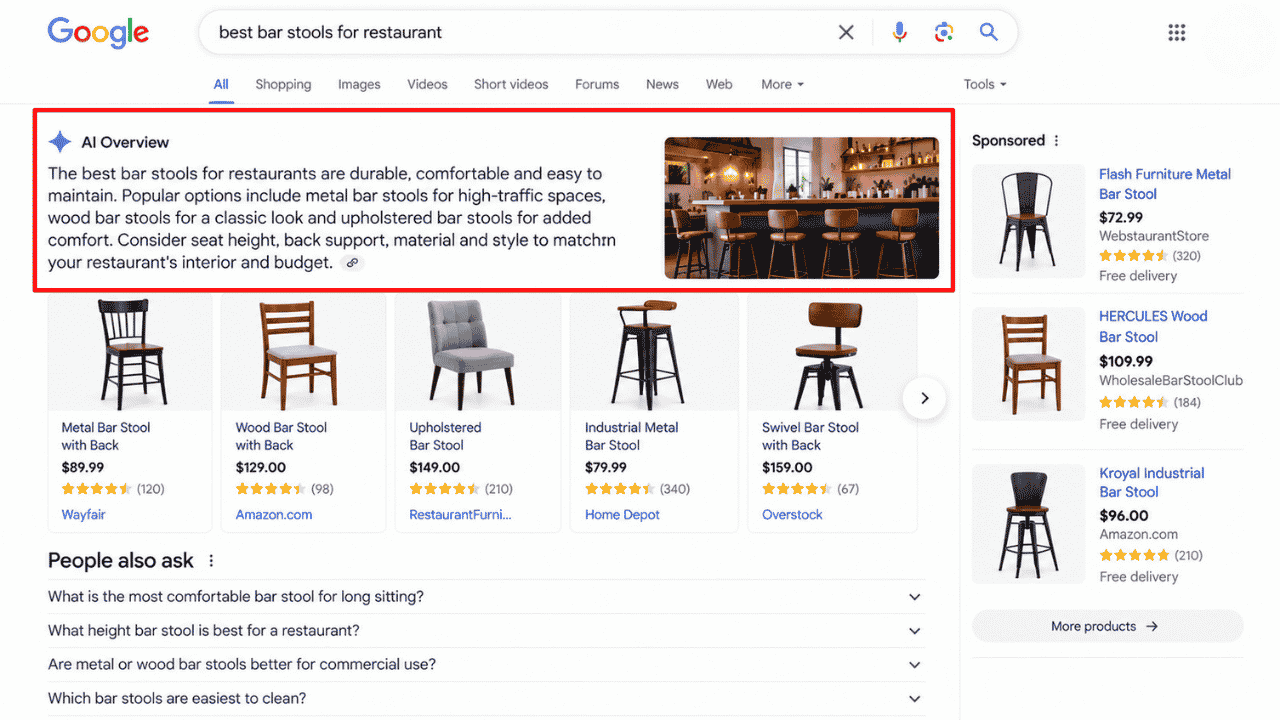
Engagement got harder because attention is saturated and product discovery is moving into AI interfaces. It got more valuable because the shoppers who do reach your store arrive further along in their decision and expect sharper answers.
The evidence points in both directions at once:
- Adobe Analytics reported that traffic to US retail sites from generative AI tools rose 693.4% year over year during the 2025 holiday season, while noting that the base of users is still modest.
- Those shoppers behave differently once they arrive. Adobe found AI-referred visitors were 33% less likely to leave immediately than visitors from other sources.
- Organic clicks are scarcer. Pew Research Center found Google users clicked a traditional result in 8% of visits when an AI summary appeared, compared with 15% when it didn’t.
- Patience for brand noise is gone. CSG’s 2026 State of the Customer Experience report found seven in ten consumers feel brands send so many messages that they no longer care what brands say, and more than a third have stopped buying from a brand because of excessive outreach.
- Returns remain a profit leak. The NRF and Happy Returns estimated that 19.3% of online sales would be returned in 2025.
Put those together and a pattern shows up. Fewer clicks, better-informed visitors, almost no tolerance for noise, and a stubborn return problem. Each one points to the same fix: clearer information, delivered at the right moment, to people trying to make a good decision.
Here’s how the confirmed developments compare with the predictions:
| Development | Status as of late 2026 | What it means for engagement |
|---|---|---|
| Google’s Universal Commerce Protocol (UCP), an open standard for agent-led shopping, launched in January 2026 | Live for selected merchants in the US, Canada and Australia | Some purchases complete inside AI Mode and Gemini, so product data has to answer questions without your page |
| Conversational attributes in Google Merchant Center, covering product Q&A, document links such as manuals, and related products | Available, optional | Your FAQs and guides can become feed data that AI shopping surfaces read directly |
| AI-referred retail traffic | Growing fast from a small base | Expect more visitors who arrive pre-educated and want specifics, not slogans |
| Agent-led checkout as the default way people shop in 2027 | Forecast, not established | Prepare your data, but don’t rebuild your store around it |
That last row deserves a note of caution. The same CSG research found 56% of consumers are uncomfortable letting AI take action on their behalf. Agentic shopping is real and growing. It isn’t universal, and a store that treats it as the whole future will underinvest in the human shopper who still does most of the buying.
Engagement in 2027 isn’t about being louder. It’s about being the clearest answer in the room.
The Confidence Loop: A Framework for Education-Led Engagement
The Confidence Loop is a four-stage model for ecommerce customer engagement built on one premise: customers stay engaged with stores that make them confident they chose well. Each stage uses a specific kind of customer education to remove a specific kind of doubt.
| Stage | The customer’s doubt | Education that removes it | Signs it’s working |
|---|---|---|---|
| Clarify | “Which one is right for me?” | Buying guides, comparisons, product Q&A, demo video, fit and sizing help | Higher product page conversion, fewer pre-sale questions |
| Confirm | “Is it safe to buy this now?” | Delivered cost, delivery and return terms, compatibility checks, fast human answers | Lower checkout abandonment, fewer “where is my order” contacts |
| Coach | “Am I using this right?” | Setup guides, care instructions, onboarding emails, how-to video | Fewer “not as expected” returns, fewer post-purchase tickets |
| Compound | “Why come back here?” | Replenishment timing, next-step suggestions, loyalty tied to behavior, community | Repeat purchase rate, time to second order, cohort retention |
It’s a loop, not a funnel, because the last stage feeds the first. The questions customers ask after buying, the photos they share, and the reviews they write become the pre-purchase education for the next shopper. A store that runs the loop well gets better at Clarify every month without writing much new content from scratch.
Here’s the uncomfortable part. Most stores pour budget into Compound with loyalty apps, win-back discounts, and VIP tiers while Clarify and Coach stay thin. That’s backwards. A points program can’t rescue a customer who sent the product back because nobody explained how it would fit.
Customers don’t stay loyal to stores. They stay loyal to the feeling of having chosen well.
If you want to see how engagement fits alongside acquisition, conversion, and measurement in one plan, this guide to connected digital business growth strategies covers the wider system. The rest of this article goes deep on the engagement layer itself.
Clarify: Help Shoppers Choose With Confidence
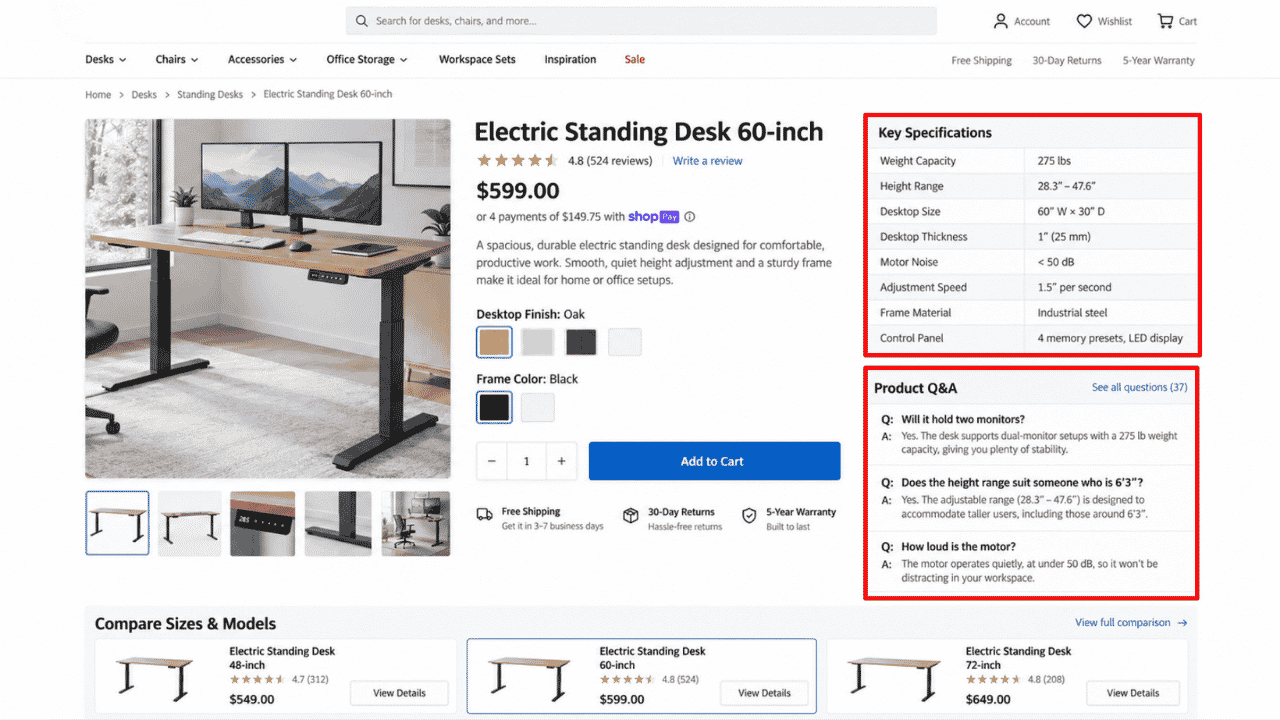
Pre-purchase education is content that answers the specific questions standing between a shopper and a confident purchase. It works best on the product and collection pages where the decision happens, not buried in a blog post three clicks away.
Start with the questions that block the sale
The best source of education topics is your customers’ own words. Support tickets, live chat transcripts, sales call notes, product reviews, and return reasons all contain the same handful of questions, asked over and over.
Picture a store selling standing desks. Week after week the inbox asks three things: will it hold two monitors, does the height range suit someone who is 6’3”, and how loud is the motor? If those answers live in a PDF spec sheet, or nowhere, every one of them becomes a support ticket or a lost sale. Put them on the page as a short Q&A block and they become the reason the shopper buys.
In ecommerce store audits, one of the most consistent patterns is the gap between what the support inbox gets asked and what the product page actually answers. The same five questions sit in tickets for months while the page stays silent.
Most stores respond to weak conversion by writing longer product descriptions. That rarely helps. A longer paragraph is harder to scan and harder for a machine to extract an answer from. What works better is a compact spec table, a Q&A block with direct one- or two-sentence answers, and a side-by-side comparison wherever two products get confused. The fundamentals in this guide to optimizing an ecommerce product page for SEO still apply. The difference now is that the answers carry as much weight as the description.
Use video where seeing beats reading
Some doubts can’t be settled with text. Scale, texture, assembly, motion, and noise are easier to show than describe. In Wyzowl’s 2026 video marketing survey, 63% of consumers said a short video was how they’d most like to learn about a product, far ahead of text articles at 12%. The same survey found 57% of video marketers said video helped reduce support queries.
One caveat worth knowing. Wyzowl’s 2026 sample was 266 respondents, so treat those figures as directional, not definitive. The practical lesson still holds. Film the thing customers ask about, not a brand film. A 40-second clip showing a sofa’s cushion depth with a person sitting on it answers more than a polished lifestyle reel ever will.
Write for the shopper and the shopping agent
Education content now has two readers. The person on your product page, and the AI system deciding whether your product belongs in an answer.
Google made this concrete in 2026. Its conversational attributes let merchants add product questions and answers, links to documents like manuals and assembly instructions, and related products such as required parts or accessories. Google describes them as optional fields that help AI systems understand a product’s specific nuances, and recommends adding them through a supplemental data source.
This is where the advanced insight sits, and most competitors miss it. A single, well-maintained Q&A set can do three jobs at once. It becomes the FAQ block on the product page for shoppers, the question-and-answer data in your Merchant Center feed for AI shopping surfaces, and the knowledge source your support team and chatbot answer from. Write once, answer three times.
The catch is consistency. Google’s product data specification lists conflicting data between your feed and your website among the common problems that keep products from showing. If the page says the desk holds 300 pounds and the feed says 250, neither answer gets trusted.
Pre-purchase education that answers real buying questions is also what earns rankings and AI citations, which is why it sits at the center of most ecommerce SEO work. For the bigger picture on how search, answer engines, and AI recommendations now overlap, see how AEO, GEO, and SEO work together.
Confirm: Remove Doubt at the Moment of Purchase
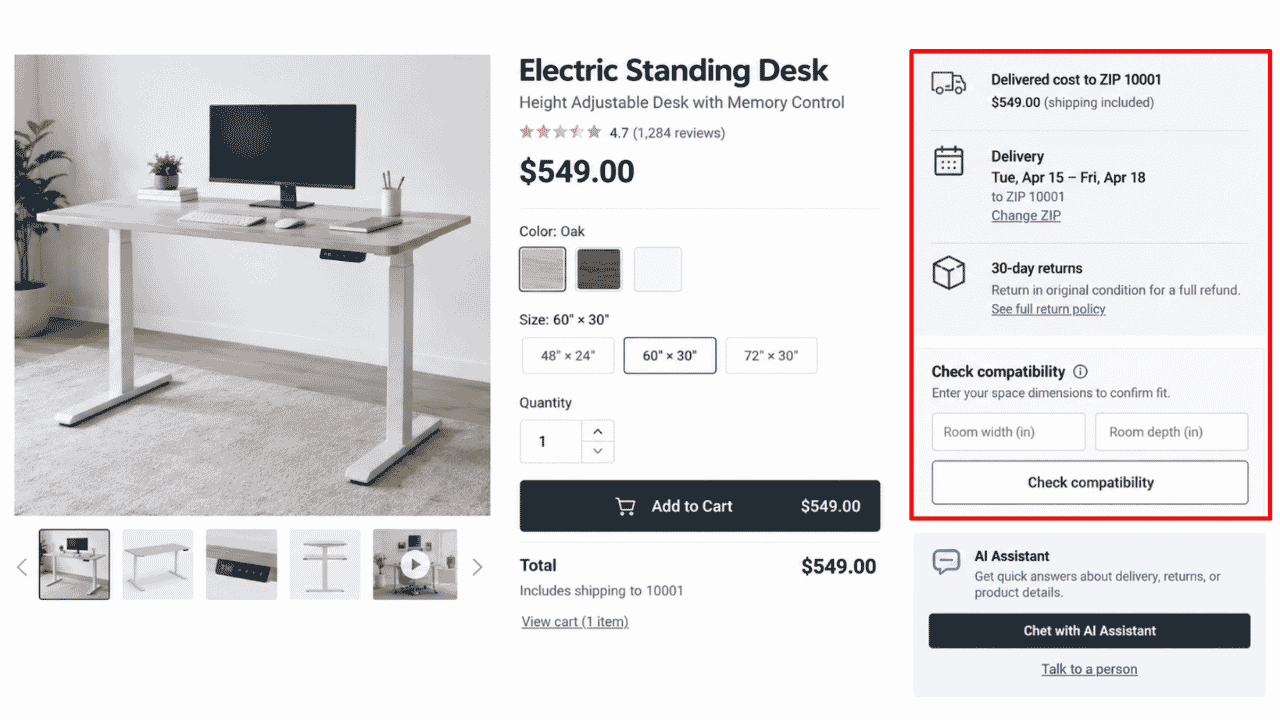
The Confirm stage removes last-minute uncertainty about total cost, delivery timing, return terms, and compatibility. A shopper who felt confident on the product page can still walk away if checkout reveals something they didn’t expect.
Baymard Institute puts the average documented cart abandonment rate at 70.22% across 50 studies. Many of those shoppers were only browsing. Among the rest, Baymard’s US research found 40% left over extra costs being too high, 13% over an unsatisfactory returns policy, and 12% because they couldn’t see the total cost upfront. None of those are persuasion problems. They’re information problems, which means education can fix them.
Education at this stage is small and precise:
- A delivered-cost estimate by ZIP code under the price, before the cart.
- One plain sentence on the return policy next to the add-to-cart button, with a link to the details.
- A compatibility check for anything that connects to something else, such as filters, replacement parts, chargers, and mounting hardware.
- A clear delivery window and delivery type for bulky items, stated on the product page.
- A real person reachable by chat for high-ticket carts.
That last point matters more as AI chat spreads. Zendesk’s CX Trends 2026 research found 81% of consumers want agents to continue a conversation without backtracking, and 74% get frustrated when they have to repeat information. A pre-purchase chat that already knows which product the shopper is viewing, and passes that context to a human when needed, feels like help. One that restarts from “How can I help you today?” feels like a wall.
Disclosure matters too. In Salesforce’s State of the AI Connected Customer research, 72% of customers said it’s important to know whether they’re communicating with an AI agent. Label the bot. It costs nothing and protects trust at the exact moment money changes hands.
For bulky, freight-heavy products, showing the delivered cost early is often the single biggest fix, and this breakdown of home improvement ecommerce marketing explains why in detail. Finding and ranking these checkout leaks is the core of ecommerce conversion rate optimization, and it usually pays back faster than buying more traffic.
A surprise at checkout undoes every piece of education that came before it.
Coach: Post-Purchase Education That Prevents Returns and Churn
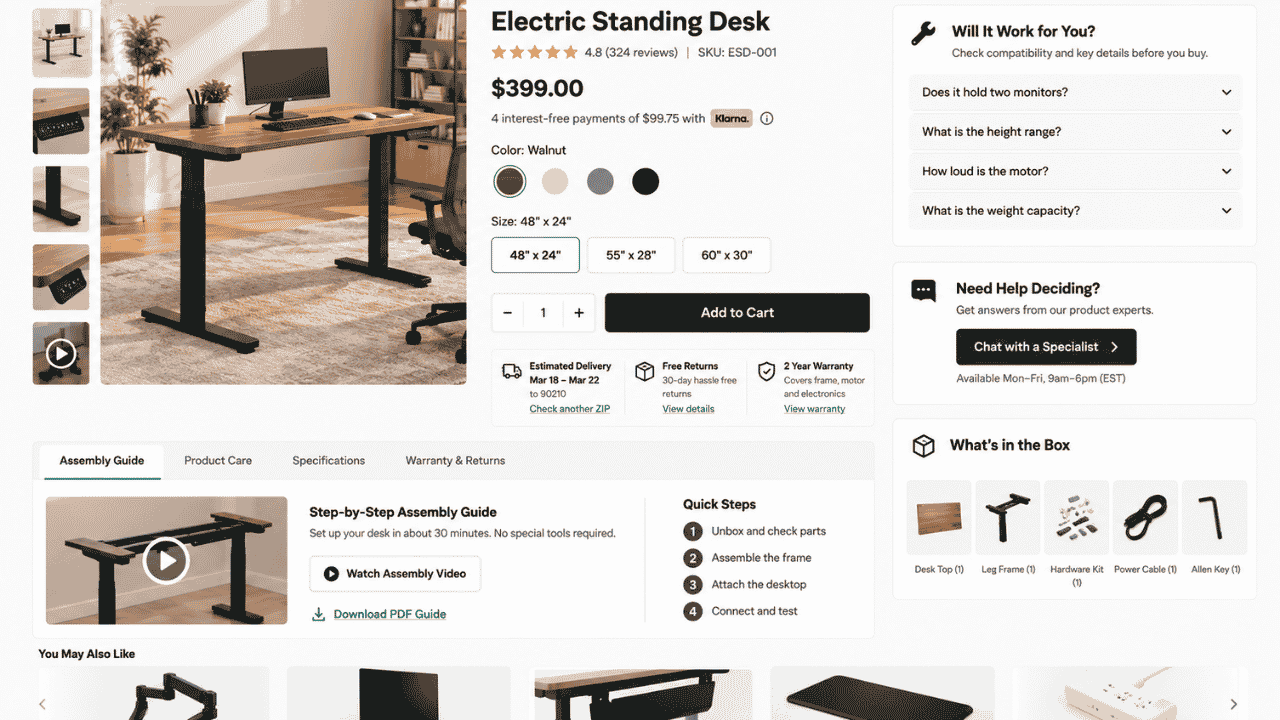
Post-purchase education helps customers succeed with what they bought, and it’s one of the most underused retention levers in ecommerce because it targets returns and silent churn directly.
The returns data shows why. In a September 2025 YouGov survey of 1,311 US adults, 44% of people who returned an item said it didn’t meet their expectations on quality, color, or size, and 39% cited poor fit. Some of those returns are genuine product failures. Many are education failures. The customer didn’t know what to expect, set the product up wrong, or judged it before it had a chance to settle in.
The first two weeks after delivery are the most valuable window in the whole relationship. The customer is paying close attention, the product is new, and the keep-or-return decision is being made right now. Silence during that window is expensive.
Stores that log return reasons in free text, rather than a single dropdown, often find that a meaningful share of “defective” or “not as described” returns are really setup or expectation problems. That’s a content gap, not a product gap.
Coaching looks different by category:
| Product type | Common post-purchase confusion | Coaching content | When to send it |
|---|---|---|---|
| Furniture | Assembly, cushion break-in, fabric or wood care | Assembly video, “what to expect in week one,” care guide | Before delivery and on delivery day |
| Skincare and beauty | How to layer products, realistic timeline for results | Routine guide, honest week-by-week expectations | On delivery, then day 7 and day 21 |
| Electronics and smart home | Setup, pairing, compatibility | Quick-start video, short troubleshooting FAQ | Delivery day |
| Apparel and footwear | Fit, sizing, care | Fit guide before purchase, care guide after | Before shipping and after delivery |
| Consumables such as coffee or pet food | Getting the best result, knowing when to reorder | Usage guide, reorder reminder based on typical use | On delivery, then shortly before run-out |
A simple coaching sequence for most stores works like this. The shipping confirmation includes a “before it arrives” note covering what to measure, what to clear, and what’s in the box. Delivery day brings setup help. Around day five to seven comes a short check-in asking how it’s going, with a one-click route to help that catches a problem before it becomes a return request. Only after that, somewhere around day 21 to 30, comes the review request and a relevant next-step suggestion.
Most post-purchase flows get this order wrong. They send a review request and a cross-sell coupon within days of delivery. Asking for a review before the customer has properly used the product invites silence or a disappointed rating. Coach first. Ask second.
The case for education-led retention is strongest in software and B2B, where it has been measured most. A Forrester Consulting study commissioned by Intellum, published in October 2019, found 90% of surveyed companies saw a positive return on customer education. That research comes from organizations with formal education programs, mostly selling complex products, so it doesn’t translate directly to a direct-to-consumer store. The mechanism does transfer, though. Customers who know how to get value from a product are less likely to send it back and more likely to buy from you again. For an ecommerce store, the right move is to test that with your own return and repeat-purchase data rather than borrow someone else’s percentage.
When the Customer Isn’t the Only One Who Needs to Learn
For products that are installed, serviced, specified, or resold by someone else, engagement depends on educating those people too. Installers, contractors, dealers, designers, and B2B purchasing teams shape the end customer’s experience, and a confused installer can create more returns than a confused shopper.
Think about a glass railing system sold online and installed by a contractor, a smart thermostat fitted by an HVAC technician, commercial seating specified by a restaurant designer, or flooring laid by a trade professional. The buyer may be a homeowner or a business owner, but whether the product succeeds depends on whoever mounts, connects, or configures it.
Educating this second audience changes the content in four ways:
- It has to be task-based. Install sequences, mounting requirements, tolerances, and common mistakes, not marketing language.
- It has to fit a practitioner’s day. Short, visual, mobile-friendly modules available on the job site, not a 40-page PDF.
- Some categories need proof of competence. A verified or certified installer program gives end customers a reason to trust the installation, and gives the installer a reason to recommend your brand.
- B2B buyers need operational education. Spec sheets, reorder paths, account pricing, and lead times matter more to them than inspiration.
The hard part is that external audiences don’t have to learn from you. Employees can be required to complete training. Customers, installers, and dealers can’t. The training platform How.io makes this point well in its article on marketing strategies for training, arguing that education for external audiences has to borrow from marketing by using short hooks, segmented learning paths, and campaigns delivered over time, because nobody is obligated to log in.
That idea maps neatly onto ecommerce. A store selling installed products can build an installer resource hub on its own site with spec downloads, install videos, and a quick quiz that gives access to trade pricing. Every installer who trusts your documentation becomes a repeat channel and a source of referrals. Brands selling to businesses face the same dynamic at a larger scale, which this look at B2B ecommerce marketing covers in more depth.
Compound: Turn Confidence Into Repeat Revenue
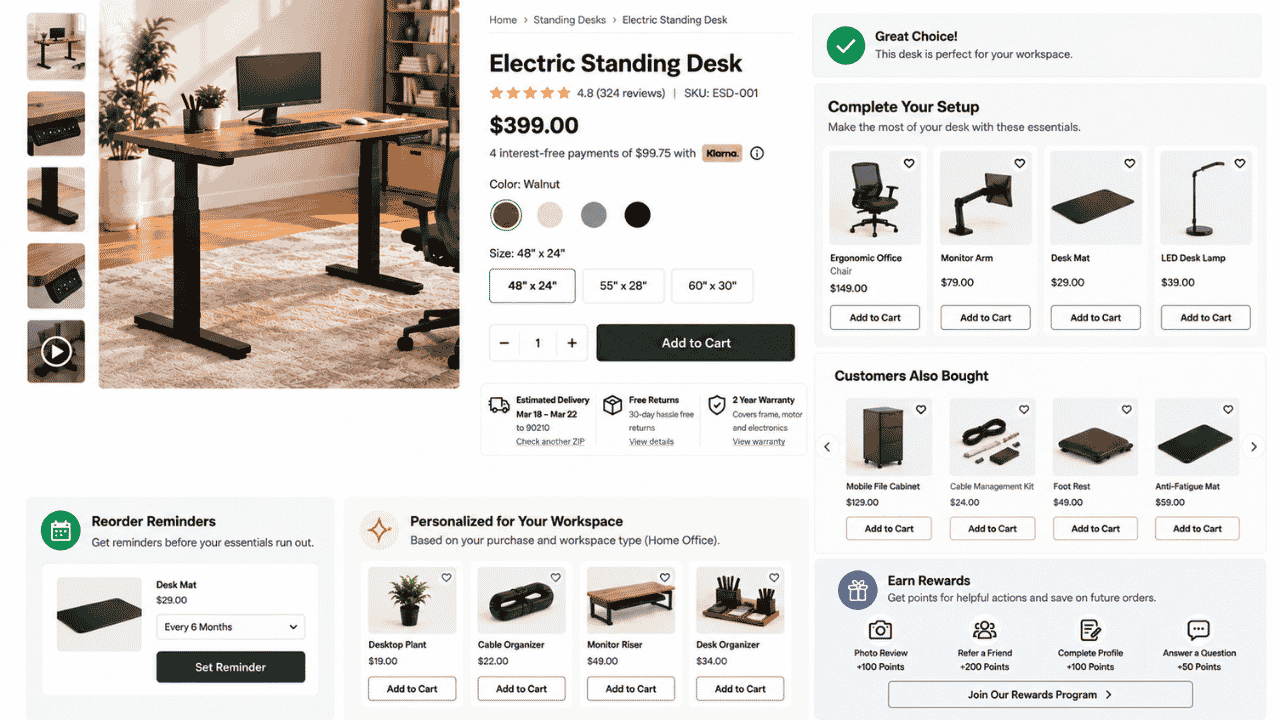
Compound is the retention stage, where a confident customer becomes a repeat customer. It works when every message matches where the customer is in using the product, not when the store simply sends more.
Send fewer, better-timed messages
The CSG finding that more than a third of consumers have stopped buying from a brand because of excessive outreach should change how stores plan their calendars. Frequency isn’t engagement. Relevance is.
Time messages to how the product is used, not to the promotional calendar. A coffee subscriber needs a reminder before the bag runs out, not a flash-sale email every Tuesday. A customer who bought a crib is a different person six months later, needing a toddler bed, not more swaddles. Every message should answer “why this, why now” from the customer’s side.
Cutting volume feels risky, and some revenue from blanket campaigns will drop at first. The test is whether repeat purchase rate and unsubscribe rate improve over the following quarter. If they do, the blasts were borrowing against future engagement.
Ask for the data you need, and say why
Personalization only works with data, and customers are wary about data. Salesforce’s research found 64% of customers believe companies are reckless with customer data. Meanwhile Zendesk’s 2026 research found 67% of consumers expect brands to tailor support based on prior interactions.
The way through that tension is zero-party data, information customers choose to give you because the benefit is obvious. A one-question prompt at checkout asking which room the rug is for, the pet’s age, or the customer’s skin type, paired with a line explaining “so the care tips you receive actually fit,” gets far better response than silent tracking.
The personalization statistics quoted in almost every engagement article come from a McKinsey article published in November 2021, which reported that 71% of consumers expect personalized interactions and 76% get frustrated when they don’t happen. Those numbers are still directionally useful. They’re also five years old, gathered during a pandemic shopping shift, before AI assistants changed what “personalized” looks like. Treat them as background, not as a forecast for your store.
Reward behavior, not just spend
Loyalty programs that only discount repeat orders train customers to wait for the discount and erode margin. Programs that reward useful behavior build the loop instead. Points or perks for a photo review, for completing a preference profile, for referring a friend, or for answering another shopper’s question all create content and trust that feed back into Clarify.
Early access for repeat buyers, priority support, and free care kits often work as well as discounts and cost less. The goal is to make returning customers feel known, not just rewarded.
Know what retention is worth to you
The most repeated retention statistic in ecommerce comes from Bain & Company research, summarized by Harvard Business Review in 2014, showing that a 5% increase in retention can lift profits by 25% to 95%. It’s widely cited and decades old in origin, and the range is so wide it can’t plan anything for you. Run your own numbers instead.
Here’s a simplified, hypothetical example. A store acquires 10,000 first-time customers a year, and 20% place a second order. Each repeat order earns $60 in gross profit. Lift the second-order rate to 25% through better coaching and better-timed messages, and that’s 500 extra repeat customers, or about $30,000 in additional gross profit before counting third and fourth orders, reviews, or referrals. That’s the business case for education, in a form a finance team will accept.
Weak retention is one of the common reasons ecommerce businesses fail, usually because acquisition costs keep rising while the customers already won quietly drift away.
How to Measure Customer Engagement That Actually Pays
Measure customer engagement through behavior that predicts revenue, such as second orders, conversion after viewing education, and fewer expectation-driven returns, rather than activity metrics like email opens or time on site.
Activity metrics are easy to inflate and hard to connect to profit. Time on site rises when a page is confusing. Privacy features in some email apps have made open rates unreliable. A busy dashboard can hide a shrinking business.
Track one or two metrics per stage of the loop:
| Stage | Metric | Why it matters |
|---|---|---|
| Clarify | Pre-sale questions per 1,000 product page sessions | Falling numbers mean the page is answering what used to reach the inbox |
| Clarify | Conversion rate of sessions that viewed a guide, Q&A, or video | Shows whether education is helping decisions (see the caution below) |
| Confirm | Checkout abandonment and the step where shoppers exit | Points to the exact information gap at purchase |
| Coach | Return rate by reason, especially “not as expected” and “didn’t fit” | The clearest signal that coaching is working |
| Coach | Support contacts per order in the first 30 days | Rising contacts after a product launch flag missing setup content |
| Compound | Time to second order and 90- or 180-day repeat rate by cohort | The core retention outcome |
| Compound | Unsubscribe and spam complaint rate per flow | Early warning of message fatigue |
| Overall | Customer lifetime value by acquisition channel | Shows which channels bring customers worth keeping |
A word of caution on the second row. Shoppers who watch a product video convert at higher rates partly because they were already serious buyers. That’s self-selection, not proof the video worked. To get a fair read, add the new education to half of a product group and compare it with similar products that didn’t get it, or compare the same products over equal periods before and after. For post-purchase email flows, hold out a small random group that doesn’t receive the flow and compare their return and repeat rates.
In GA4, set up events for video plays, Q&A expansions, size guide opens, and guide downloads so education engagement can be tied to orders. It takes an afternoon and saves months of arguing about whether content “works.”
Where AI Helps Customer Engagement, and Where It Erodes Trust
AI is useful for scaling customer education and support, but it damages engagement when it’s hidden, wrong, or used to send more messages.
Where AI tends to help:
- Summarizing thousands of support tickets, chat logs, and reviews into a ranked list of unanswered questions, the raw material for the Clarify stage.
- Drafting first versions of Q&A answers, care guides, and onboarding emails that a person then checks against real specs.
- Powering on-site assistants that answer from your own verified product content, with a clear handoff to a human.
- Timing messages based on usage and reorder patterns rather than a fixed calendar.
Where it backfires:
- Hidden bots. With most customers wanting to know when they’re talking to AI, an unlabeled assistant is a trust problem waiting to surface.
- Unexplained decisions. Zendesk’s research found 95% of consumers expect an explanation for AI-made decisions. If an AI system declines a return or changes an order, the customer needs to know why in plain language.
- Confident wrong answers. An assistant that tells a shopper a part is compatible when it isn’t creates a return, a support ticket, and a bad review in one move. Ground answers in verified data or route them to a person.
- Automated volume. AI makes it cheap to send more messages. That’s exactly the wrong use, given how many consumers are already tuning brands out.
If you use AI to produce product and education content at scale, keep a human editor on every spec, and read up on how generative AI is changing ecommerce SEO before publishing hundreds of pages at once.
AI should make your answers faster and more consistent. It should never make them less true.
Putting the Confidence Loop to Work in One Quarter
A realistic first quarter focuses on your top-selling products, fixes the education gaps customers already complain about, and measures the change before scaling.
Month one: listen and set a baseline. Pull 90 days of support tickets, chat transcripts, reviews, and return reasons. Tag each by loop stage. Pick your top 20 products by revenue and record their conversion rate, return rate by reason, and pre-sale question volume.
Month two: fix Clarify and Confirm on those 20 products. Add a short spec table and a Q&A block built from real questions. Record one short video for the most-asked question on each product. Put delivered cost and a one-line return summary near the add-to-cart button. Load the same Q&A into Merchant Center as conversational attributes through a supplemental feed, so the shopper and the shopping agent see identical answers.
Month three: build Coach and trim Compound. Launch a post-purchase coaching sequence for your two highest-return categories, with a small holdout group. Move review requests to after the coaching emails. Cut one broadcast campaign that doesn’t earn its unsubscribes. At the end of the quarter, compare the 20 products against your baseline and decide what to roll out next. If AI visibility is a priority, work through this GEO checklist alongside month two.
Conclusion
Ecommerce customer engagement in 2027 comes down to confidence. Shoppers arrive better informed and less patient, a growing share of discovery happens inside AI tools, and the tolerance for brand noise has worn thin. The stores that keep customers aren’t the ones sending the most messages. They’re the ones that answer the right question at the right moment.
The Confidence Loop gives that a structure. Clarify the choice before purchase. Confirm the cost, terms, and fit at checkout. Coach the customer through the first weeks with the product. Compound that confidence into repeat orders with fewer, better-timed messages. Then feed what customers ask and share back into the next shopper’s education.
Measure behavior that predicts revenue, test changes against a fair comparison, and use AI to make answers faster and more consistent, never less honest. Start with your top 20 products and the questions your customers already ask. Those questions are the strategy.
If you run an established online store and want an outside view of where shoppers are losing confidence, from product pages to checkout, EcomOptix offers a free growth analysis that maps the biggest gaps and the first fixes worth making.
Frequently Asked Questions
How does customer education increase ecommerce sales?
Customer education raises sales in two places. Before purchase, clear answers about fit, specs, compatibility, and total cost help hesitant shoppers buy with confidence. After purchase, setup and care guidance reduces expectation-driven returns and makes customers more likely to come back, which raises lifetime value without extra acquisition spend.
What are the best metrics for measuring ecommerce customer engagement?
Focus on behavior tied to revenue. Useful metrics include pre-sale questions per 1,000 product page sessions, conversion rate after viewing education content, return rate by reason, support contacts per order, time to second order, and repeat purchase rate by cohort. Email open rates and time on site are weak signals on their own.
How can a small ecommerce store improve customer engagement on a limited budget?
Start with the questions customers already ask in support emails and reviews, and answer them directly on your top product pages. Add a short post-purchase email sequence with setup and care tips before asking for a review. Both cost mostly time, and both tend to improve conversion and repeat purchases faster than adding new marketing channels.
Will AI shopping agents replace on-site customer engagement?
Not in the foreseeable future. AI agents are handling more product research and, for some merchants, checkout, but many consumers remain uncomfortable letting AI act on their behalf. The practical approach is to make product information accurate and consistent enough for both people and AI systems to use, while keeping a strong on-site experience for the shoppers who still visit.
How often should an ecommerce store email its customers?
There’s no universal number, and frequency matters less than relevance. Messages tied to the customer’s actual use of the product, such as setup help, reorder reminders, or a relevant next purchase, tolerate far more frequency than generic promotions. Watch unsubscribe and spam complaint rates for each flow, and cut any campaign that consistently drives them up.
What types of customer education content work best for online stores?
The most effective formats are short product Q&A blocks, compact spec tables, side-by-side comparisons, short demo or setup videos, fit and sizing guides, and post-purchase care emails. The best choice depends on the doubt you’re removing. Video works for scale, texture, and assembly, while tables and Q&A work for specs and compatibility.