A plain-English guide to what agencies do, the services they offer, and the results you can realistically expect.
You know you need more customers. You can feel that more people are searching online than ever, and somehow your competitor down the road keeps showing up first. But when someone says “you should hire a digital marketing agency,” you nod along without really knowing what one does all day.
You are not behind. Most small business owners are in the same spot. Marketing changed faster than anyone had time to keep up with.
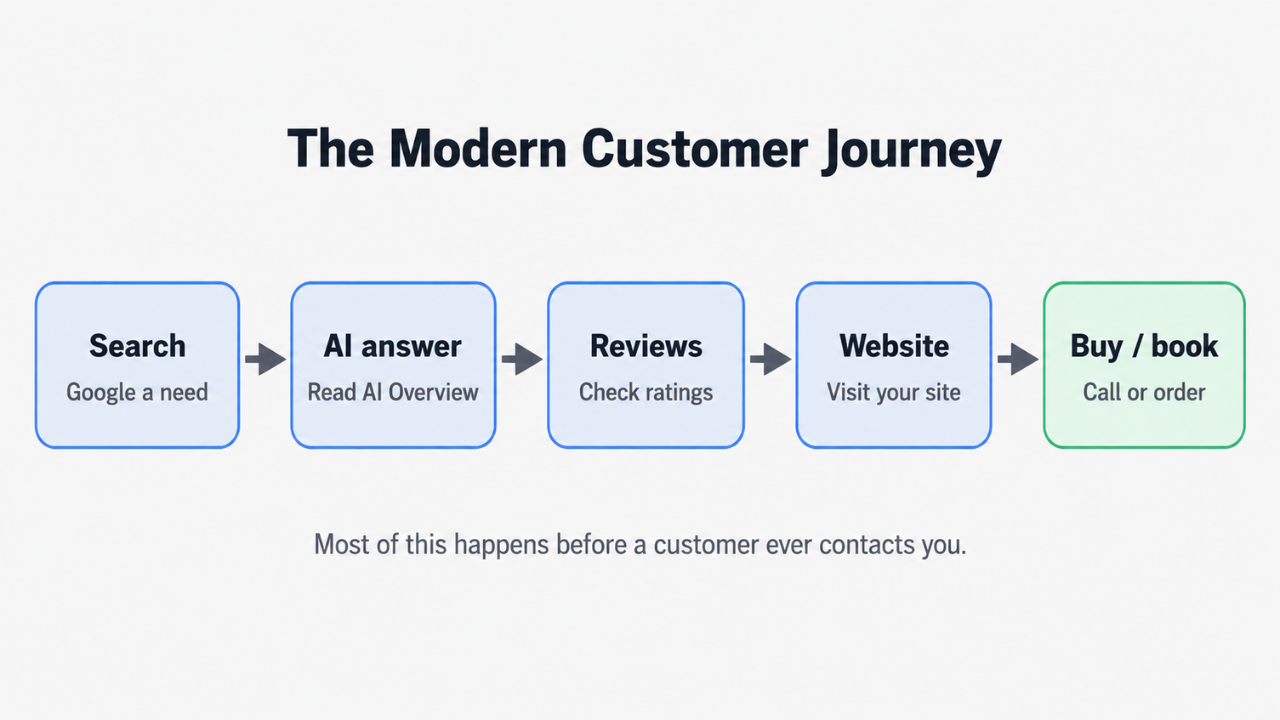
Here is what changed by 2026. Customers do not just “Google” things anymore. They search on Google, read AI Overviews that answer questions before they click, ask ChatGPT or Gemini for recommendations, scroll social feeds, and check reviews before they ever call you. Your future customer often decides before speaking to a single person. A digital marketing agency exists to make sure your business shows up, looks trustworthy, and gets chosen at each of those moments.
This guide explains what these agencies actually do, in plain language, with no sales pitch.
Quick Answer:What Does a Digital Marketing Agency Do for Small Businesses?
A digital marketing agency helps a small business attract customers online and turn them into sales. It does this through SEO, content marketing, paid advertising, website design and optimization, social media marketing, email marketing, and performance tracking.
In plain terms: an agency makes sure people can find your business when they search, trust it when they land on your site, and have an easy way to buy or book. Then it measures what works and adjusts.
A simple way to remember the whole job is the Find, Trust, Buy path. Agencies help customers find you, trust you, and buy from you. Every service below fits one of those three steps.
What Is a Digital Marketing Agency?
A digital marketing agency is a company that promotes other businesses online. Instead of newspaper ads or billboards, it uses websites, search engines, social media, email, and online ads to bring in customers.
The purpose is simple: get the right people to notice your business and take action, like calling a plumber, booking a dentist, or buying a product.
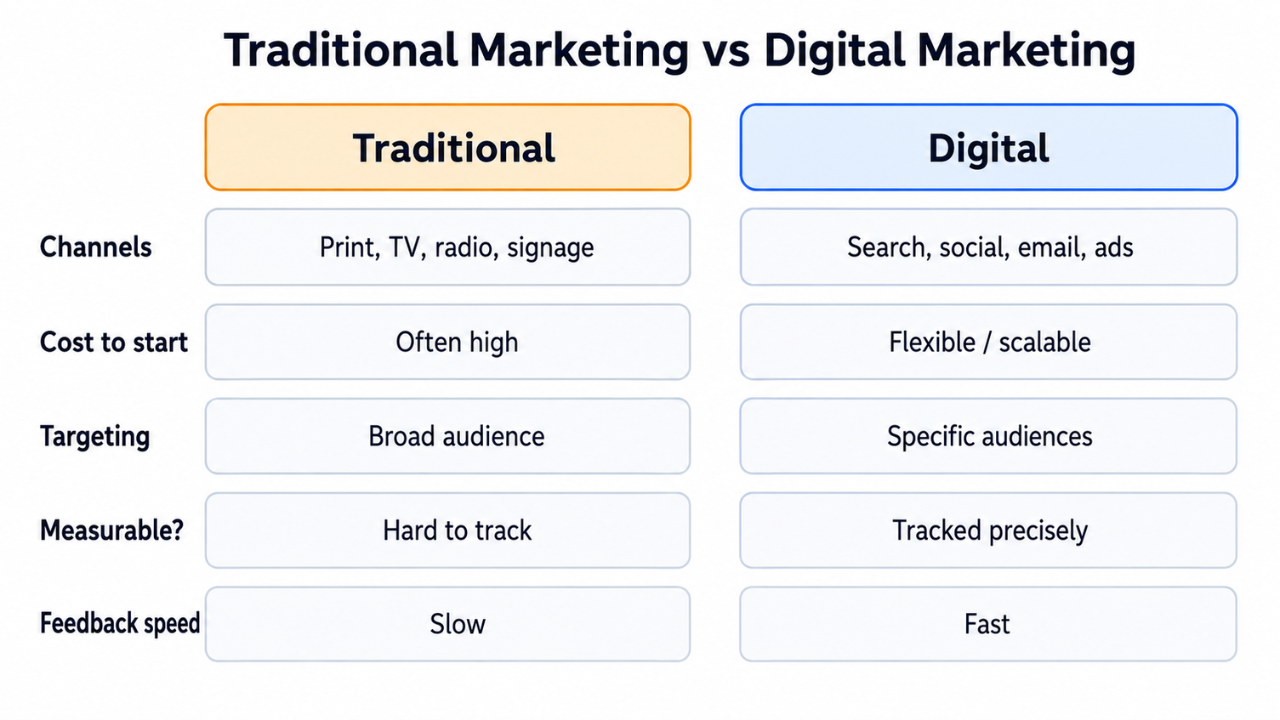
Here is how that differs from old-school marketing. A traditional advertising company focuses on awareness through print, radio, TV, or signage, and it is hard to know how many customers that billboard brought in. A digital agency works in channels where almost everything can be measured: who saw your ad, clicked, called, and bought.
Example: A local roofing company is invisible on Google. An agency builds a clear website, gets it ranking for “roof repair near me,” and runs a small Google Ads campaign. Within months the phone rings with people searching for exactly that service. That is the difference between hoping to be seen and being findable on demand.
Why Is Digital Marketing Important for Small Businesses?
Digital marketing matters because that is where your customers already are. Around 81% of shoppers research online before they buy, even when the final purchase happens in person. If you are not visible during that research, you are not in the running.
Customer behavior has flipped. People used to call three businesses and pick one. Now they search, compare reviews, and often decide before any conversation. The business that shows up and looks credible wins the click.
Local search is the clearest example. Roughly 76% of people who search for something nearby on their phone visit a business within a day. Someone typing “emergency electrician near me” is ready to hire. If your competitor ranks and you do not, that job is theirs.
Most small businesses do not lose to better companies. They lose to more visible ones.
How Does a Digital Marketing Agency Help Small Businesses?
An agency helps by fixing the specific gaps that stop a business from growing online. Most owners feel a vague problem like “not enough customers.” The agency’s job is to find the exact cause and fix it.
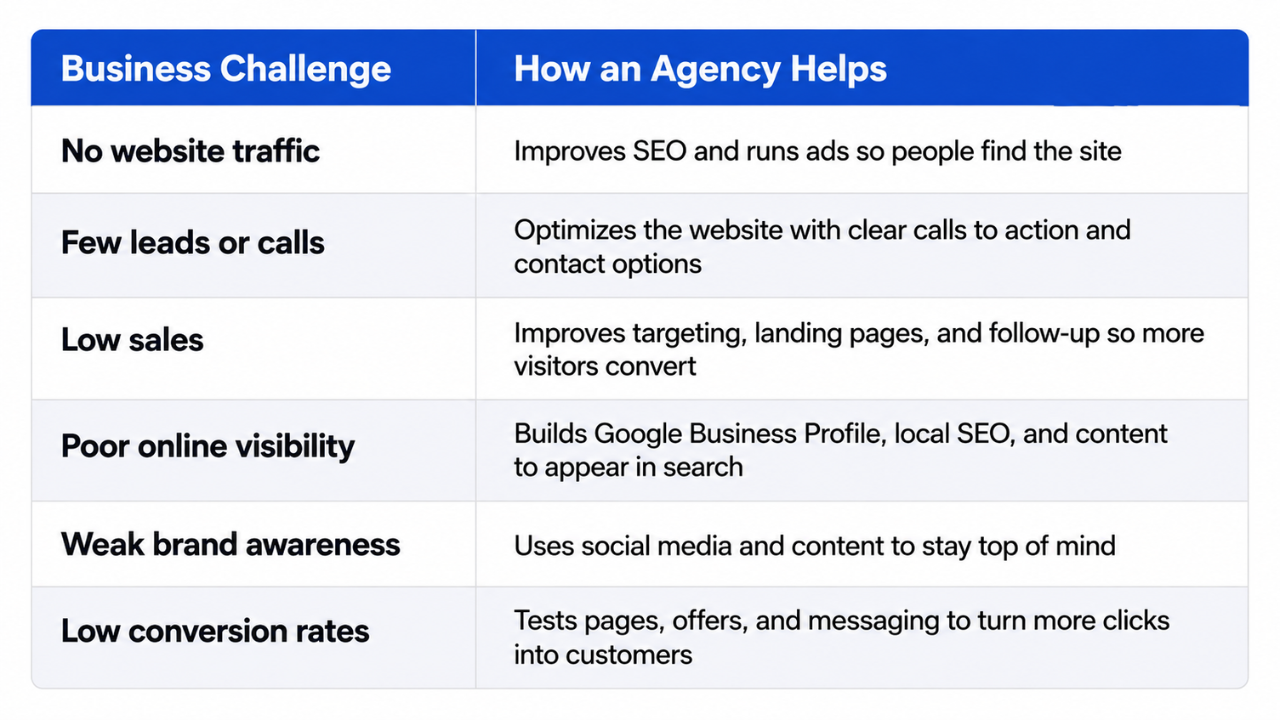
What most owners get wrong: they assume the problem is “not enough traffic.” Often the traffic is fine and the website quietly loses people who were ready to buy. A good agency diagnoses before it spends.
What Services Do Digital Marketing Agencies Typically Provide?
Agencies offer a menu of services. A small business rarely needs all of them at once.
Search Engine Optimization (SEO)
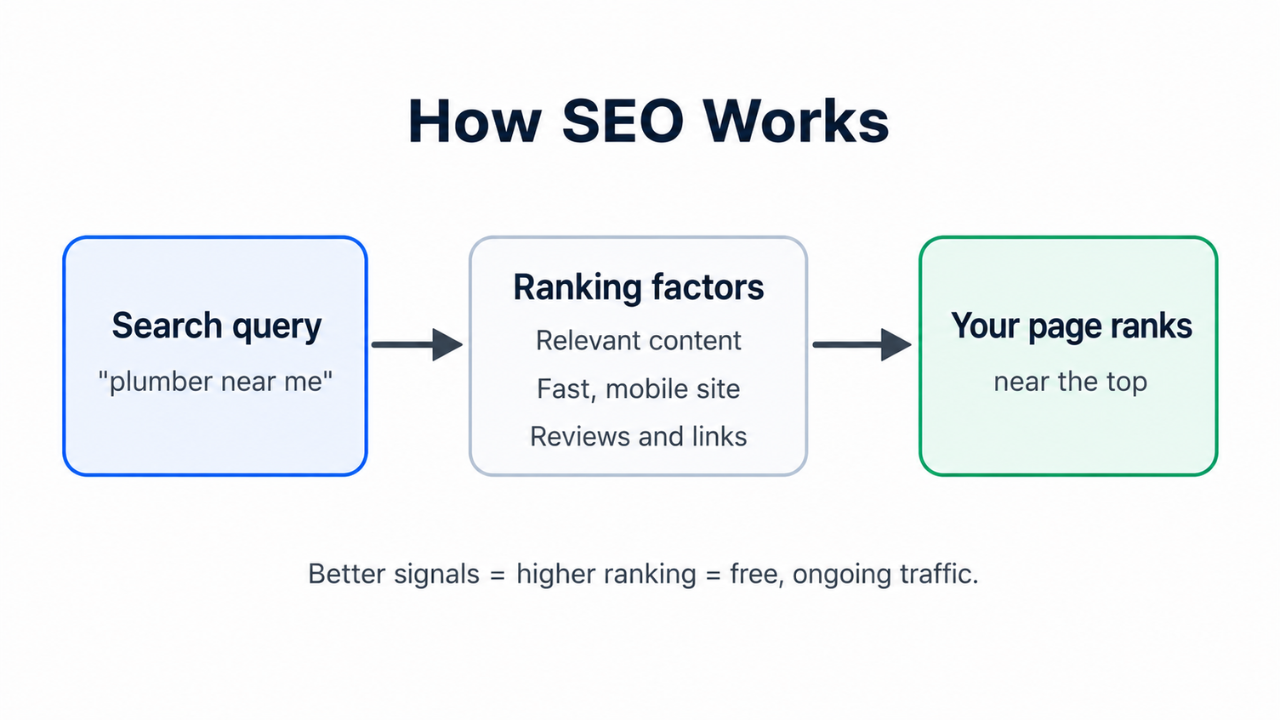
SEO makes your website show up higher in search results without paying for each click. It has two parts. General SEO helps your pages rank for what you sell. Local SEO helps you appear in map results and “near me” searches through your Google Business Profile, reviews, and location pages. SEO is slow but compounding: it can take months, but once you rank, the traffic keeps coming for free. You can see our SEO results across ecommerce and local businesses.
Pay-Per-Click Advertising (PPC)
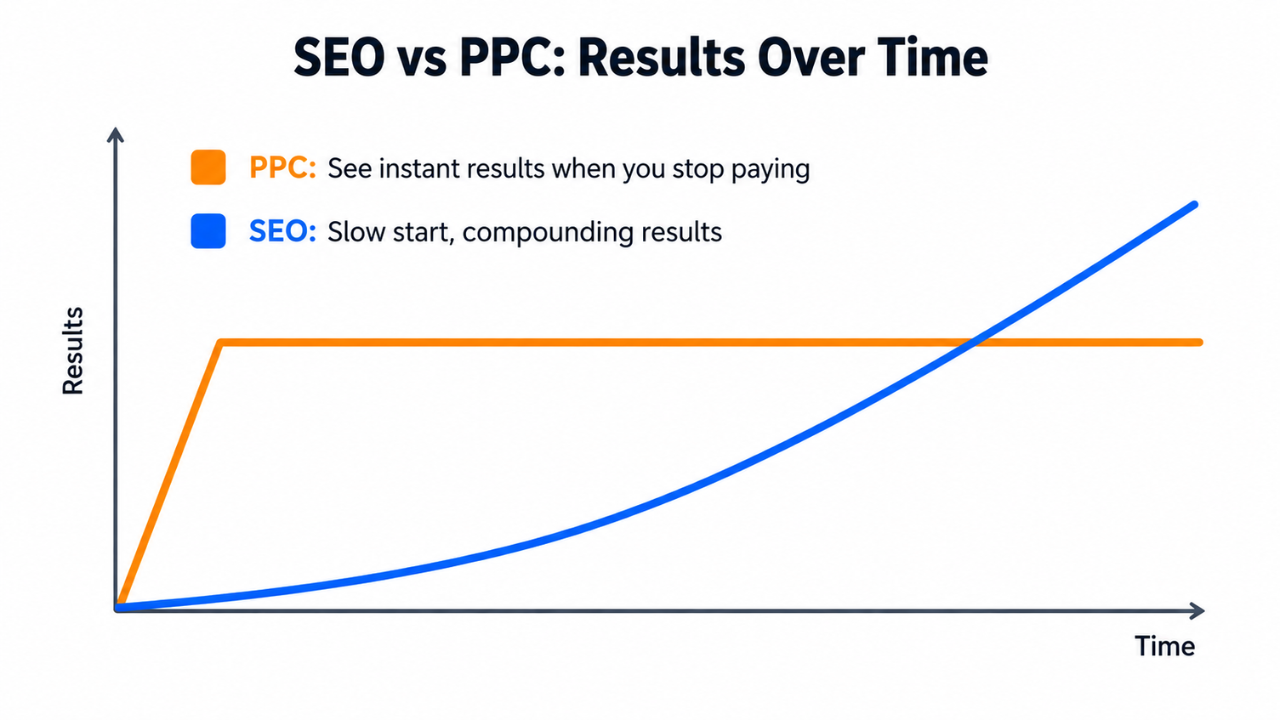
PPC is paid advertising where you pay only when someone clicks. Google Ads and Facebook or Instagram Ads are the most common. The advantage is speed: you can appear at the top today, not in three months. But PPC is rented visibility. The leads stop the moment you stop paying, while SEO is visibility you own over time. Many agencies run both.
Website Design and Optimization
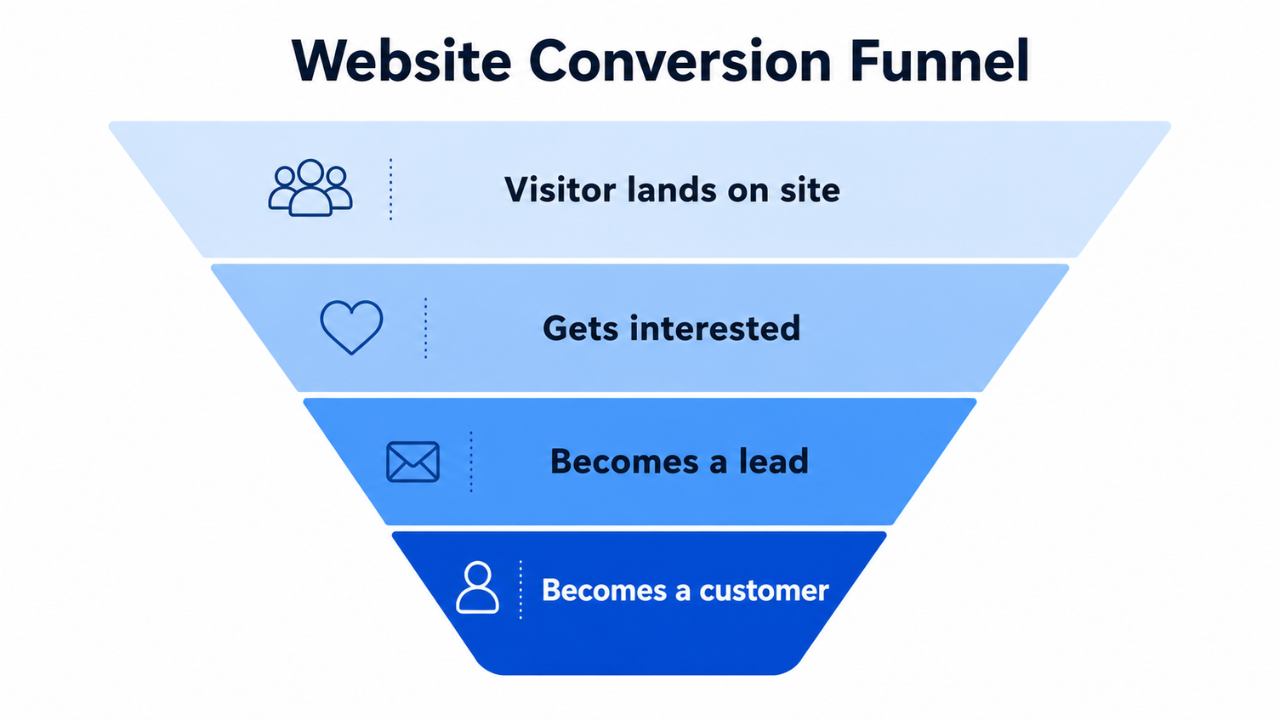
Your website is your digital storefront. An agency makes sure it loads fast, looks good on a phone, and guides visitors toward one clear action like “Call Now” or “Book Online.” This step is underrated. You can drive all the traffic in the world to a confusing, slow site and still get few customers.
Content Marketing
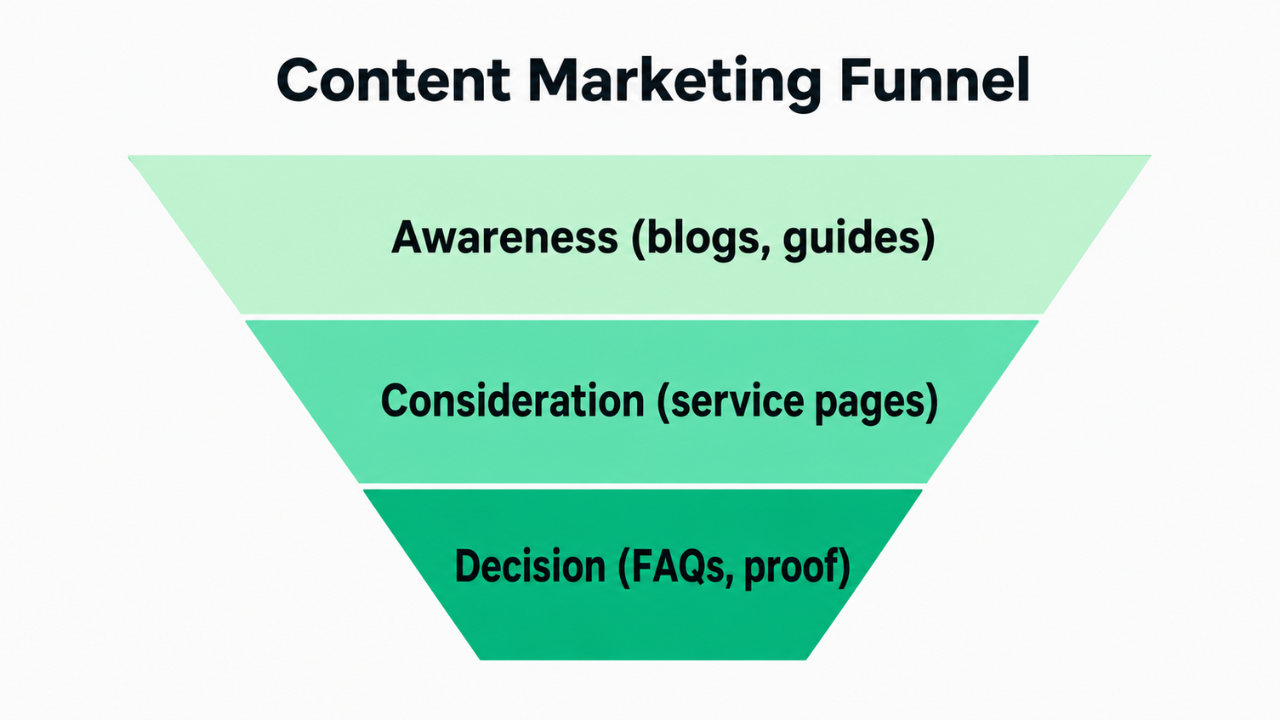
Content marketing means creating useful blog posts, service pages, guides, and FAQs that answer customer questions. It helps you rank in search and builds trust. In 2026 it matters more than ever, because AI tools like ChatGPT and Google’s AI Overviews pull answers from clear, helpful content, so good content can get you recommended inside AI answers, not just the blue links.
Social Media Marketing
Social media marketing uses platforms like Instagram, Facebook, TikTok, and LinkedIn to build awareness, trust, and engagement. For most small businesses it is a trust and reminder channel, not a direct sales machine. A restaurant’s photos make people hungry; a contractor’s before-and-after posts prove quality. It supports the sale rather than always closing it.
Email Marketing
Email marketing keeps you in touch with people who already know you, driving repeat business and referrals through promotions, updates, and reminders. It is one of the highest-return channels: studies regularly find email returns around $36 for every $1 spent, because you are talking to people who already chose you once.
Analytics and Reporting
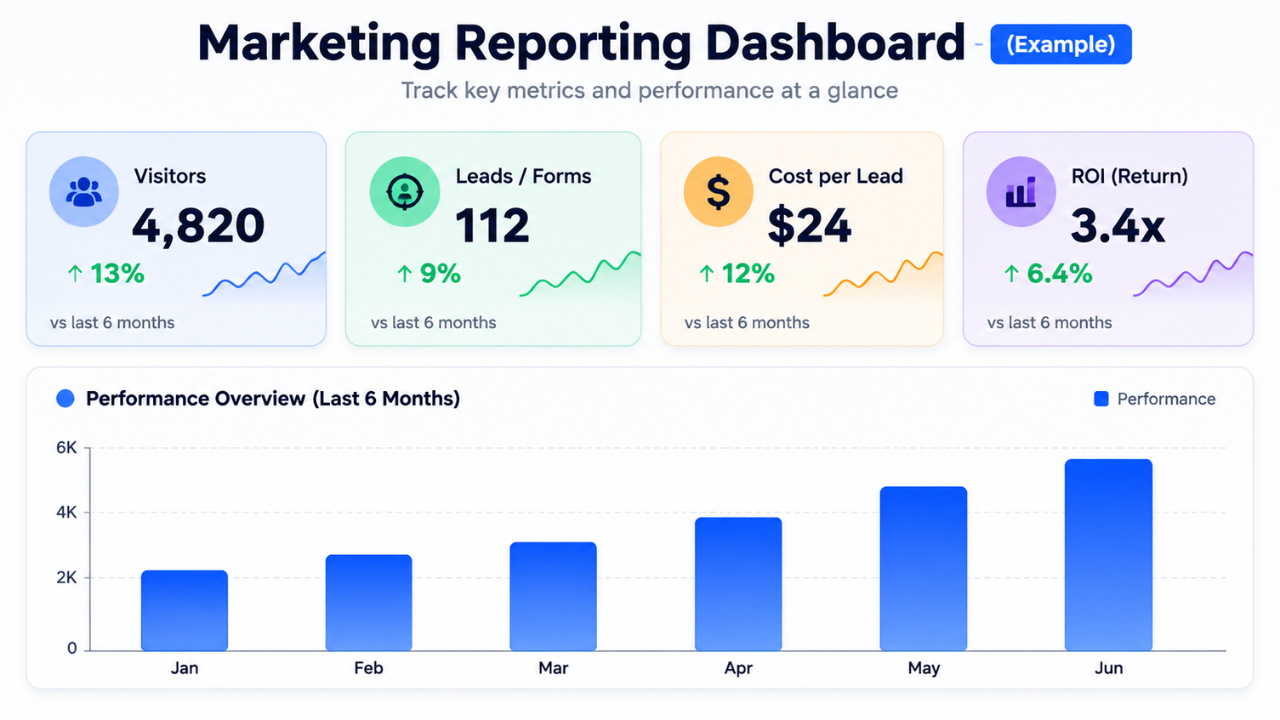
Analytics tells you what is actually working. An agency measures traffic, leads, calls, sales, and return on investment (ROI), then uses that data to decide where to spend next. Without measurement, marketing is guessing. The real value of an agency is knowing which work to do more of.
What Does Working With a Digital Marketing Agency Look Like?
It follows a repeating cycle, not a one-time project.
Step 1: Business Discovery. The agency learns your business, customers, goals, and competitors.
Step 2: Marketing Strategy. It builds a plan: which services and channels, and what to do first.
Step 3: Campaign Execution. It builds the website, runs ads, writes content, and optimizes SEO.
Step 4: Monitoring and Optimization. It tracks results and adjusts what underperforms.
Step 5: Reporting. It shows you the numbers and what they mean in plain language.
The five-step cycle most agencies follow.
Can Small Businesses Do Digital Marketing Themselves?
Yes, and many start that way. The question is not whether you can, but whether it is the best use of your time.
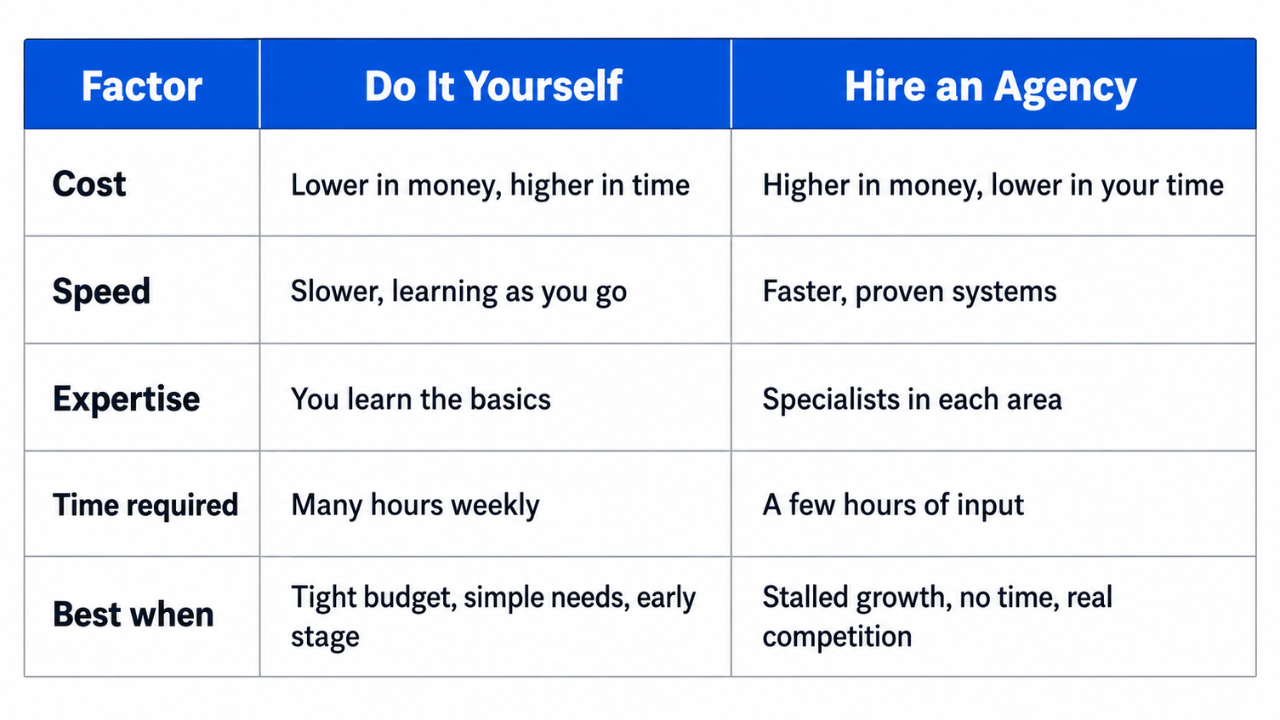
DIY makes sense when budgets are tight, needs are simple, and you have time to learn. Hiring help makes sense when marketing eats hours you should spend running the business, or results have stalled. The honest middle ground: most owners can handle a Google Business Profile and basic social posts, and bring in help for the technical work like SEO and ads.
What Results Can Small Businesses Expect?
Realistic results depend on the channel. Paid ads work fast. SEO and content take months but last. Anyone promising instant rankings is selling, not explaining.
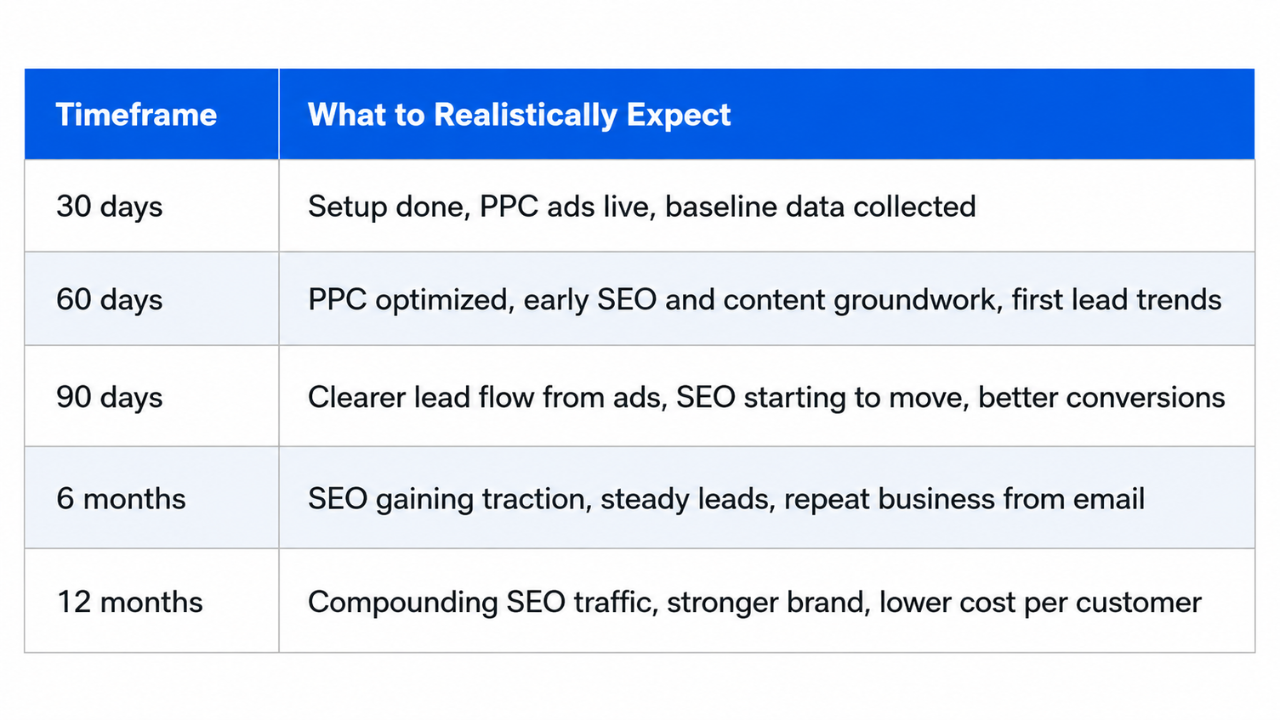
By channel: PPC can produce leads in days. SEO usually takes three to six months to show real movement and longer to mature. Content builds slowly then compounds. Social media is a long game of trust. Most businesses see fast early wins from ads while cheaper organic channels build underneath.
Common Misconceptions About Digital Marketing Agencies
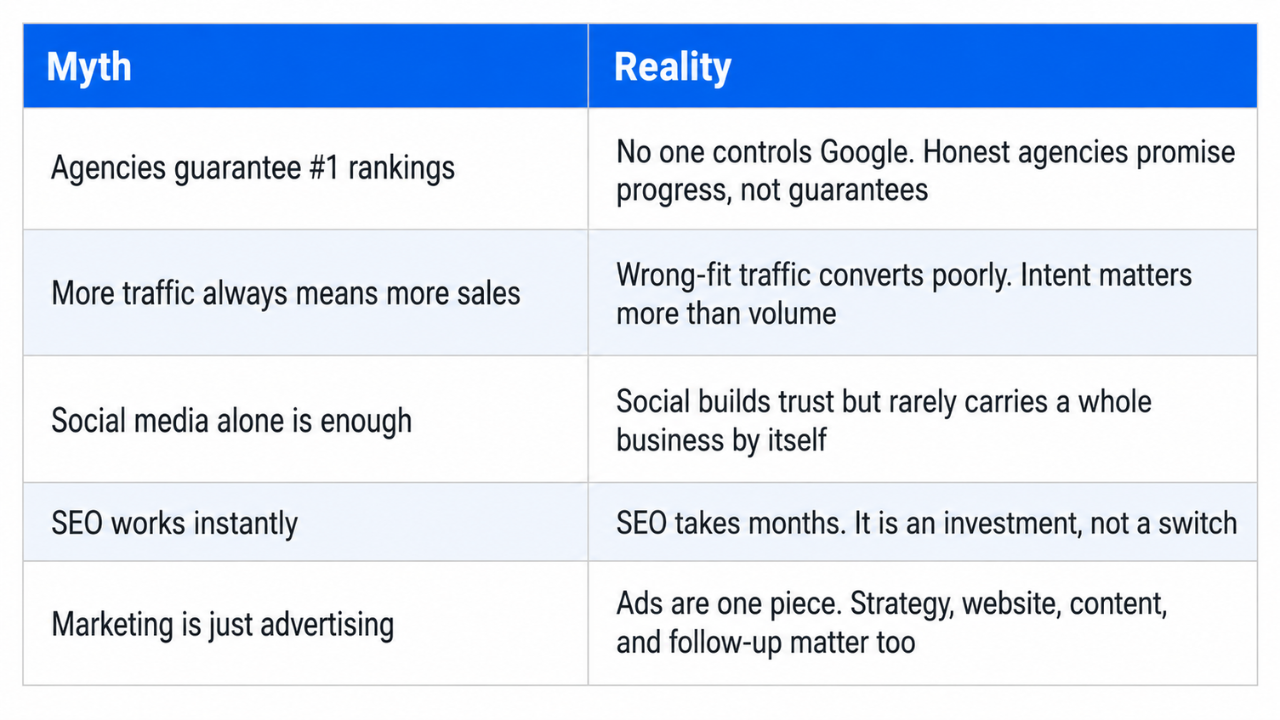
If an agency guarantees the top spot on Google, treat it as a warning sign, not a selling point.
When Should a Small Business Consider Hiring a Digital Marketing Agency?
Consider hiring when marketing no longer fits into the margins of your day. The clearest signals are limited expertise, no time, stalled growth, rising competition, or plans to expand.
If you are growing fine and have time to learn, DIY is reasonable. But if leads have flatlined or competitors are pulling ahead, the opportunity cost adds up fast. Every month you stay invisible is customers quietly choosing someone else. There is no shame in either choice; the point is to decide on purpose, not by default.
Key Questions to Ask Before Hiring an Agency
- Experience: Have you worked with businesses like mine in my industry?
- Case studies: Can you show real results from past clients?
- Reporting: How and how often will you report, and in what terms?
- Communication: Who is my contact, and how do we stay in touch?
- Strategy: What would you focus on first for my business, and why?
- Pricing transparency: What exactly is included, and are there extra costs?
A trustworthy agency answers these clearly. Vague answers and pressure to sign fast are red flags.
Final Thoughts
A digital marketing agency helps your business become more visible online, attract the right customers, and grow steadily over time. It handles getting found, building trust, and turning interest into sales, then measures it so the budget goes where it works.
You do not need every service, and you do not need to hire anyone tomorrow. What you need is a clear picture of where customers find businesses like yours, and an honest look at whether you have the time and skills to compete there. Whether you do it yourself or hire help, the goal is the same: be easy to find, easy to trust, and easy to buy from.
Frequently Asked Questions
[sp_easyaccordion id=”9742″]