Real stores.
Real work.
See the evidence.
Before you choose a growth partner, look at the work. Explore client dashboards, hear from store owners, and see how we put performance in context.
Your store. Your priorities. A clear next step.

Total store sales · 19 May–18 June 2026
Every store has a story.
Start with the context.
These are established businesses with different products, customers, and acquisition channels. Each walkthrough offers a closer look.
Glass Railing Store
A high-ticket store. A broader path to purchase.
Online orders and quote requests both matter for this store. The walkthrough puts the sales figure in context, alongside order value and how customers buy.
Source: client Shopify Analytics. Total sales include multiple channels; this is not an SEO-attributed revenue figure.
▶OPEN THE DASHBOARD WALKTHROUGH ↗Wholesale Bar Stool Club
Commercial buyers. Considered purchases.
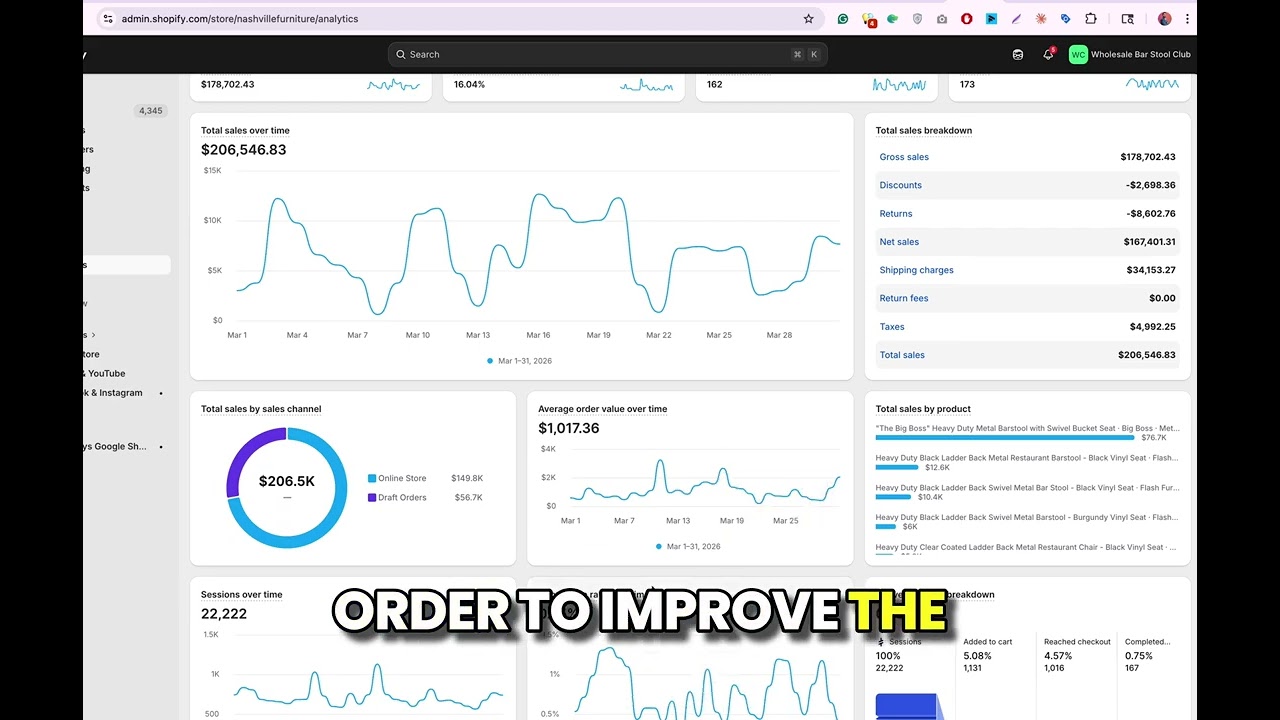
A commercial seating store serving bars, restaurants, and venues. See the store’s reporting, then hear directly from CEO Timothy Bryant below.
Source: client Shopify Analytics. Total sales include multiple channels; this is not an SEO-attributed revenue figure.
 ▶OPEN THE DASHBOARD WALKTHROUGH ↗
The Appliance Guys
A complex catalog. More ways to be found.
Explore the client walkthrough for a closer look at search visibility and store performance. The focus: helping buyers reach the right categories and products.
Watch the original client reporting for the metric definitions and reporting periods.
 ▶OPEN THE DASHBOARD WALKTHROUGH ↗
Tell us where you are now and what you want to improve.
Real clients.
Their own words.
Get a feel for the work—and the working relationship—from the people who’ve experienced it.
“We have been working with Manoj almost 2 years… we are extremely happy.”
Excerpt from Bora’s video testimonial.
Hear it from
the people we work with.
Three more stories to exploreDifferent businesses. First-hand experiences. Choose a story and hear it directly.
Timothy Bryant
CEO · Wholesale Bar Stool Club
In their own words
Client testimonial · Qualified inquiries
Chris
Client testimonial
Your goals, your challenges, and a useful next step.
More than a
big number.
A useful report explains what changed, where the data came from, and what to do next.
Discuss how we’d measure your store ↗Name the metric.
Total store sales, organic revenue, orders, and search clicks answer different questions. We keep those distinctions clear.
Show the source and the period.
Review the reporting window and the original analytics. Seasonality, promotions, and other channels all deserve context.
Connect the work to the next decision.
Use performance to prioritize the next improvements across search, collections, product pages, and the buying experience.
Fair questions.
Clear answers.
Are these sales figures all from SEO?
No. The figures labeled total store sales include multiple channels. They provide business context; they are not presented as revenue caused by SEO alone.
Can I see more detail about the work?
Start with the dashboard walkthroughs and client videos. On a call, ask about the work most relevant to your store and the supporting detail available to share.
Will my store see the same results?
Every store starts somewhere different. Competition, product demand, technical foundations, and implementation pace all affect performance. These examples are not a forecast for your business.
Do you also help with development and conversion?
Yes. Our team works across ecommerce SEO, conversion, development, migrations, and speed. We agree on the priorities around your store’s needs.
What happens when I get in touch?
You can book a call or send project details through Contact Us. Share your store URL and what you want to improve so we can discuss a useful next step.
Let’s find your
next opportunity.
Show us your store. Tell us what’s holding you back. We’ll talk through the opportunities and the work worth prioritizing.
Get my free growth analysis ↗Book a call or send your details. Start where you’re comfortable.