
A growing share of online shopping now starts with a question typed into an AI assistant, and the answer often names three or four products before the shopper ever sees a store. Adobe’s retail data shows that these AI-referred visitors already convert better than non-AI traffic overall, yet Gartner’s research shows most people still want to make the final purchase decision themselves.
For ecommerce brands in 2027, that combination changes what marketing has to do: earn a place on the short list an AI tool or search result builds, then prove the recommendation right when the shopper arrives.
That is why ecommerce SEO now has to cover how products appear in AI answers as well as in traditional search results, and why paid media, social selling, and customer data are shifting at the same time. This guide looks at the changes already measurable in US retail data and platform announcements, separates them from the forecasts still circulating, and turns them into a practical plan for growing an online store through 2027.
What Online Store Marketing Looks Like Now: The Short Answer
In 2027, ecommerce marketing is about getting your products chosen from short lists that AI assistants, search results, and social feeds build for shoppers.
Brands win by feeding those systems accurate product data, earning trust from reviews and creators, giving automated ad platforms strong inputs, and keeping customers longer, with growth measured in profit rather than clicks.
Five changes drive that shift, and each one shapes how stores plan their marketing this year:
- AI handles the research. Shoppers ask AI assistants to compare products and narrow their options, then visit a store to confirm and buy.
- SEO earns recommendations, not just rankings. Search results and AI answers often settle product questions before anyone clicks, so visibility now depends on being cited and recommended.
- Paid media runs on automation. Google and Meta increasingly choose audiences, placements, and creative, so the quality of what advertisers feed them decides results.
- Social platforms sell directly. TikTok Shop, Instagram, and YouTube now close sales, not just build awareness.
- First-party data and retention protect profit. A store’s own customer data steers automated systems, and repeat buyers carry a growing share of revenue.
The opportunity behind these changes is still large. US online retail came into 2027 growing at a healthy pace: the Census Bureau’s preliminary figures for the second quarter of 2026 put ecommerce sales at $340.2 billion, or 17.1% of all retail sales, up 12.2% from a year earlier.
It also helps to know what is not yet proven. In the most recent consumer research, fully autonomous AI agents that choose and pay for products without the customer’s input were still a small, early behavior.
Forecasts that AI agents will handle a large share of online spending by 2030 come from investment banks and consultancies, and they are projections, not measurements. A sensible plan for 2027 treats the five changes above as near-certain and fully autonomous shopping as something to prepare for without betting the budget on it. The sections below explain each change and what to do about it, and how they fit into a wider digital business growth strategy.
AI Becomes the Shopper’s Research Assistant, Not Its Buyer
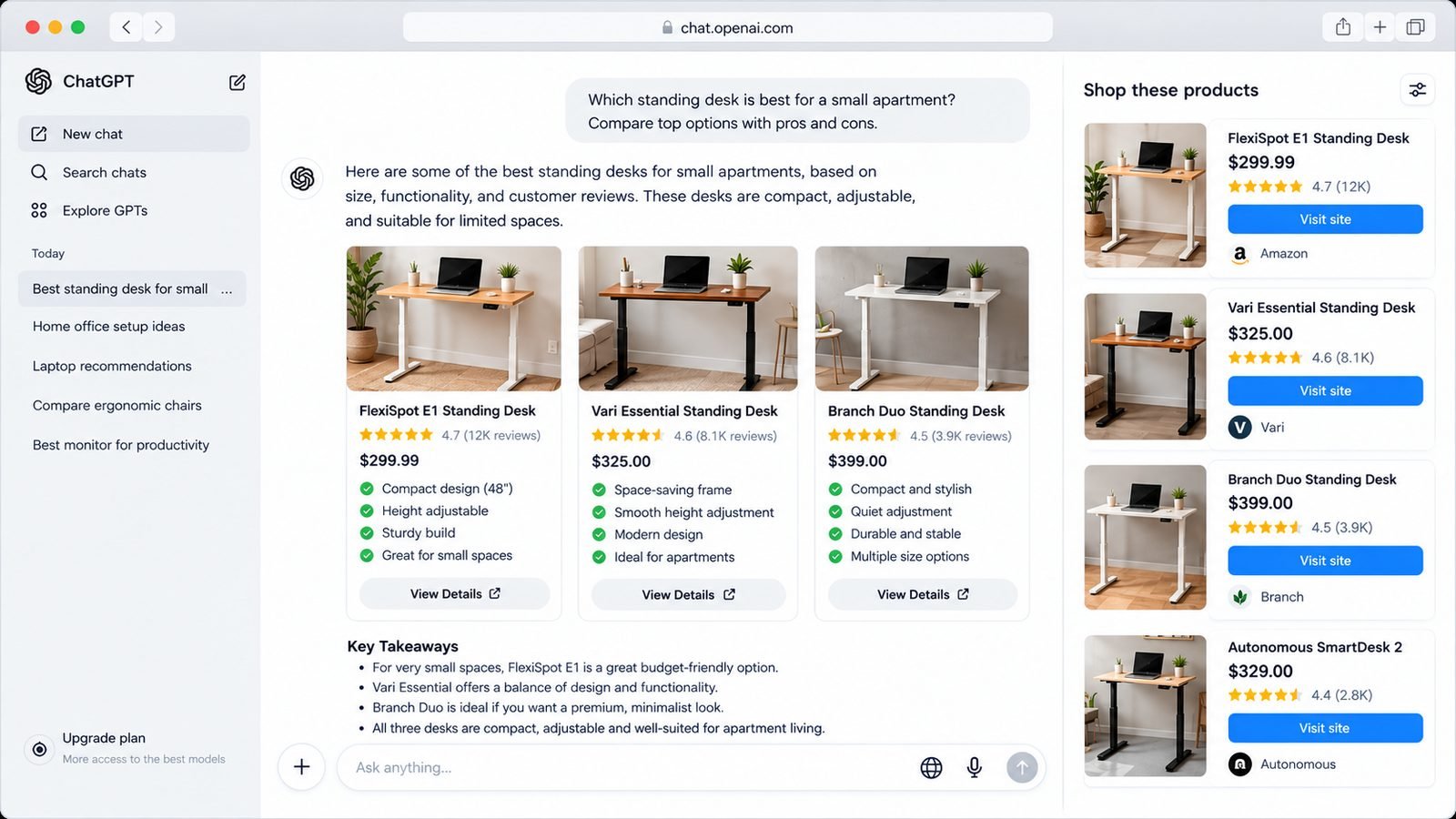
AI-referred visitors arrive later in the decision
Adobe, which analyzes traffic across a large share of US retail sites, reported that visits from AI sources grew 393% year over year in the first quarter of 2026. Growth from a small base always looks dramatic, so the more useful number is quality.
In March 2026, AI-referred visits converted 42% better than non-AI traffic, a reversal from a year earlier, when they converted 38% worse. Those visitors were also 12% more engaged once they reached the site.
The likely reason is that much of the research now happens inside the conversation. A shopper asks which standing desk suits a small apartment, reads a comparison, narrows the field, and only then clicks. By the time that visitor lands, the product page’s job is less about persuasion and more about confirmation: the price, dimensions, delivery date, and return policy need to match what the AI said. Stores that treat these visitors like cold traffic waste the head start.
This is where conversion rate optimization earns its keep, because small mismatches between an AI summary and the page can lose a sale the store had nearly won.
Why AI buying on the shopper’s behalf is further off than the headlines suggest
Consumer behavior has not caught up with the agentic commerce headlines. In a Gartner survey published in May 2026, willingness to let AI make the actual purchase decision topped out at 11%, even in low-stakes categories such as personal care and household supplies. Shoppers were far more open to letting AI narrow their options.
Trust is the main barrier: among consumers who had used generative AI for a recent purchase, 54% said they had to double-check everything it told them, and 62% said the information ended up wasting their time.
For 2027 planning, this points to a clear priority. Being accurately represented when AI tools research and compare products matters more than building for a fully autonomous buyer. A store that feeds AI assistants wrong or incomplete information pays twice. It loses the recommendation, and it loses the shoppers who verify the details and find a conflict.
The shortlist decides who gets considered
When AI tools do the comparing, the field shrinks fast. In a user-behavior study of Google’s AI Mode published by growth advisor Kevin Indig, 88% of participants accepted the AI’s shortlist as it was, and 74% chose the top-ranked product. Products in third place or lower drew about 10% of choices. As with any single study, treat the exact percentages with caution, but the pattern is clear: being absent from the list now costs more than ranking lower within it.
Brand recognition is the main exception. In the same study, participants named recognition as a trust signal in 34% of AI Mode sessions, compared with 23% in traditional search. Familiar brands can win even when they are not listed first. For smaller stores, this argues for steady brand-building work alongside search work, because recall tilts every shortlist in your favor.
What Agentic Commerce Means for Store Owners Right Now
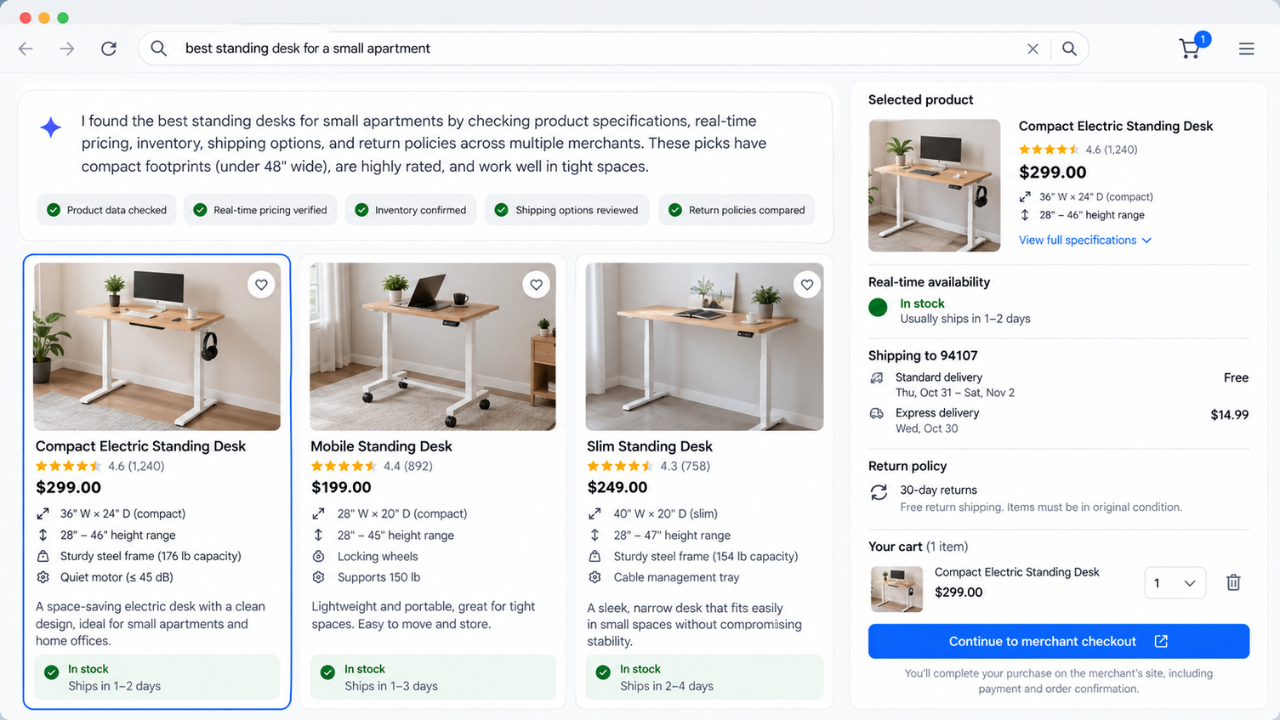
Agentic commerce describes AI systems that do more than recommend. They check inventory, build a cart, and in some cases complete checkout. Much of the infrastructure became real in 2026, even though consumer adoption is moving more slowly than the infrastructure suggests.
The protocols behind AI shopping, in plain terms
Two standards matter most for US merchants. Google introduced the Universal Commerce Protocol (UCP) at the NRF conference in January 2026. Developed with Shopify, it lets AI agents read merchant catalogs, check real-time prices and stock, manage carts, and complete purchases through one shared standard rather than custom integrations.
OpenAI’s Agentic Commerce Protocol (ACP), built with Stripe, plays a similar role for ChatGPT. Shopify has also rolled out Agentic Storefronts, which make participating merchants’ products available across AI assistants including ChatGPT, Microsoft Copilot, Google’s AI Mode, and Gemini.
Most store owners will not need to implement these protocols directly, because ecommerce platforms are handling much of the plumbing. What merchants control is the quality of the data flowing through it. For brands on Shopify, Shopify SEO increasingly includes keeping catalog data clean enough to travel well across these new channels.
The same principle applies to WooCommerce SEO, where catalog quality depends on how product data is structured across themes and plugins.
What the ChatGPT checkout reversal teaches
OpenAI launched Instant Checkout in ChatGPT in September 2025, letting US users buy from participating merchants without leaving the chat. By March 2026, it had changed course, refocusing ChatGPT Shopping on product discovery and sending shoppers to merchants’ own checkouts.
OpenAI said the first version did not offer the flexibility it wanted. Walmart has reportedly seen in-chat purchases convert at roughly a third of the rate of shoppers redirected to its own site.
The lesson is not that agentic checkout failed. It is that the parts of commerce that depend on trust, such as payment, returns, and customer service, are harder to move into a chat window than product research is. Brands that rushed to build for in-chat purchasing gained less than brands that focused on being well represented during AI-assisted research.
Getting a catalog ready for AI agents
Agent readiness is mostly unglamorous data work. AI systems compare products on attributes they can read reliably, so the catalog itself becomes a marketing asset. The priorities are:
- Complete product feeds, including the optional attributes most stores skip, such as materials, dimensions, compatibility, and intended use
- Accurate real-time pricing and inventory, since agents favor offers they can trust to be available
- Shipping speed, delivery promises, and return terms published as structured data instead of buried in policy pages
- Product titles and descriptions that state, in plain language, who the product is for and how it compares
Adobe’s analysis found that the average US retail product page scored only 66 out of 100 on machine readability, meaning a meaningful share of product content was hard for AI systems to parse. That gap is an opportunity for stores willing to fix it before their competitors do.
How Ecommerce SEO Shifts From Rankings to Recommendations
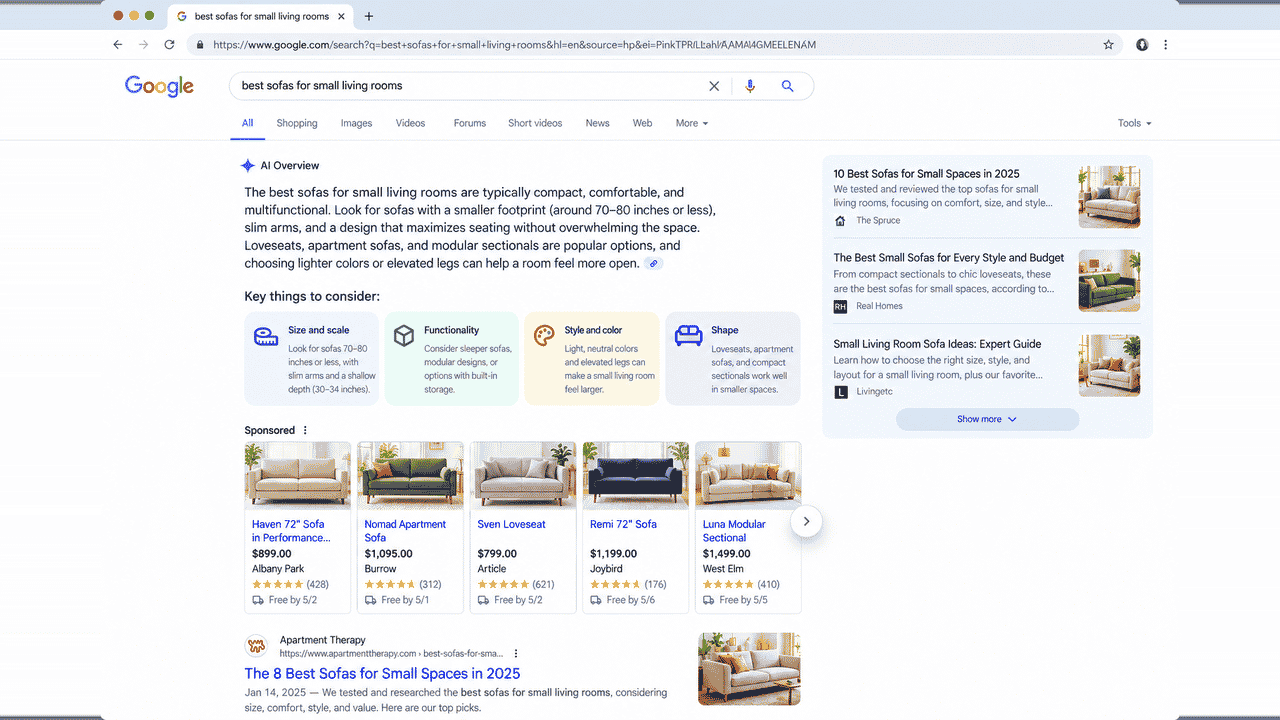
Search remains a major source of organic traffic for most online stores, and Google sits at the center of AI search through AI Overviews and AI Mode. The job of SEO is widening rather than disappearing. For the broader picture of how AEO, GEO, and SEO fit together, that foundation applies here. This section focuses on what changes for product and category pages.
What AI answers are doing to product-related clicks
AI summaries reduce clicks when they appear. Seer Interactive’s analysis of 5.47 million queries found that organic click-through rates fell 61% on queries showing an AI Overview. Informational and how-to searches take the biggest hit.
The effect on commercial and branded searches is less consistent: published estimates of how often those queries trigger AI Overviews range from under 10% to far higher, depending on the dataset and the month measured. Treat any single figure skeptically, and check your own Search Console data by query type. For a closer look at the content side of this shift, see how generative AI is changing ecommerce SEO.
Ranking and being cited are also coming apart. Research cited in 2026 found that pages ranking in Google’s top 10 accounted for about 76% of AI Overview citations in mid-2025, but only about 38% by early 2026. A first-page ranking is still valuable, but it no longer guarantees a place in the answer.
Product and category pages that machines can read and trust
The pages that earn recommendations answer the questions shoppers actually ask before buying. Strong product page SEO still starts with clear titles, useful descriptions, good images, and reviews, but 2027 raises the bar on specificity.
A category page for sofas for small living rooms should state the dimensions that qualify, compare fabrics for households with pets, and explain delivery for apartments. That level of detail helps a person decide, and it gives an AI system something concrete to cite. Considered purchases like these are where furniture store SEO and similar category work pay off most.
Structured data matters because it removes guesswork. Product, offer, review, shipping, and return policy markup lets Google and other AI systems read the facts directly. Markup does not guarantee inclusion in any AI answer, but missing or incorrect markup makes exclusion more likely.
Technical basics still apply as well. AI crawlers need access to key pages, important content should render in HTML rather than only through scripts, pages should load quickly, and faceted navigation should not bury the category pages that matter most. These on-page ecommerce SEO fixes cover the basics, and Shopify stores with slow templates often need dedicated speed optimization.
Comparison and buying-guide content deserves new attention. Shoppers ask AI tools to compare brands, and those tools draw on whatever comparisons exist. Publishing a fair, specific comparison of your product against the alternatives gives the AI an accurate source. Leaving that gap empty lets a competitor or an affiliate site define the comparison for you.
Off-site signals now carry more weight
On-site work makes a store eligible. Off-site evidence makes it recommendable. An Ahrefs study of AI brand visibility found that YouTube mentions and branded web mentions each correlated at about 0.7 with visibility in Google’s AI Overviews, compared with about 0.3 for domain rating.
Correlation is not causation, but the direction is consistent: what others say about a brand appears to influence AI recommendations more than traditional authority metrics do.
For ecommerce, that means detailed reviews, creator videos that show the product in use, accurate listings on marketplaces and review sites, and genuine participation in communities such as Reddit, where shoppers ask for recommendations. Our GEO checklist ranks these off-site tasks by impact for teams deciding where to start.
Paid Media in 2027: More Automation, Fewer Manual Levers
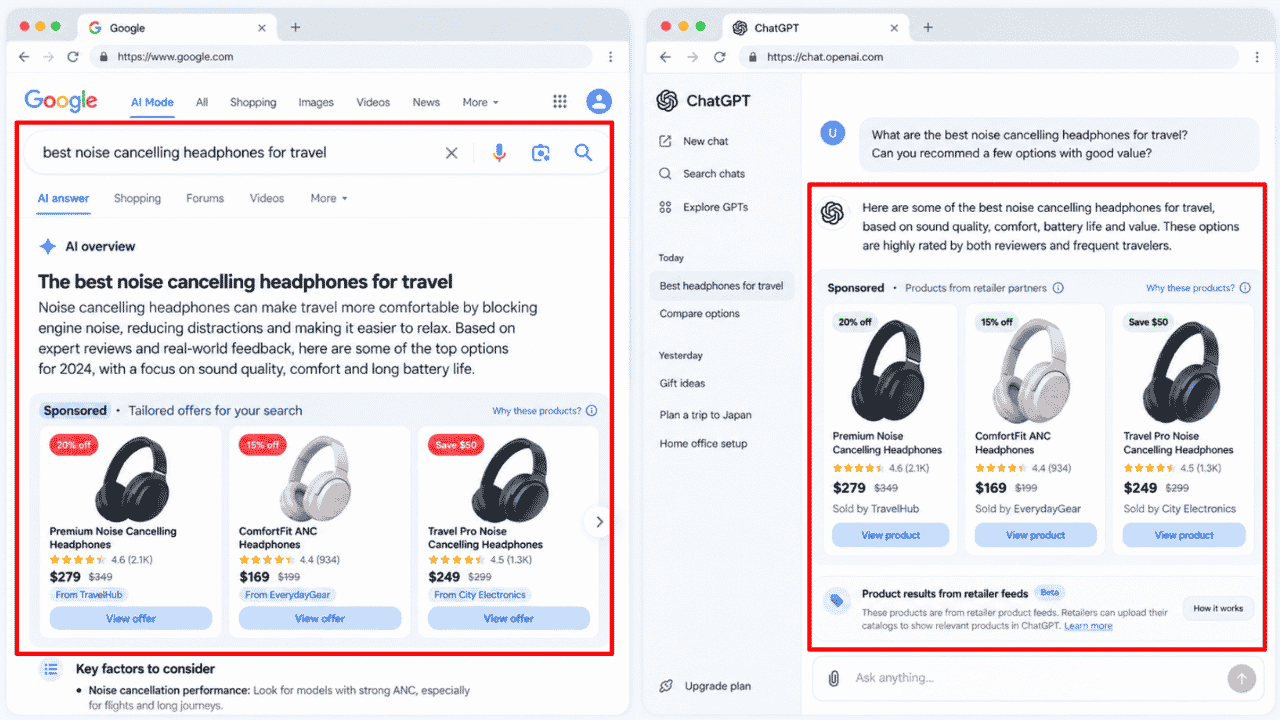
Ads move inside AI answers
The AI ad formats advertisers are working with in 2027 began as tests in 2026. Google introduced Direct Offers in January 2026, a pilot that lets advertisers present tailored discounts inside AI Mode when a shopper appears ready to buy, and expanded it in May 2026 with brands such as Chewy, Gap, and L’Oréal. Google has also begun placing Shopping ads within AI Mode responses, labeled as sponsored.
OpenAI started showing ads in ChatGPT in February 2026, limited to logged-in adult users in the US on its Free and Go tiers. By midyear, it had reportedly added a product-feed option that lets retailers upload a catalog and generate ads for individual items.
Early access also reportedly came with high minimum spends, so most small and midsize stores will reach these placements through managed programs or later self-serve tools rather than right away. Plan a test budget for 2027, but expect the formats, pricing, and measurement to keep changing.
Automated campaigns become the default
On Google, Performance Max and AI Max push toward broad, automated targeting driven by product feeds and conversion data. Meta has moved new sales campaigns toward Advantage+ automation by default, and the company has described a goal of letting businesses generate entire campaigns from little more than a product image and a budget. Reports put that target at the end of 2026, so treat it as a stated plan rather than a finished product.
Automation can reduce the work of running ads, but it changes where performance comes from. When the platform chooses audiences, placements, and often creative, two businesses using the same tool differ mainly in the inputs they provide.
Retail media keeps taking budget
Retail media, the advertising that retailers such as Amazon and Walmart sell on their own sites and apps, continues to draw budget from other channels. Warc Media expects global retail media spending to reach about $223.4 billion in 2027, up 11.5% from 2026, while noting that growth outside Amazon is slowing. For brands that sell through marketplaces, retail media is less an option than a cost of being visible on those digital shelves.
What advertisers still control
The levers that remain are the inputs automation cannot supply for you:
- Accurate conversion data sent back to the platforms, ideally with order value and margin information
- A product feed with complete, honest attributes
- Profit-based goals, so the system does not chase unprofitable orders
- Offers that give shoppers a concrete reason to choose you
- Creative that reflects a real brand point of view rather than generic templates
Teams that manage these inputs well will get more from automated systems than teams that try to fight them.
Social Commerce Turns Discovery Into Checkout
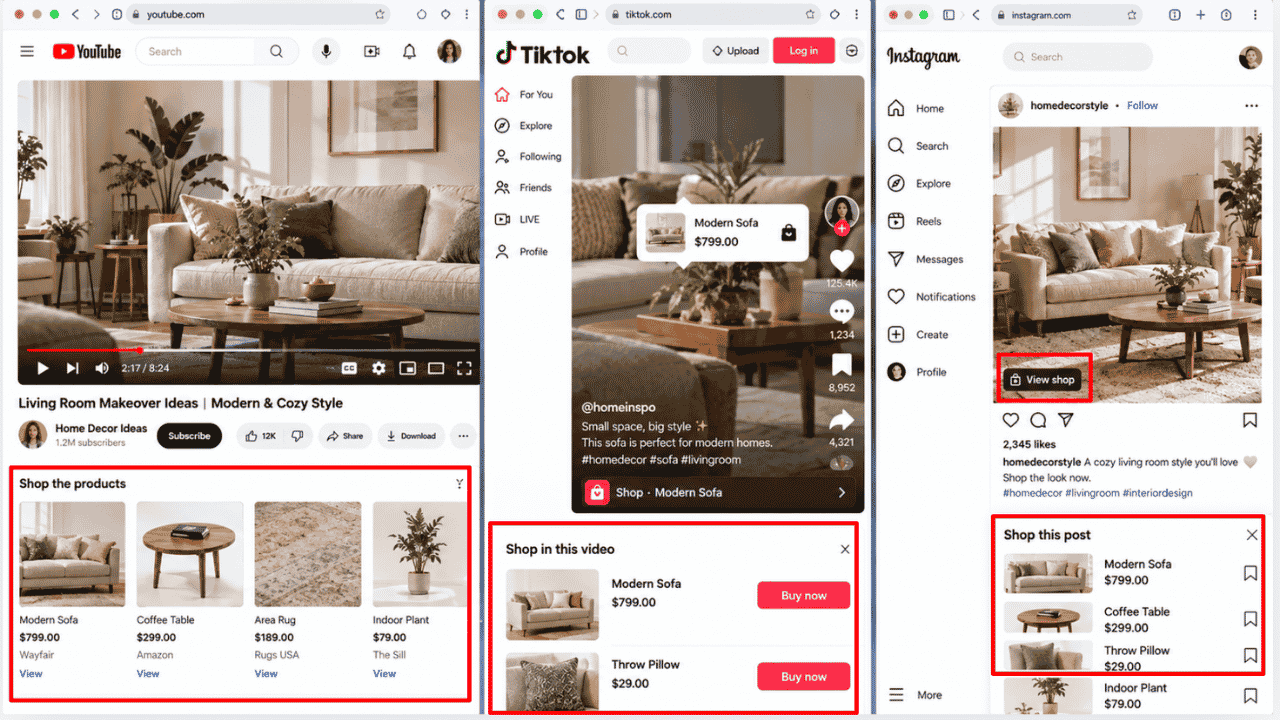
Social platforms now close sales instead of only starting them. eMarketer projected TikTok Shop’s US ecommerce sales at about $23.4 billion for 2026, up 48% from 2025, which would give it a larger US ecommerce business than retailers such as Target and Best Buy. Instagram, YouTube Shopping, and Pinterest continue to expand their own shopping features.
How these channels work matters more than their size. Social commerce rewards products that are easy to understand in a short video, moderately priced, and visually interesting. A large share of sales comes through creators and affiliates rather than brand accounts, which favors brands willing to work with many smaller creators instead of a few expensive endorsements.
Those same videos often feed AI search, since YouTube appears frequently among the sources AI tools cite. A product demo filmed for social selling can therefore double as off-site evidence for AI recommendations.
Social selling is not the right fit for every catalog. High-consideration purchases such as furniture, appliances, and custom products may use social mainly to build awareness and drive branded search, with the sale happening on the store’s own site. The guide to growing furniture ecommerce brands shows how that path works for a high-consideration category. The decision for 2027 is where each channel fits in your path to purchase, not whether to be everywhere.
First-Party Data and Retention Become the Profit Center

Your data steers the automated systems
When ad platforms and AI assistants make more of the targeting decisions, a store’s own customer data becomes one of its few lasting advantages. Accurate purchase data, sent back to ad platforms through server-side tracking and conversion APIs, teaches automated campaigns which customers are worth finding. Zero-party data, meaning the preferences customers share directly through quizzes, product finders, and account settings, gives a store information that outside AI tools cannot see.
Retention pays for acquisition
New customers are getting harder to attribute and often more expensive to win, which makes the second order more important. Across more than 12,000 merchants using Gorgias, repeat customers made up 21% of customers but generated 44% of revenue. Klaviyo’s 2026 benchmarks show that triggered emails, such as welcome, post-purchase, and replenishment messages, accounted for 5.3% of sends but 41% of email revenue.
Retention marketing in 2027 is less about sending more campaigns and more about timing useful messages to how customers actually use the product. The approach to education-led customer engagement covers how stores can build that system step by step.
Privacy rules tighten in 2027
US privacy law remains a state-by-state patchwork. As of August 2026, 20 states had comprehensive consumer privacy laws in effect, with Oklahoma’s law taking effect on January 1, 2027, and Alabama’s in May 2027. California’s rules on automated decision-making technology, including notice and opt-out requirements, become enforceable on January 1, 2027, which matters for brands that use AI to personalize offers or pricing.
Thresholds vary, and many small stores fall below some of them, so confirm which laws apply with qualified legal counsel rather than assuming. The practical approach is to collect data for a clear purpose, explain why you ask for it, and make consent easy to manage.
Measuring Growth When AI Hides Part of the Journey
Traditional attribution struggles when research happens inside an AI conversation. A shopper may see your brand recommended in ChatGPT, search for your name on Google a week later, and buy through a branded ad. A last-click report credits the ad and misses the recommendation that started the journey.
Stores can respond in a few practical ways. Set up a GA4 channel group or segment for AI referrers such as chatgpt.com, perplexity.ai, gemini.google.com, and copilot.microsoft.com, so that this traffic is visible on its own. Track branded search impressions in Search Console over time, since AI exposure often shows up later as people searching for your name.
Check regularly how the major AI assistants describe your products, prices, and policies, and correct inaccurate information at its source. For larger budgets, incrementality tests and marketing mix modeling help separate what each channel truly adds from what it merely touches.
Revenue metrics also need a profit lens. Return on ad spend can look healthy while discounts, shipping costs, and returns erase the margin. Marketing efficiency ratio, contribution margin per order, and the ratio of customer lifetime value to acquisition cost give a clearer picture of whether growth is worth having.
A Practical 12-Month Plan for 2027
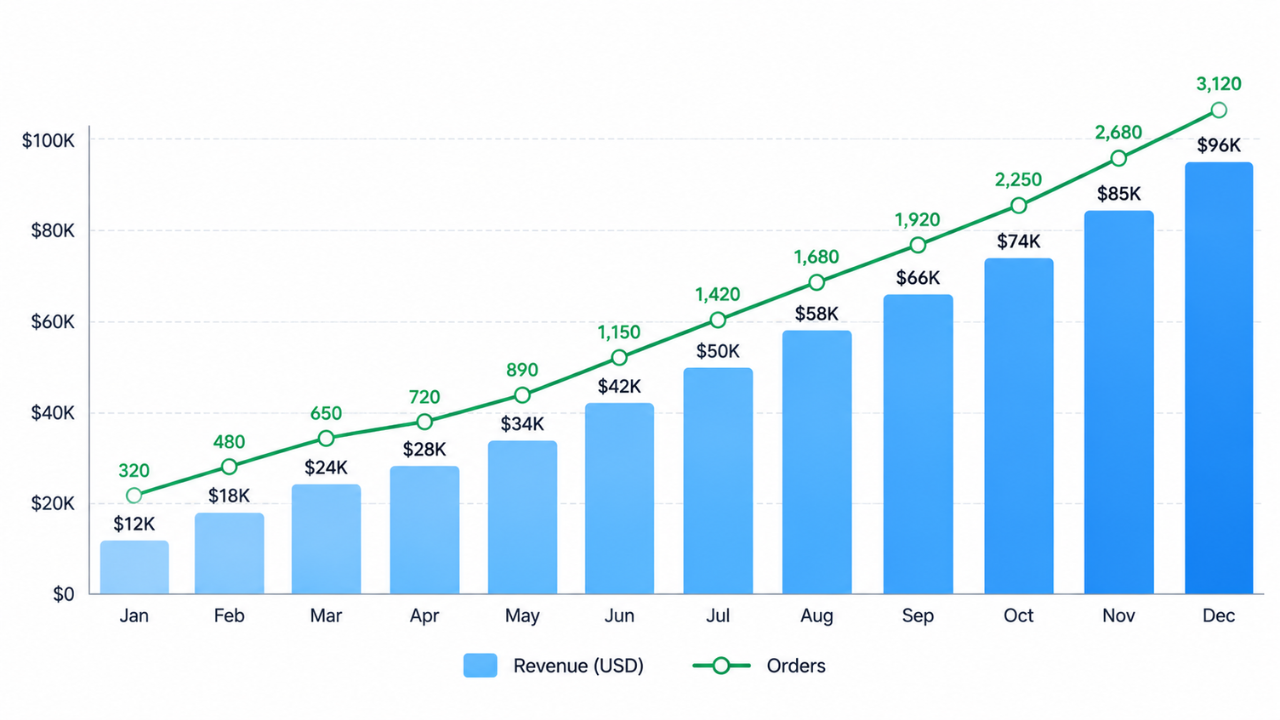
Not every store needs to do everything at once. The quarter-by-quarter order below starts with the work that protects existing revenue and builds toward newer channels.
January to March: Audit and Fix the Foundations
Start the year by auditing how your store appears today. Ask the major AI assistants about your category and your brand, and note where you appear, what they say, and what they get wrong. Review product feeds for missing attributes and errors, confirm that structured data on product and category pages is valid, and make sure AI crawlers can reach your key pages. Set up AI-referral tracking in GA4 so you have a baseline before you change anything.
April to June: Build the Evidence AI Systems Use
Shift attention to the content and evidence AI systems draw on. Strengthen your top category pages with specific buying guidance, publish honest comparison pages for your main products, and build a steady flow of detailed reviews. Start or expand a creator program focused on product-in-use videos. Tighten post-purchase and replenishment flows so that retention improves while the acquisition work takes hold.
July to December: Test New Channels and Tighten Measurement
With the foundations in place, test newer channels in a controlled way. Run small experiments with ads in AI placements as access opens up, compare automated campaigns against your profit targets ahead of the holiday season, and decide whether your platform’s agentic commerce features make sense for your catalog.
Stores with very large catalogs often need ecommerce SEO built for catalog scale at this stage, because template-level fixes affect thousands of pages at once. Close the year by reviewing measurement: which channels contributed to profitable growth, and which only looked good in last-click reports.
Risks Worth Planning For
The biggest risk in 2027 is not falling behind on AI. It is spending money on the wrong version of it. The ChatGPT checkout reversal showed how quickly an early bet can lose its value, so tie each new initiative to a measurable outcome and a review date.
Platform dependency is the second risk. If AI assistants become a main gateway to shoppers, a handful of companies will control more of the path between brands and customers, much as search and social platforms do today. Owned channels, such as email, SMS, and a recognizable brand, reduce that exposure.
Quality shortcuts are the third. Mass-produced AI content, fake reviews, and pages created only to target small query variations already conflict with search engine spam policies, and they erode trust with the shoppers who check. Finally, growth that ignores margin is not real growth. Automated ad systems and discount-driven offers can lift revenue while profit falls, and weak financial tracking is among the most common reasons ecommerce businesses fail.
Conclusion
The future of ecommerce marketing in 2027 is less about one new channel and more about a change in where buying decisions get made. AI assistants, product grids, creator videos, and automated ads all present shoppers with short lists, and the stores that make those lists are the ones with accurate data, credible outside evidence, and pages that confirm what shoppers were told.
So far, the evidence points to AI as a powerful research assistant rather than an independent buyer, which makes accuracy and trust worth more than speculative bets.
The practical path is steady work: fix product data and pages, build the reviews and content others cite, feed automated ad systems better inputs, protect margins, and measure beyond the last click. If you want an outside view of where your store stands across search, AI visibility, and conversion, you can request a free ecommerce growth analysis from the EcomOptix team.
Frequently Asked Questions
How can a small online store get recommended by ChatGPT or Google AI Mode?
No method guarantees it. The most reliable inputs are complete and accurate product data, product and category pages that answer real buyer questions, valid structured data, and consistent third-party evidence such as detailed reviews and creator content. Check regularly how AI tools describe your store, and correct inaccurate information where it originates.
Is ecommerce SEO still worth investing in for 2027?
Yes, for most stores. Google's AI features draw on the same crawlable, well-structured pages that traditional SEO produces, and organic search remains a major traffic source. What changes is the scope. SEO now includes product data quality and off-site reputation, and success should be measured partly by visibility in AI answers, not only by rankings.
Should ecommerce brands advertise inside ChatGPT in 2027?
It depends on budget and category. ChatGPT ads were limited to US users on free tiers in 2026, and early access reportedly required large minimum spends. Brands with room in the budget can test them alongside proven channels. Most smaller stores will get more from strengthening organic AI visibility and product feeds until self-serve options and measurement mature.
How much of a 2027 marketing budget should go to AI search?
There is no reliable industry benchmark yet, so be wary of anyone quoting one. A practical approach is to fund the foundations first, such as product data, structured data, and content quality, because they also support Google search and shopping ads. Then set a small, separate test budget for new AI ad placements and judge it on profit, not clicks.