Shopify Speed Optimization · USA
Shopify Speed Optimization Services That Convert
Faster load times. Better Core Web Vitals. More completed checkouts.
We optimize Shopify and Shopify Plus stores doing $30K–$300K/month — theme code, app scripts, images, fonts and third-party requests — so your store passes Core Web Vitals and stops losing revenue on slow pages. Measured before and after, on your real traffic.
★★★★★
100+ Five-Star Reviews
Verified client reviews
●
Shopify Speed Specialists
Theme, app & Core Web Vitals level
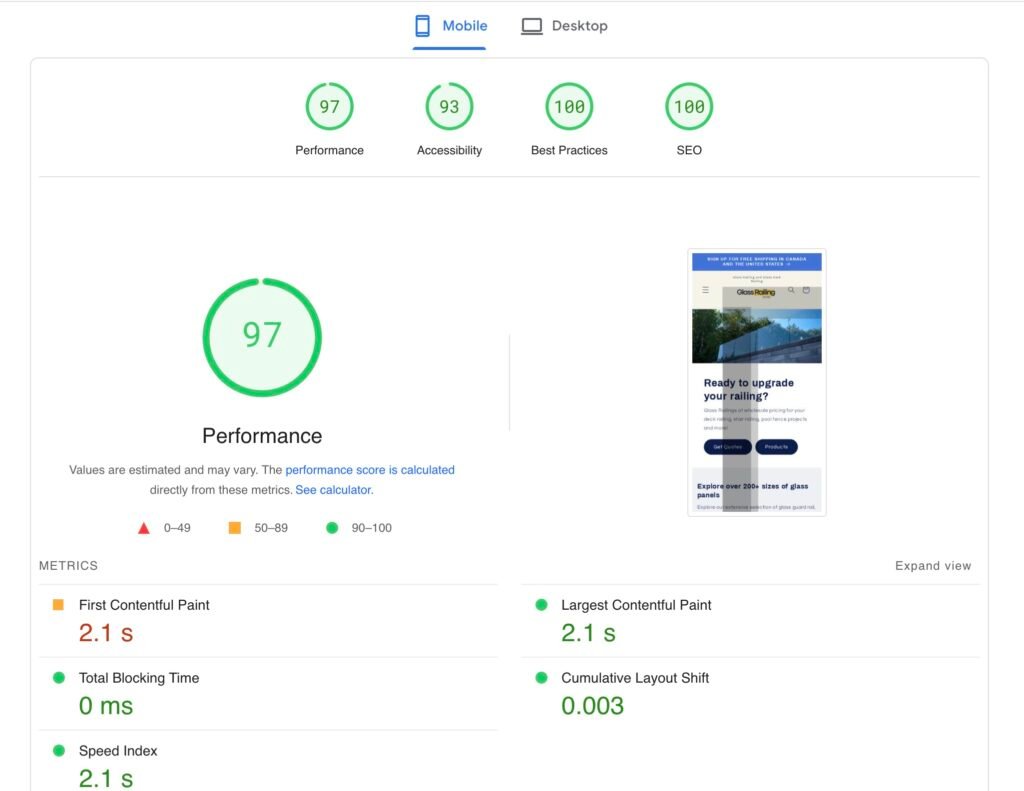
97
mobile PageSpeed achieved
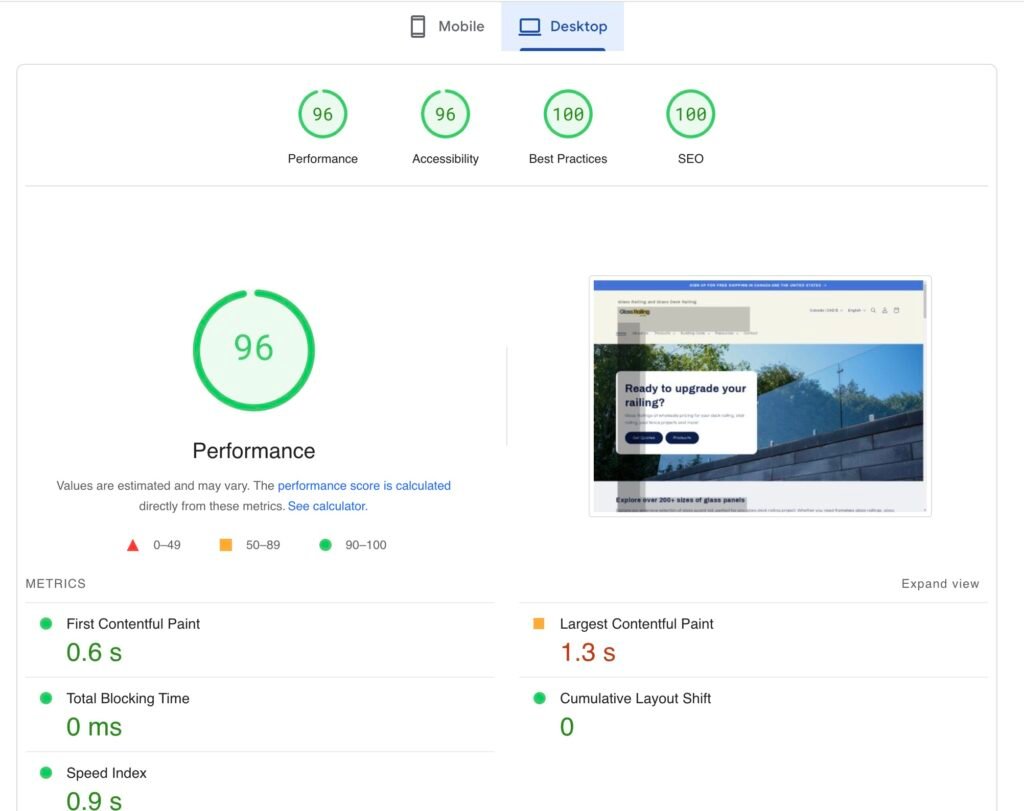
96
desktop PageSpeed achieved
7–10 days
typical turnaround
What we optimize
Shopify
Shopify Plus
Headless / Hydrogen
Custom Themes
LCP
Largest Contentful Paint
target under 2.5s
CLS
Layout shift stabilized
target under 0.1
INP
Interaction latency
target under 200ms
— The cost of a slow store
Slow Shopify stores don't just annoy shoppers. They quietly delete revenue.
Speed isn’t a vanity metric. It sits between your ad spend and your checkout — and on mobile, where most Shopify traffic lands, it decides how many sessions ever reach a product page.
01
Every extra second costs orders
Mobile shoppers leave before your hero image finishes loading. You already paid for that click through Meta or Google — the traffic arrives, then bounces on a blank screen.
Deloitte's “Milliseconds Make Millions” study found a 0.1s improvement in mobile site speed lifted retail conversion rates by 8.4%.
02
Google grades you on real user data
Core Web Vitals are part of Google's page experience signals, measured from real Chrome users over a rolling 28-day window — not from the lab test you ran on your laptop.
A perfect Lighthouse score means nothing if your field data still fails.
03
Apps pile up and nobody removes them
Every Shopify app injects its own JavaScript, CSS and third-party requests. Twelve apps later your theme carries code for six features you stopped using a year ago.
“We installed 14 apps over two years. Nobody ever removed one.”
— What's actually slowing you down
Six things break Shopify speed. We fix all six.
A speed score is a symptom. These are the causes we find in almost every Shopify audit — and each one is fixable without rebuilding your theme.
Render-blocking JavaScript
App scripts load before your content can paint. We defer, async or remove what doesn't need to run first.Unoptimized images
Full-size PNGs served to phones. We move to WebP/AVIF with correct responsive sizes and explicit dimensions.Third-party script overload
Chat widgets, review apps, pixels and heatmaps each add requests. We audit, consolidate and defer them.Bloated theme code
Unused CSS and legacy Liquid from past developers and abandoned sections, still shipping on every page load.No lazy loading
Everything below the fold loads immediately, competing with the content the shopper can actually see.Layout shift (CLS)
Fonts swapping, banners injecting and images without dimensions — the page jumps while people try to tap.Your theme isn't slow. Everything bolted onto it is.
EcomOptix audit findings across Shopify and Shopify Plus stores.
Most stores don't need a redesign or a headless rebuild. They need the render path cleaned up, the app layer controlled and the media pipeline fixed — in that order.
8.4%retail conversion lift from a 0.1s mobile speed improvement (Deloitte, Milliseconds Make Millions).
— How Shopify speed optimization works
Four pillars. One speed system.
The same process on every engagement — a five-app Shopify store or a Shopify Plus catalog with 20,000 SKUs.
Pillar 01
Audit & Baseline
We benchmark lab and field data before touching anything, so every gain is provable.
- PageSpeed & Lighthouse baseline
- CrUX field data review
- Request waterfall analysis
- Before-state screenshots
Pillar 02
Theme & Code
We clean the critical render path so first paint stops waiting on scripts.
- Critical CSS inlined
- Defer / async non-critical JS
- Unused CSS removed
- Liquid & section cleanup
Pillar 03
Assets & Media
Images and fonts are usually the single biggest LCP win available.
- WebP / AVIF conversion
- Responsive image sizes
- Lazy loading below fold
- Font preload & swap
Pillar 04
Apps & Scripts
We measure what each app actually costs you in milliseconds, then act on it.
- Per-app performance audit
- Remove unused apps
- Defer non-critical scripts
- Tag consolidation
— The 10-day deployment
No black box. Here's the exact sequence.
Every engagement follows the same schedule, on a duplicated theme, so your live store is never at risk.
01
Days 1–2
Audit & Baseline
We capture lab and field metrics, map every request and identify which apps and assets cost you the most. You get the findings before any work starts.
Lighthouse baselineCrUX field dataRequest waterfallApp cost report
02
Days 3–5
Theme & Code Work
Critical CSS, script deferral, unused code removal and Liquid cleanup — all on a duplicated theme, tested against your key templates.
Critical CSSJS deferralUnused CSS purgeTemplate QA
03
Days 6–8
Assets, Fonts & Apps
Image pipeline rebuilt, fonts preloaded, lazy loading applied and the app layer trimmed or deferred based on the audit.
WebP conversionLazy loadingFont strategyApp cleanup
04
Days 9–10
Verify, Publish & Handover
We re-test across templates and devices, publish the optimized theme and hand you a before/after report plus a maintenance guide.
Cross-device QABefore/after reportLive publish30-day monitoring
— What's included
Everything in one fixed scope. No add-ons.
No “that’s extra” halfway through. Every Shopify speed optimization engagement includes all of this.
Technical work
- Critical CSS generation & inlining
- Render-blocking JS deferred or removed
- Unused CSS and legacy code purged
- Image conversion to WebP/AVIF
- Responsive image sizing & dimensions
- Lazy loading for below-fold media
- Font preloading and display strategy
- Third-party script audit & deferral
- Per-app performance audit
- Layout shift (CLS) fixes
Reporting & handover
- Full before/after PageSpeed report
- Lab and field (CrUX) metric comparison
- Mobile and desktop scores per template
- Documented list of every change made
- Optimized theme published live
- Backup of your original theme
- Maintenance guide for your team
- App install guidance going forward
- 30 days of post-launch monitoring
- Direct access to the engineer who did the work
— Real speed results
We track load time.
And what it does to revenue.
Scores below are from Google PageSpeed Insights after optimization. Results vary by theme, app stack and catalog size.
Glass railing store · Shopify97Mobile PageSpeed score after theme, image and app-layer work. Desktop reached 96 in the same engagement, with no change to how the store looks.Shopify store · 8-day engagement · mobile 97 / desktop 96
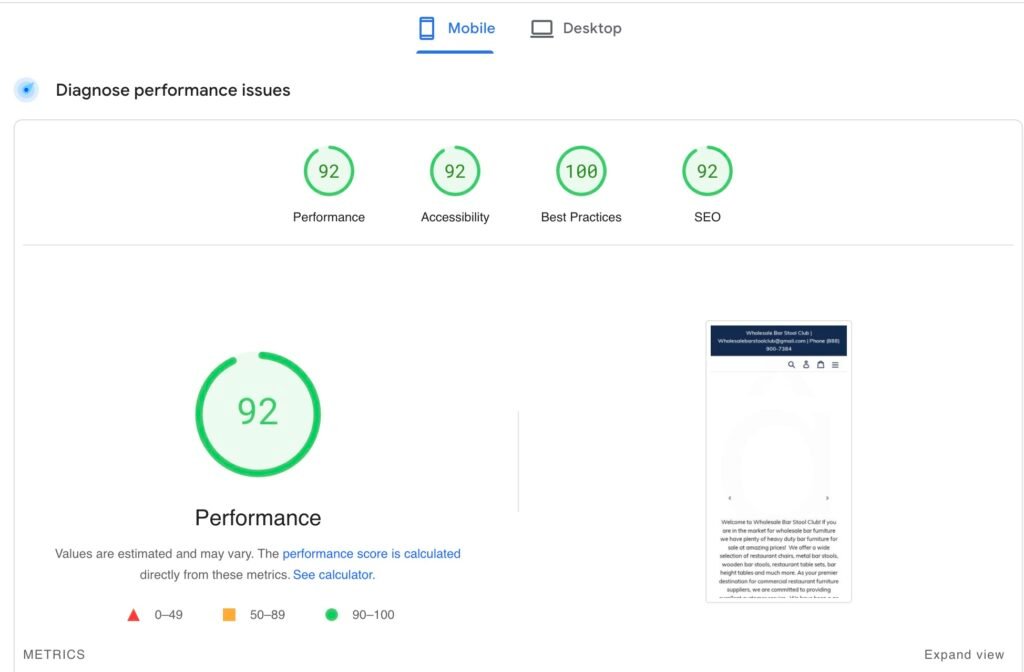
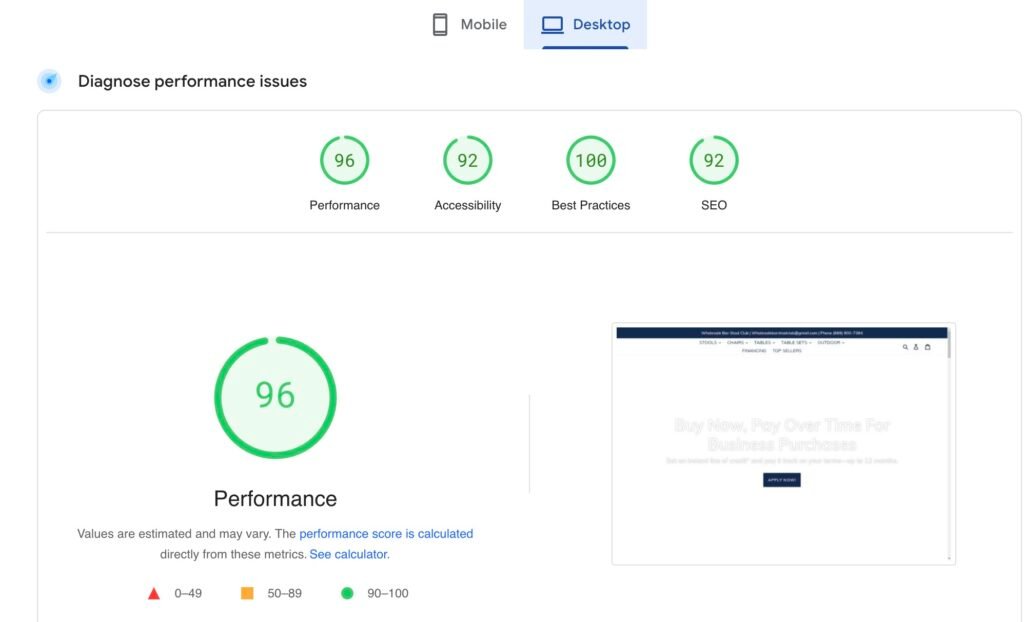
Furniture store · Shopify2.1sLargest Contentful Paint on collection pages after the media pipeline was rebuilt. Image-heavy catalog where lazy loading and WebP did most of the lifting.Shopify store · 10-day engagement · image-heavy catalog
Apparel store · Shopify Plus9Apps removed or deferred during the engagement after the per-app audit showed what each one cost in load time. Custom code replaced four of them.Shopify Plus · 10-day engagement · app stack rationalized
Results from real Shopify speed engagements. Individual results vary by theme, app stack, hosting-side factors and catalog size.
— Is this right for your store?
We only take on stores
where speed work will actually pay.
Not every slow store needs us. We audit first and tell you honestly when the bottleneck is something speed work won’t fix — even when that costs us the project.
✓ This is for you if…
- ✓You're doing $30K–$300K/month on Shopify or Shopify Plus
- ✓Your mobile PageSpeed or Core Web Vitals are failing
- ✓You're paying for traffic that bounces before the page paints
- ✓You've installed apps over the years and never removed any
- ✓You want measurable before/after data, not a vague “we optimized it”
- ✓You'd rather fix the render path than commit to a headless rebuild
✕ This is NOT for you if…
- ✕You want a guaranteed 100/100 score — nobody can honestly promise that
- ✕Your store does under $10K/month — the return won't cover the work yet
- ✕You want it done in 48 hours with no audit
- ✕You're unwilling to remove or defer a single app
- ✕Your real problem is traffic quality or product-market fit, not speed
— How we compare
Speed apps vs generalist devs vs specialists.
Most stores try a one-click app first, then a general developer. Here’s what each layer actually delivers.
One-click speed app
Generalist developer
EcomOptix
Core Web Vitals field data
✕
●
✓
Theme & Liquid code cleanup
✕
●
✓
Per-app performance audit
✕
✕
✓
Image pipeline rebuilt (WebP/AVIF)
●
●
✓
Layout shift (CLS) fixes
✕
●
✓
Work done on a duplicated theme
✕
●
✓
Documented before/after report
●
✕
✓
Post-launch monitoring
✕
✕
✓
Shopify-specific experience
●
✕
✓
✓ included · ● partial / depends · ✕ not covered
— Ways to work with us
Three ways to fix your store speed.
Start with a one-off sprint or keep us monitoring. No minimum commitment on the first engagement.
Best for a one-off fix
Speed sprint
A single 7–10 day engagement: full audit, theme and asset work, app rationalization, then a documented before/after handover.
- Fixed price, quoted upfront
- 7–10 day turnaround
- Work on a duplicated theme
- 30 days of monitoring
Best for stores that keep slowing down
Speed + monitoring
The sprint plus ongoing monthly monitoring, so new apps, banners and theme edits don't quietly undo the gains.
- Monthly Core Web Vitals report
- Alerts on regressions
- Pre-install app impact checks
- Priority fix queue
Best for agencies with client stores
Agency white label
We do the speed work under your agency's brand, NDA-backed, so you can offer it without hiring a performance engineer.
- NDA before any brief
- Delivered under your brand
- No contact with your clients
- Partner rate card
— What store owners say
Faster stores. Better numbers.
Replace these with your own verified reviews before publishing.
★★★★★
“Our product pages took six seconds on mobile. After the work they were under two. The difference showed up in add-to-cart rate within the first two weeks.”
FStore OwnerFurniture · Shopify Plus
★★★★★
“They found nine apps we weren't using and showed us what each one cost in load time. Mobile went from the 40s to 97 without changing how the site looks.”
GStore OwnerGlass & railing · Shopify
★★★★★
“Two developers told us we needed a headless rebuild. EcomOptix fixed the render path and images in ten days for a fraction of that.”
AMarketing LeadApparel · Shopify
— Before and after
Real Shopify stores. Real scores.
Screenshots taken directly from Google PageSpeed Insights after each engagement.
— Why store owners choose us
Partners, awards and a delivery record.
Recognition from the platforms and awards bodies that matter in ecommerce and search.








Shopify specialists, not generalists
We work on Shopify and Shopify Plus every day, so we know which apps break which templates and where Liquid quietly costs you milliseconds.
Measured, not claimed
You get lab and field data before and after, per template, on mobile and desktop — documented change by change.
Your live store is never at risk
All work happens on a duplicated theme with your original backed up, so you can roll back at any point.
The gains are built to last
You leave with a maintenance guide and per-app baselines, so your next marketing campaign doesn't undo the work.
— Shopify speed optimization expertise
Shopify speed optimization that holds up in Core Web Vitals.
Shopify speed optimization is not a one-time score chase. Google grades your store on field data collected from real Chrome users over a rolling 28-day window, which means a Lighthouse screenshot taken on a fast laptop tells you almost nothing about how your store is actually assessed. We optimize for the metrics Google records in the field — Largest Contentful Paint, Cumulative Layout Shift and Interaction to Next Paint — then verify the improvement holds once real traffic hits it.
Lab scores vs field data — what Google actually uses
A 100/100 desktop Lighthouse score means very little if your mobile CrUX data still reports an LCP of 4.2 seconds. Lab tests run on simulated hardware; field data comes from the phones your customers actually hold, on the networks they actually use. We baseline both, optimize against the field metrics, then re-measure after 28 days so you can see the real Core Web Vitals assessment change — not just a prettier lab screenshot.
Why Shopify stores get slow again — and how we prevent it
Most optimized stores are slow again within a year, because the cause was never the theme — it was the process. Every new app, tracking pixel and hero banner adds weight, and nobody measures the cost at install time. We hand over a documented maintenance guide, a per-app performance baseline, and clear rules for what to check before installing anything new. It pairs directly with our Shopify SEO, Shopify development and conversion rate optimization services.
— Shopify speed questions
Questions we get before every engagement.
Straight answers on cost, timeline, risk, and what speed work can and can’t do.
How much does Shopify speed optimization cost?
It depends on your app stack, theme complexity and catalog size — a five-app store is a very different scope from a Shopify Plus build with a custom theme and 20 integrations. We quote a fixed price after the free audit, so you know the number before you commit. No hourly billing and no scope creep mid-project.
How long does it take?
Most engagements run 7–10 business days end to end: two days of audit, five to six days of implementation, then two days of verification and handover. Larger Shopify Plus stores with heavy customization take longer, and we tell you that upfront rather than discovering it halfway through.
Will you break my theme or lose customizations?
No. All work is done on a duplicated theme, never your live one. We test every key template — home, collection, product, cart — on mobile and desktop before publishing, and we keep a backup of your original theme so you can roll back at any time.
Do you guarantee a 90+ PageSpeed score?
No, and be careful with anyone who does. Scores depend on your app stack, third-party scripts and hosting-side factors nobody fully controls, and a store that removes zero apps has a hard ceiling. What we commit to is a measurable, documented improvement in your Core Web Vitals, with before and after data proving it.
Do I have to remove my apps?
Not necessarily. We audit what each app costs in load time and give you the data, then you decide. Many apps can be deferred or conditionally loaded rather than removed. The decision is always yours — we just make sure it’s an informed one.
Does site speed actually affect SEO rankings?
Indirectly but meaningfully. Core Web Vitals are part of Google’s page experience signals, so speed rarely outranks relevance on its own — but it acts as a tiebreaker between comparable pages and strongly affects the engagement metrics that follow. The bigger and faster return is usually conversion rate, not rankings.
Do you work on Shopify Plus and headless builds?
Yes. We work across standard Shopify, Shopify Plus and headless or Hydrogen storefronts. Headless builds have different bottlenecks — hydration cost and API waterfalls rather than theme bloat — and we scope those separately.
What happens after the optimization?
You get a documented change log, your original theme backed up, a maintenance guide for your team and 30 days of post-launch monitoring. If a metric regresses because of something we changed, we fix it at no cost.
Free Shopify speed audit
Find out exactly what's slowing your store down.
We’ll benchmark your Core Web Vitals, map every render-blocking request and show you what each app costs you in load time — with a fixed quote to fix it. No obligation, and you keep the audit either way.
Takes 30 minutes. You keep the audit regardless.
Free audit & fixed quoteWork on a duplicated themeBefore/after report30-day monitoring