★★★★★ 100+ Reviews · AU's Specialist Ecom Agency USA Specialist Ecommerce Marketing Agency · 100+ Five-Star Reviews · Top Rated Plus on Upwork · Strategy-Led · AI-Accelerated · Revenue-Proven
★★★★★100+ reviews Book Strategy Session →
Beauty & Cosmetics SEO·US

Nobody searches your serum.
They search what it fixes.

We help US beauty and cosmetics brands doing $50K–$500K/month rank for the concern, ingredient and shade searches that drive first orders — with claim language that keeps your legal team calm.

★★★★★100+ Five-Star ReviewsVerified client reviews
Top Rated Plus100% Job Success

Beauty Platforms We Rank

Shopify WooCommerce Magento BigCommerce

+58%

Avg organic traffic growth

across beauty clients

$720

Avg customer LTV

replenishment-led brands

90%

Client retention rate

avg 6+ month engagements

— The beauty SEO reality

Beauty is the most researched

category in ecommerce SEO.

Beauty buyers research like scientists. They search a concern, then an ingredient, then a comparison, then reviews — and read six pages before buying. Whoever answers those questions earns the sale, which is why editorial sites outrank the brands that actually make the products.

01

Editorial sites answer before you do

Paid costs for beauty keywords have climbed 40–70% in the last 24 months. Retailers that only buy clicks watch margins disappear — and most agencies’ answer is “spend more.”

SkincareMakeupHaircareFragranceClean BeautyMen’s GroomingTools & DevicesBody & BathSuncare
02

Most agencies don't understand beauty

Most agencies pitch beauty, B2B SaaS, and local services with the same playbook. Ingredient-led search, shade variants, and cosmetic claim rules are a specialist discipline.

“Our previous agency wrote claims our regulatory consultant had to pull.” — Beauty Brand, Southeast

03

Beautiful catalogs Google can’t read

Beauty brands spend $200K+ on gorgeous catalog pages with zero body copy, zero structured data, and zero ranking potential. Looks good in a portfolio. Doesn’t sell organically.

SkincareMakeupHaircareFragranceClean BeautyMen’s GroomingTools & DevicesBody & BathSuncare
— What's actually broken in beauty SEO

Four issues we see in 9 out of 10

beauty brand audits.

Concern searches you don't rank for

Buyers search “niacinamide for dark spots,” “foundation for oily skin,” “retinol vs retinal” — concern, ingredient and comparison terms. Most brands rank for their own name and nothing else, so they never reach anyone still deciding what to buy.

Collection pages ranking nowhere

Most beauty brands rank for their own name and little else — not the concern, ingredient or skin-type terms buyers actually type. Organic only reaches people who already know them.

Shade and skin-type doubt killing the cart

Beauty lives and dies on match. Brands that hide shade finders, skin-type guidance, full ingredient lists and return terms until checkout bleed conversions on orders that were already won — then pay for it again in returns.

Core Web Vitals in the red

Beauty sites lean on swatch imagery, video tutorials and review walls. Uncompressed assets, UGC galleries and quiz apps push LCP past 3s — and mobile buyers leave before the product loads.

“Your beauty brand could be earning far more of its revenue from organic search. It's just not structured to.”

The starting point of every EcomOptix beauty audit. Every one of these issues is fixable — none require a platform change. They require a beauty SEO agency that treats ingredients and claims as a specialist discipline.

91%

of beauty brands we audit have at least 3 of these 4 issues unfixed. EcomOptix audit data across 100+ ecommerce stores.

— How EcomOptix ranks beauty brands

Four pillars. One beauty SEO system.

Built for repeat-purchase revenue.

The same framework we deploy across every beauty engagement — a Shopify Plus skincare label or a WooCommerce multi-brand retailer. It draws on our ecommerce SEO, Shopify SEO, WooCommerce SEO and ecommerce CRO services.

Pillar 01

Beauty Technical SEO

Shade and size variants, ingredient data, review markup. We fix the technical issues that quietly cap beauty rankings.

Pillar 02

Collection Keyword Architecture

Buying-intent keywords mapped to concerns, ingredients, skin types and shades — the way US beauty buyers actually search.

Pillar 03

Content That Converts Beauty Buyers

Ingredient and routine content wins the shopper still researching. We build concern guides, ingredient explainers and routine builders that rank, then route readers to the product.

Pillar 04

Authority & Local Visibility

Real authority building (no PBNs) plus local visibility — so showroom searches and national demand both convert.

— What happens and when

You'll know what we're doing.

Every single step.

No black box. Every beauty engagement follows the same 90-day deployment model.

M1
Month 1 — Foundation

Fix the store. Map the category opportunity.

Full technical audit of your Shopify or WooCommerce store. National concern keyword universe. Collection page architecture. Competitor & retailer gap analysis. Paid spend audit. Conversion funnel review.

Technical AuditCategory Keyword MapCategory ArchitectureCompetitor AnalysisPaid Audit
M2
Month 2 — Build & Deploy

Collection pages live. Rankings start moving.

Collection page copy deployed. On-page optimization across products. Technical fixes live on production. Google Shopping feed alignment. First ranking movements tracked in national results.

Category Copy LiveSchema DeployedAds RestructuredNational Ranking Movement
M3
Month 3 — Momentum

Organic sessions growing. Revenue attributable.

Collection terms moving to page 1–3 in national SERPs. Organic sessions compounding. Attributed organic revenue visible in reports — orders from organic, not just sessions.

Page 1–3 RankingsOrganic Revenue LiveLink Acquisition Active
M4+
Month 4 Onwards — Compound

Traffic compounds. Paid dependency reduces.

Every ranking, link, and piece of content compounds. Organic share of revenue grows, and paid dependency drops — without the revenue drop retailers fear when they cut spend.

Compounding TrafficReduced Ad DependencyQuarterly Strategy Reviews
— What you get

Everything included.

Nothing hidden.

No lock-in contracts. No “that’s an add-on”. Every EcomOptix beauty SEO engagement includes all of this.

Technical Ecom SEO

Keyword & Content

Authority & Paid

Reporting & Strategy

— Real beauty results

We track revenue.

Not just rankings.

Indicative outcomes from real ecommerce engagements. Individual results vary by store, category, and competition.

SkincareMakeupHaircareFragranceClean BeautyMen’s GroomingTools & DevicesBody & BathSuncare
$188K

In attributed organic revenue in the first 90 days. Store had zero meaningful organic at engagement start. Category pages rebuilt from scratch.

SkincareMakeupHaircareFragranceClean BeautyMen’s GroomingTools & DevicesBody & BathSuncare

Makeup · Shopify

+312%

Organic traffic growth in 6 months. US skincare brand. Collection pages moved from page 4–5 to page 1 for primary buying-intent keywords.

Haircare brand · ongoing retainer

Haircare · WooCommerce

40%

Reduction in Meta ad dependency in 4 months. Monthly Meta spend reduced from $18K to $10.8K while maintaining the same revenue.

Makeup · 6-month engagement

Figures are indicative of results across client accounts. No specific ranking or revenue outcome is guaranteed.

— Is this right for your beauty brand?

We only take on beauty brands

we're confident we can grow.

✓ This is for you if...

✗ This is NOT for you if...

— How we compare

Specialist beauty SEO agency

vs generalist vs in-house.
What matters for US ecom
EcomOptix
Generalist Agency
In-house Team
Ecom-only specialisation
Partial
Platform-specific (Shopify / Woo)
Depends
Revenue attribution (orders, not sessions)
Beauty specialists
Maybe
SEO + Paid + CRO integrated
Siloed
AI search visibility (AIO, ChatGPT)
No lock-in contracts
N/A
Typical monthly cost ($50K+/mo brand)
$3.5K+
$5–15K
$10K+
— What our clients say

100+ verified reviews.

From ecommerce store owners.

★★★★★

Two agencies before EcomOptix gave me traffic reports. EcomOptix gave me revenue reports. By month 4, organic was 28% of our total revenue.

SkincareMakeupHaircareFragranceClean BeautyMen’s GroomingTools & DevicesBody & BathSuncare

★★★★★

They explained what was broken in our first audit and I immediately understood why two previous agencies had failed. Six months in, our collection pages rank on page 1 for our biggest category terms.

Marcus R.
CEO · Makeup Brand · Shopify

★★★★★

A team that actually understands beauty — ingredients, shades, claims, repeat purchase. That’s what I wanted, not another generalist pitching me their B2B SaaS playbook.

Amanda C.
Owner · Haircare · WooCommerce

100+ verified five-star reviews · Top Rated Plus · 100% Job Success

— Beyond beauty SEO

Ecommerce SEO services,

nationwide.

Beauty is our specialty, but not our only one. Explore the other store types we rank — or the specialist services we deploy on every engagement.

Beauty & cosmetics SEO expertise

SEO built for how beauty
is actually searched.

As a specialist beauty and cosmetics SEO agency, we help US brands win a category where buyers research before they trust. Shoppers search a concern, then an ingredient, then a comparison long before they search a brand. SEO for beauty brands means owning those searches with content that is both credible and compliant.

Collection pages that rank for concerns and ingredients

Beauty buyers search by concern, ingredient and skin type — “niacinamide for dark spots,” “foundation for oily skin,” “fragrance free moisturizer for eczema.” We map that demand to your collection structure, then rebuild those pages with real copy, filters Google can crawl, and product schema carrying shade, size, ingredients and availability. It builds directly on our ecommerce SEO and Shopify SEO work.

Fixing what quietly caps beauty rankings

Beauty catalogs multiply fast: one product becomes dozens of URLs once shade, size and set combine. We control faceted navigation so those combinations don’t flood the index, redirect or repurpose discontinued shades instead of deleting the authority they earned, and surface shade matching, full ingredient lists and returns information early, which lifts both rankings and conversion — the same principle behind our conversion rate optimization work.

E-E-A-T & AI search

Why Google trusts editorial
more than your brand.

Skincare and cosmetics content sits close to what Google calls Your Money or Your Life — material that can affect health decisions — so it is judged on demonstrated experience, expertise, authoritativeness and trust rather than keywords. That is why a dermatologist-reviewed article on a publisher site outranks the brand that formulated the product. The fix is not more content. It is attributable content.

Credentialed authors and expert review

Every ingredient and concern page we publish carries a named author with relevant credentials and, where the topic warrants it, review by a board-certified dermatologist or cosmetic chemist. Reviewer name, credentials and review date appear on the page and in structured data, so Google and AI systems can attribute the expertise rather than guess at it.

Claims that stay on the cosmetic side of the line

In the US a product is regulated by what it claims to do. Say a cream moisturizes and it is a cosmetic; say it stimulates collagen or treats a condition and you have made a drug claim, with the approval burden that follows. MoCRA — the largest expansion of FDA cosmetics authority since 1938 — adds facility registration renewed every two years, annual product listing with ingredients, safety substantiation records, and serious adverse event reporting within 15 business days. We write ingredient content that ranks without crossing that line. References: FDA: Is it a cosmetic, a drug, or both?, FDA MoCRA overview, FTC Health Products Compliance Guidance.

Structured so Google and AI systems cite you

AI answers extract passages, not pages. We write self-contained 40–60 word answers under question-shaped headings, build comparison tables for “retinol vs retinal” style queries, and ship FAQ, Article and Organization schema with author and reviewer attached. Research on generative engines found citing sources and adding statistics lift citation rates by roughly 40% and 37%, while keyword stuffing reduces them.

— Common questions

Beauty SEO questions,

answered.

Yes. Beauty is one of our core specialties — ingredient-led search, shade variants, and claim-sensitive content. We work with skincare, makeup, haircare, fragrance and clean beauty brands across the US. We don’t run the same playbook we’d use for a t-shirt store.

No — we work across ecommerce, but beauty is where we’re strongest. That specialization means we already know your ingredient keyword landscape, your shade variant structure, and where cosmetic claim language creates risk.

Most beauty clients see ranking movement in months 2–3, with revenue attribution measurable from month 3. Ingredient and concern content compounds, and replenishment revenue lags the first order. Any agency promising page 1 in 30 days isn’t telling you the truth.

Yes — all of them. Most beauty brands we work with are on Shopify, Shopify Plus, or WooCommerce. We also handle Magento, BigCommerce, and headless builds.

Engagements are scoped to your catalog size and competition — from a one-time technical audit and roadmap to an ongoing retainer. We work with US beauty and cosmetics brands doing $50K–$500K/month.

Yes. Most beauty engagements include Google Shopping feed alignment and Shopping feed optimization. The goal isn’t to kill paid — it’s to make it efficient while SEO reduces dependency over time.

Free · No obligation · US-based team

Get a free SEO growth audit

for your beauty brand.

We’ll audit your beauty brand’s technical SEO, map your biggest collection page opportunities, and show you what competitors rank for that you don’t — with no obligation.

Takes 30 minutes. US-based team. You keep the audit regardless.

Helpful Resources

Check Out Our Top Resources

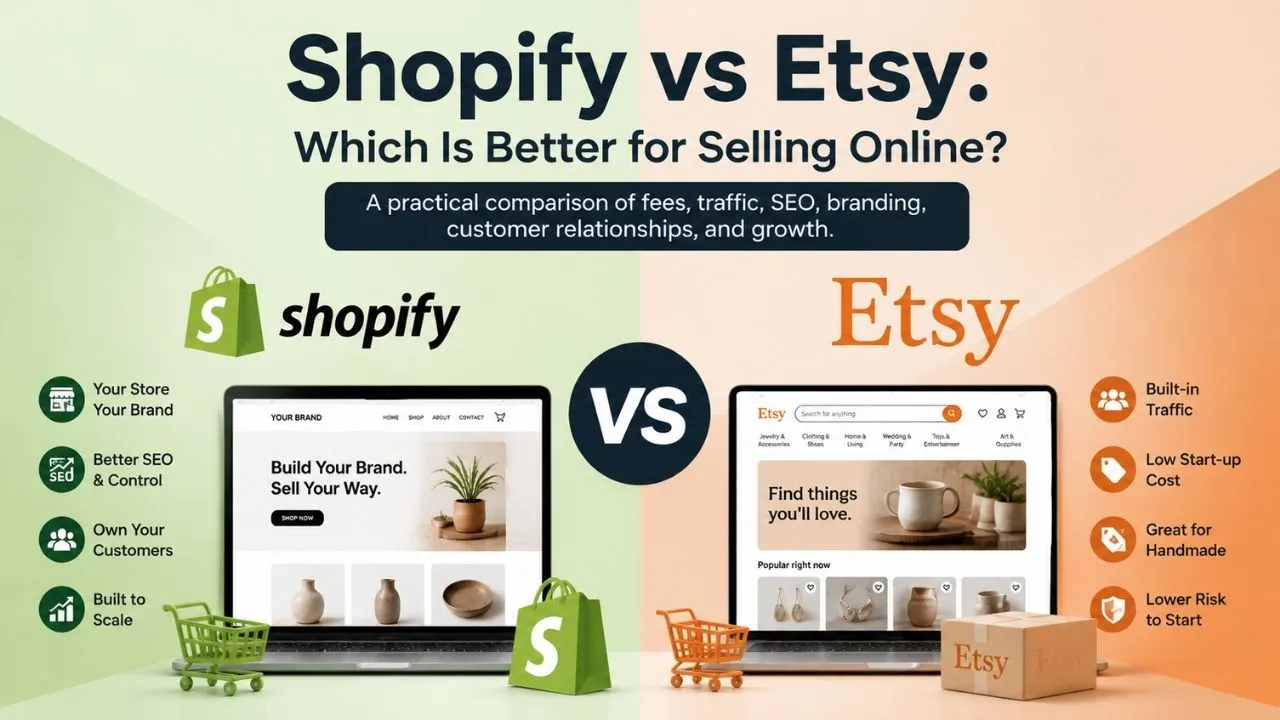
Shopify vs Etsy: Which Is Better for Selling Online?

Shopify vs Etsy: Which Is Better for Selling Online?

A practical comparison of fees, traffic, SEO, branding, customer relationships, and growth. Short…
What Does a Digital Marketing Agency Do for Small Businesses? (2026 Guide)

What Does a Digital Marketing Agency Do for Small Businesses? (2026 Guide)

A plain-English guide to what agencies do, the services they offer, and the…
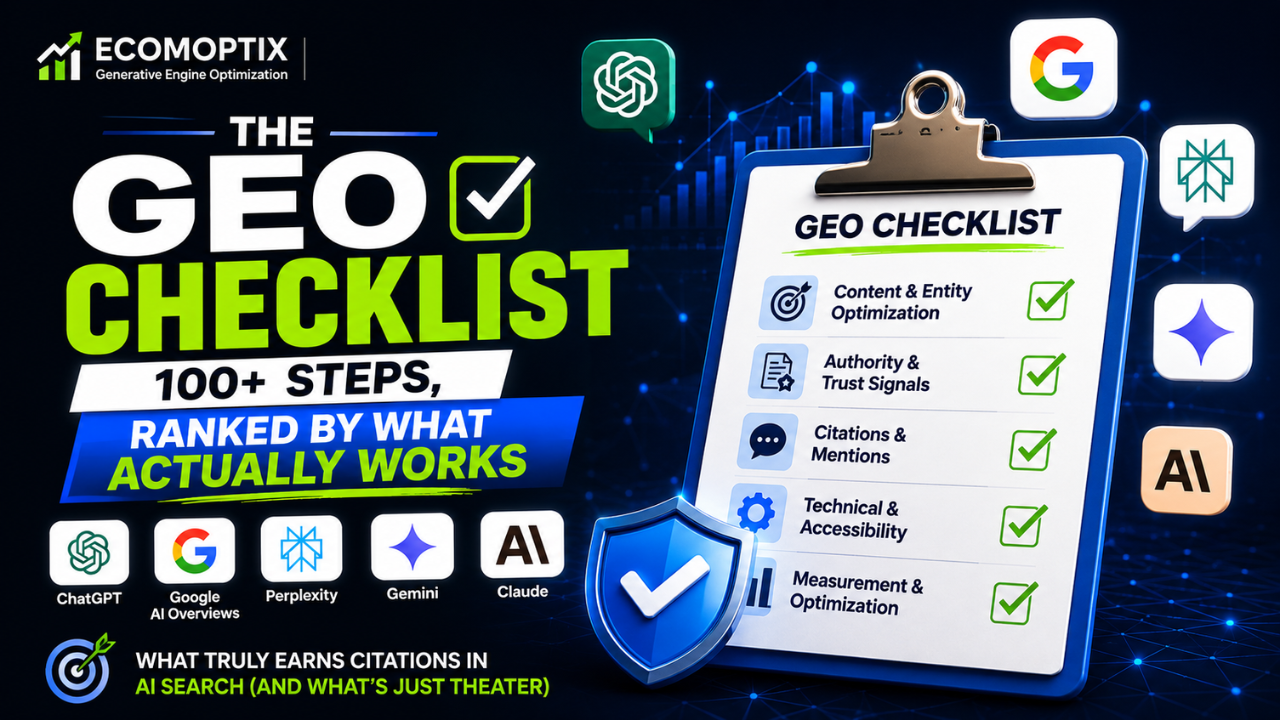
The GEO Checklist: 100+ Steps, Ranked by What Actually Works

The GEO Checklist: 100+ Steps, Ranked by What Actually Works

What truly earns citations in ChatGPT, Google AI Overviews, Perplexity, Gemini, and Claude,…